Best Fabrics for Thailand Wedding Attire
The best fabrics for Thailand wedding attire are usually lightweight to medium-weight woven fabrics with enough structure for the garment, some air movement, and a lining that does not add unnecessary heat. Silk, cotton, silk blends, and lyocell-rich blends can all work. The fiber name alone does not decide comfort or formality; yarn size, weave density, thickness, lining, fit, embellishment, and the ceremony setting matter as well.
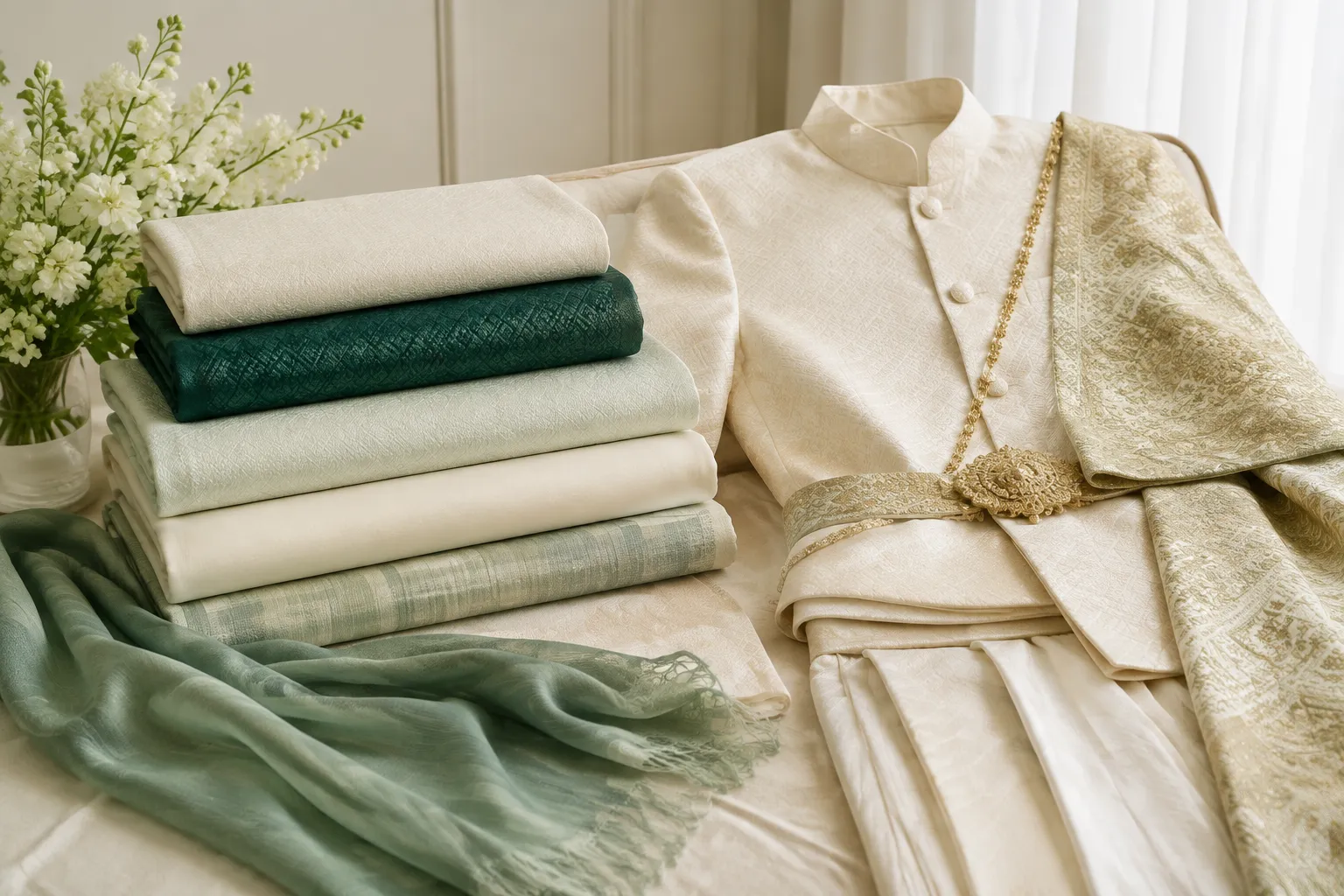
Start with the complete outfit rather than the fabric label:
- For a formal indoor ceremony, consider silk, a silk blend, or another smooth, structured woven fabric.
- For outdoor exposure or a long ceremony sequence, look for lighter construction and avoid unnecessary layers.
- For a khan maak procession, door games, photography, or repeated standing and sitting, choose fabric with controlled drape and enough ease for movement.
- For a traditional or family-specific outfit, confirm the preferred style, color, surface, and level of formality with the couple and family before ordering fabric.
Thai wedding attire varies by family, region, ceremony sequence, religious setting, and venue. A fabric that looks suitable for a formal Thai-inspired outfit may still feel uncomfortable if it is thick, tightly fitted, heavily embellished, or fully lined.
What Makes a Fabric Practical in Thailand?
A wedding outfit may be worn in an air-conditioned room, a warm outdoor space, a covered walkway, or several locations during one ceremony sequence. The useful question is not simply whether a fabric is described as “cool” or “luxurious.” Consider how the finished garment will manage heat, moisture, movement, opacity, and appearance.
- Weight and thickness: Heavier or thicker cloth can provide structure and coverage, but may also reduce air and moisture movement.
- Weave density: The spaces within the yarns and weave influence air permeability and how the fabric handles moisture.
- Lining: A lining can support seams, improve opacity, and help a garment hold its shape. It also adds another layer between the body and the air.
- Fit: A close-fitting garment leaves less air space than one with measured ease. The same fabric can feel different in a fitted blouse, loose jacket, or skirt.
- Finishing: Surface treatments can change softness, smoothness, wrinkle behavior, and moisture handling.
- Embellishment: Beading, metallic thread, dense embroidery, and layered panels add weight and may restrict movement.
Textile comfort is a combination of fabric and garment properties rather than a simple ranking of natural and manufactured fibers. Treat the fiber name as a starting point, then inspect the actual cloth and planned construction.
Silk: Formal With Construction Limits
Silk is often considered for formal wedding attire because it can provide a smooth surface, controlled drape, and visible luster. Research on formal Thai costume places named formal attire in wedding and other auspicious settings, but it does not establish one fabric as necessary for every wedding.
Silk may suit an indoor reception, a structured blouse or skirt, or an outfit where surface sheen and drape matter in photography. The result depends heavily on the specific construction. Lightweight silk behaves differently from dense woven silk or brocaded cloth, while lining, interfacing, and decorative panels can change warmth and stiffness.
Before choosing silk, check:
- Opacity under direct light
- Ease of movement at the shoulders, waist, and hips
- Visible creasing during travel and sitting
- Care requirements before and after the wedding
- Whether the surface sheen suits the venue lighting and photography
Silk can be a strong formal option, but it should not automatically be treated as the coolest or easiest fabric. Confirm the specific weave, weight, lining, and care instructions with the tailor.
Cotton: Practical Potential Depends on the Weave
Cotton can work well for warm-weather attire when the cloth is light enough and the garment allows movement. Thailand-specific handwoven cotton research shows why the label “cotton” is not enough to predict the finished result. Yarn count, yarn type, cover factor, and finishing can change stiffness, softness, bending, shearing, compression, and drape.
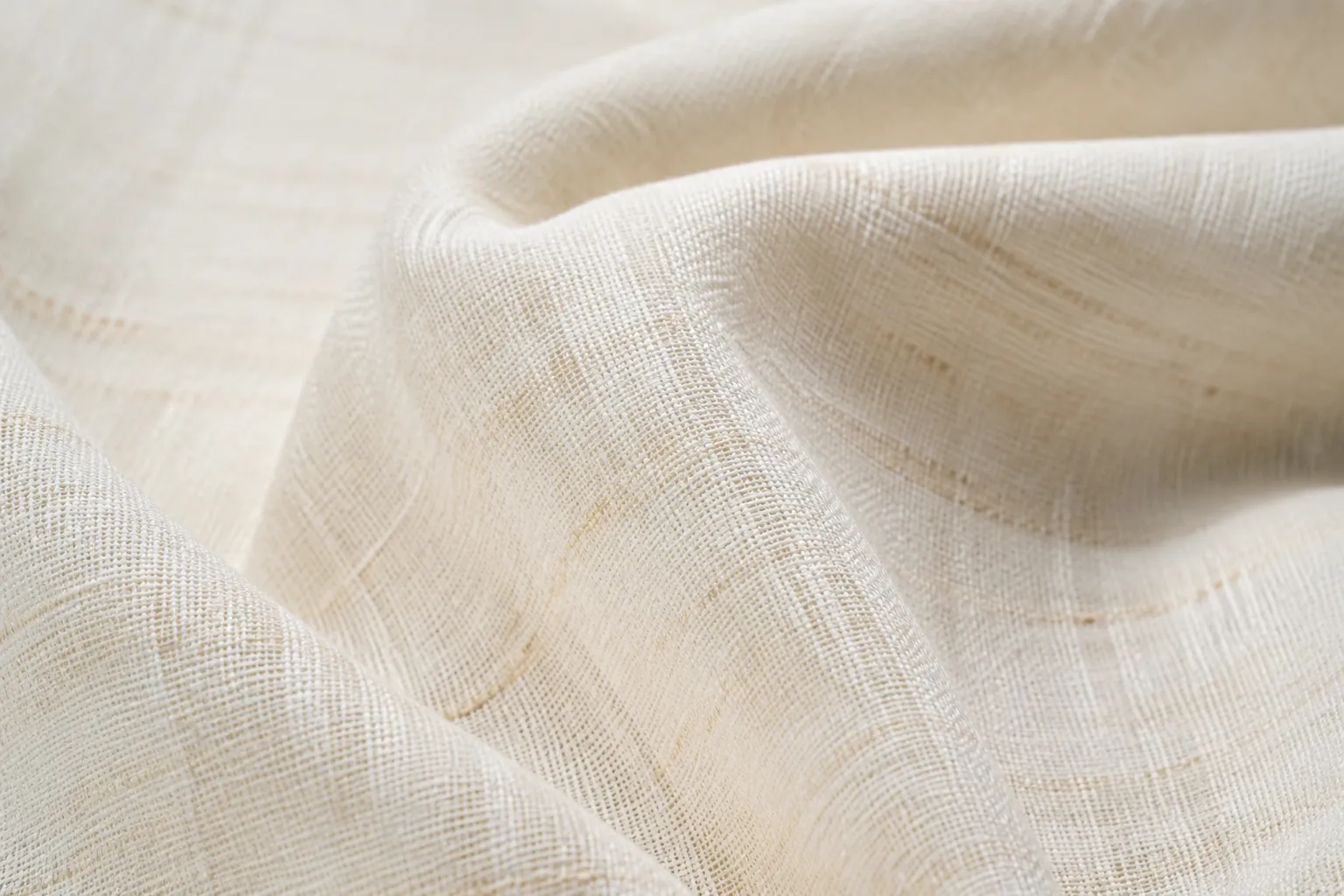
A lighter, less dense cotton may suit outdoor portions of the ceremony, a relaxed formal outfit, or a shirt, blouse, skirt, or dress with moderate structure. Some handwoven cotton has a pronounced body and can hold a skirt or jacket silhouette. That structure may look attractive, but it can feel less flexible in a close-fitting garment.
Ask the tailor to show how the cloth behaves when it is folded, gathered, and moved. Also check:
- Whether the fabric becomes transparent in sunlight or strong indoor lighting
- Whether finishing makes it softer or leaves it crisp
- Whether it needs a full lining for coverage
- Whether the weave snags or frays at cut edges
- Whether it keeps its intended shape after sitting and walking
Silk Blends and Lyocell-Rich Blends
Blended fabrics may combine a polished surface with a different level of moisture handling, drape, or crease recovery. In one comparison of silk and lyocell-rich fabrics, the tested lyocell-rich fabrics showed higher air permeability, water-vapor permeability, absorbency, wicking, drape, and crease recovery than the tested silk fabrics.
Those findings apply to the tested constructions, not to every silk or lyocell blend available. A blend may be worth considering when you want some visual richness with a softer or more fluid handle, easier packing, or a less rigid silhouette.
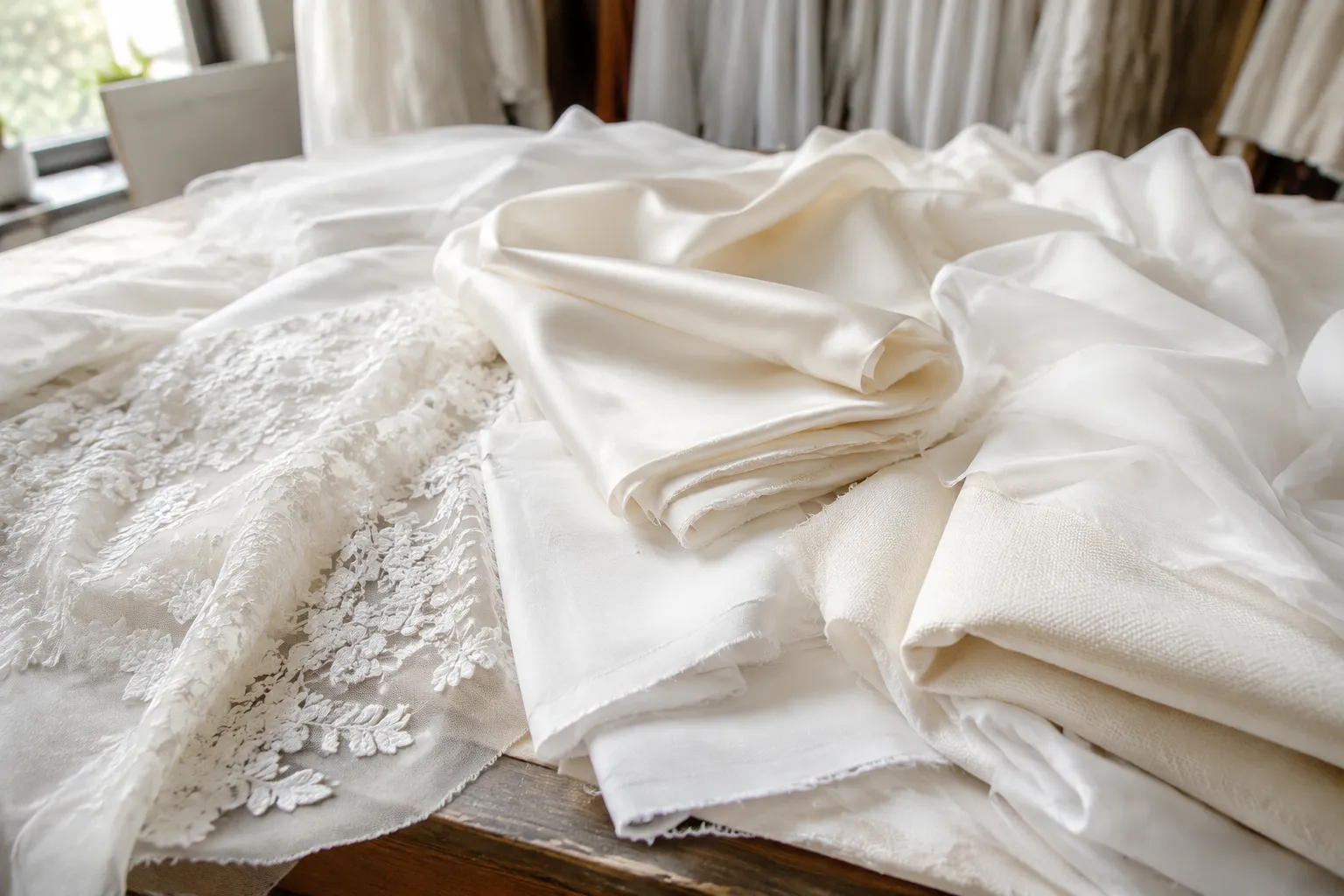
Check the blend ratio and the cloth itself. Two fabrics with similar fiber percentages can behave differently when their yarns, weave density, thickness, or finish differ. A fluid blend may also look too casual for a particular ceremony or family preference, so review the finished sample with the couple, family, and tailor.
Lightweight Structured Wovens
A lightweight structured woven can provide clean lines without a heavy outer layer. This category may include cotton, silk, regenerated-cellulose, or blended constructions. Look for controlled drape, sufficient opacity, moderate stiffness, and a weight that matches the garment design.
This type of cloth may work for a tailored blouse, long-sleeved top, traditional-inspired skirt, or simple jacket for an air-conditioned venue. It can also help a garment look neat in photographs without relying on extensive decoration.
A very stiff fabric may be awkward for a design that requires kneeling, walking, water pouring, or frequent changes of position. An overly fluid fabric may need additional support for a structured silhouette. Discuss the design, lining, and seam construction before the fabric is cut.
Choosing Fabric by Ceremony Setting
Indoor blessing or formal ceremony
A polished silk, silk blend, cotton-silk blend, or structured lightweight woven may suit a formal ceremony, depending on family preference and the planned attire. Coverage, sleeve design, hem length, and color may matter as much as the fiber. Ask the couple or family whether the outfit should coordinate with a particular style or ceremony sequence, then confirm practical clothing guidance with the ceremony leader or venue.
Khan maak procession and door games
A procession and door-game sequence can involve walking, waiting, bending, and interacting with relatives. Choose fabric that permits a full stride and does not pull across the shoulders or knees.
Test the garment or fitting sample by:
- Walking up and down stairs
- Raising both arms
- Sitting and standing
- Taking a longer step
- Carrying a small handbag or ceremonial item
- Moving without catching embroidery or loose trim
A slightly lighter fabric with moderate drape may be more practical than a heavy formal cloth for this part of the day.
Rod nam sang water-pouring ceremony
During the rod nam sang ceremony, the hands, sleeves, and upper body may need to remain accessible. Very tight sleeves, long loose cuffs, or delicate trim near the hands can make the sequence less convenient.
Plan the sleeve shape and cuff before selecting the final fabric. Ask the family or ceremony planner how the sequence will be arranged, especially when the outfit is highly structured or includes multiple layers.
Outdoor photography and mixed indoor-outdoor venues
For gardens, terraces, outdoor photography, or long travel between spaces, prioritize fabric weight, airflow, opacity, and movement. Current textile research supports treating thickness, weight, pore structure, and layering as relevant comfort variables, but it does not provide a universal fabric ranking for every Thailand weather condition or all-day wearer.
A fitting in the actual planned layers is more useful than judging the fabric alone. Try the garment in a cool room and a warmer space when possible. Confirm whether the venue has stairs, outdoor sections, a place to rest, or a changing area.
Lining, Opacity, and Respectful Design
A light outer fabric may need lining to prevent transparency or support its shape. A study of Thai handwoven textiles found no significant thermal-comfort difference between the tested handwoven fabrics with fusible and nonfusible linings, while fusible lining provided structural support along seams and helped with fraying at cut edges. That result does not mean every lining feels identical in every garment.
Ask the tailor to compare partial and full lining, lining options, the outer cloth against the finished layered sample, and coverage under sunlight and flash photography. The completed garment is what the wearer experiences, including interfacing, closures, embroidery, and fit.
Respectful attire is not defined by one universal fabric, color, or silhouette. Expectations may differ by family, ceremony leader, temple, and venue. Confirm the preferred level of coverage and formality before making a deposit or cutting the fabric.
Thailand Wedding Fabric Comparison
| Fabric direction | Useful strengths | Points to check |
|---|---|---|
| Lightweight silk | Formal surface, smooth handle, controlled drape | Weave density, lining, opacity, care, creasing |
| Silk blend | Balances appearance with a different handle or care profile | Blend ratio, finish, drape, actual weight |
| Lightweight cotton | Familiar handling and possible airflow | Weave density, stiffness, transparency, pressing |
| Handwoven cotton | Texture and structure for selected silhouettes | Yarn size, cover factor, bending, movement, fraying |
| Lyocell-rich blend | In tested fabrics, notable moisture and drape properties | Exact construction, wrinkle behavior, availability, formal appearance |
| Structured lightweight woven | Clean lines and tailoring support | Heat from layering, sleeve movement, stiffness |
This is a planning comparison, not a universal ranking.
How to Check Fabric Before Ordering
Request a swatch and test it in the way the garment will actually be worn:
- Hold it near a window and under bright indoor light to check opacity.
- Fold and unfold it to observe creasing.
- Drape it over the hand to see whether it falls softly or holds a firm shape.
- Move the swatch against the skin to assess surface feel.
- Compare the outer fabric and lining together.
- Walk, sit, raise the arms, and turn in a fitting sample if available.
- Ask how the garment should be pressed, cleaned, stored, and transported.
- Confirm whether the venue has outdoor areas, air conditioning, stairs, or a sequence requiring extra movement.
Do not judge comfort from a fabric bolt alone. The completed garment, including lining, interfacing, closures, embroidery, and fit, is what the wearer will experience.
The Practical Shortlist
- Lightweight silk or a silk blend: A polished option for formal attire when the lining and fit are appropriate.
- Lightweight or handwoven cotton: Worth considering when texture, structure, and easier routine care are priorities.
- Lyocell-rich blend: A possible choice when the specific sample offers the desired drape and moisture handling without looking too casual for the ceremony.
- Lightweight structured woven: Useful when tailoring, opacity, and clean lines matter more than surface shine.
Agree the final choice with the tailor and check it against the ceremony sequence. Confirm family preferences with the couple or elders, and ask the ceremony leader or venue about setting-specific expectations. The most practical choice is the fabric and construction that fit the planned garment, movement, climate exposure, care routine, and family context together.
Sources
- Traditional handwoven textiles: a case study of thermal comfort of Thailand’s traditional fusible and nonfusible linings
- A Study on Korean-Thai Traditional Wedding Dresses
- Clothing Thermophysiological Comfort: A Textile Science Perspective
- Formal Thai National Costume In The Reign Of King Bhumibol Adulyadej
- Moisture Vapor Permeability and Thermal Wear Comfort of Ecofriendly Fiber-Embedded Woven Fabrics for High-Performance Clothing
- Mechanical and Surface Properties of Thai Cotton Hand-woven Fabric Made from Hand-spun and Machine-spun Yarns
- A study on the thermophysiological and tactile comfort properties of silk/lyocell blended fabrics