How to Prevent Sweat Marks in Thailand Wedding Outfits
The most practical way to reduce sweat marks in a Thailand wedding outfit is to plan around the local weather and ceremony sequence, limit unnecessary layers, test the complete outfit in heat and movement, and arrange shade, ventilation, cooling breaks, and a backup garment.
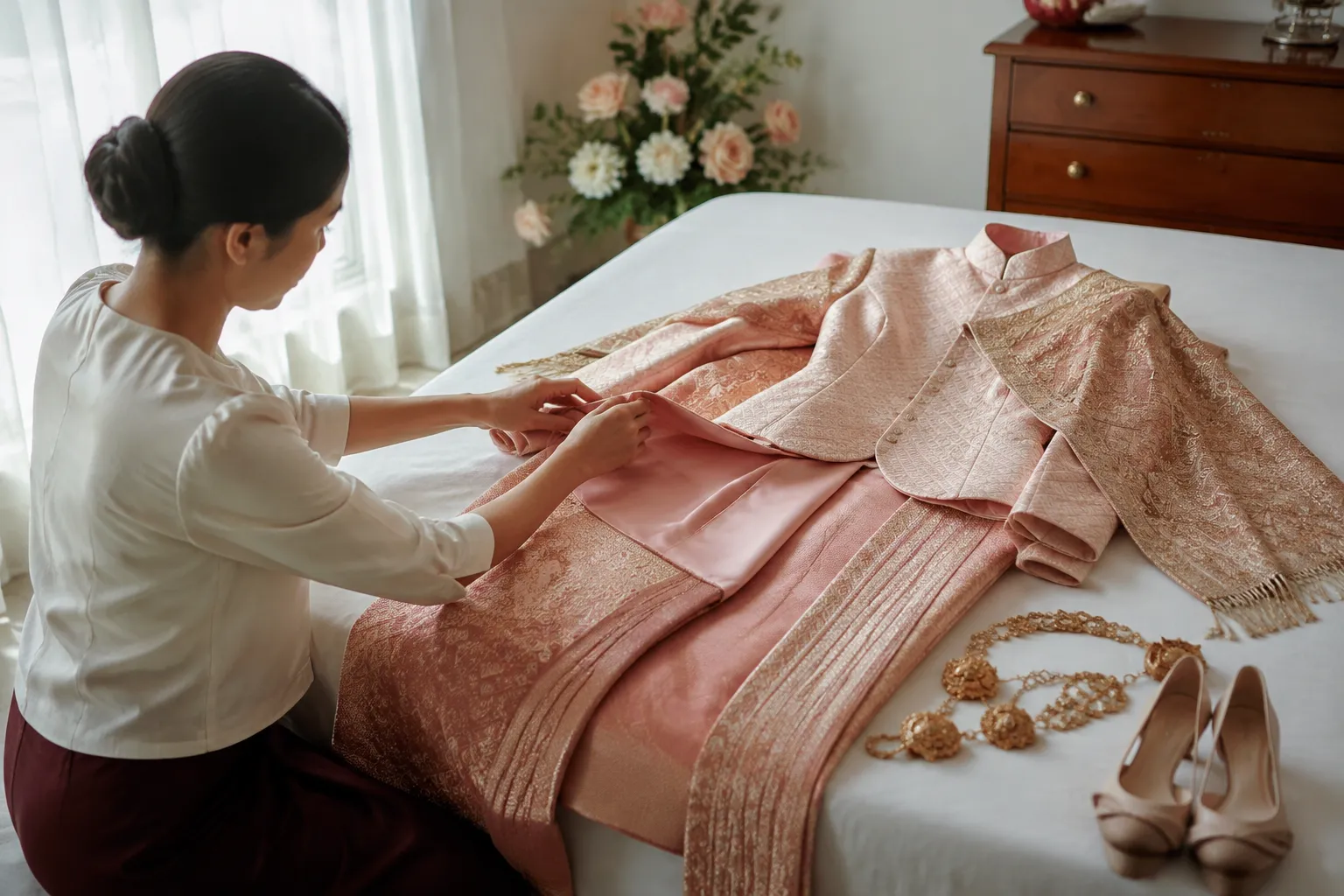
No fabric or product can promise completely mark-free clothing. Lining, close-fitting sections, overlapping panels, decorative layers, humidity, movement, and individual sweating patterns all affect how moisture appears and dries. Choose the outfit that remains manageable and presentable during the real day, rather than relying on a fabric label alone.
Start With the Location and Ceremony Sequence
Check the specific wedding location, date, and forecast before finalizing the outfit. Conditions around an outdoor khan maak procession may differ from those inside an air-conditioned venue. Thailand’s regional weather information can provide useful context, but the venue schedule remains the planning detail that matters most.
Mark the parts of the day when heat, waiting, or movement may increase:
- Getting dressed and waiting before the ceremony
- A khan maak procession or outdoor entrance
- Door games or other activities involving movement
- A Buddhist blessing at a temple, home, or venue
- Family photographs and outdoor couple portraits
- A rod nam sang water-pouring ceremony
- Travel between ceremony or reception locations
Sweat marks may become more noticeable during waiting, transitions, or photography than during a short formal ritual. Ask the planner or venue where you will be outside, whether a private changing space is available, and when you can return indoors.
Family preferences may also affect coverage, color, sleeves, traditional elements, or respectful adaptation for a temple or blessing. Confirm significant outfit changes with the relevant family member, ceremony leader, venue, or tailor.
Ask About the Finished Outfit, Not Just the Fabric
Discuss the whole clothing system with the tailor, boutique, or rental provider. The outer fabric is only one part of the result. Lining, underlayers, fit, fastenings, and decorative panels can affect warmth, airflow, and the visibility of damp areas.
- What are the outer fabric and lining?
- Which areas have multiple layers or overlapping panels?
- Can an inner layer be reduced without changing the intended coverage?
- Will the garment allow comfortable walking, sitting, bowing, posing, and arm movement?
- Which areas of this design are most likely to show moisture?
- What exactly was tested if the provider uses terms such as “wicking” or “quick drying”?
- Were the results measured on this finished garment or on a different fabric sample?
- Is a spare inner layer, shirt, sash, or removable outer piece available?
- What cleaning and care instructions apply after the ceremony?
Words such as “breathable,” “moisture managing,” “wicking,” and “quick drying” describe particular textile properties. They do not predict how a complete formal outfit will look after several hours of wear. Much of the available research concerns sportswear, T-shirts, laboratory clothing, or occupational clothing, so use these terms as prompts for questions rather than as performance promises.
Reduce Unnecessary Heat and Bulk
Dense fabric, several layers, tight sections, and overlapping panels can make formalwear feel warmer. Clothing research describes how coverage, wetness, fit, and airflow affect the movement of heat and moisture, but it does not identify one universally suitable fabric for Thai wedding formalwear.
Where the family’s expectations and ceremony plans allow, ask the tailor about practical adjustments:
- A lighter lining in areas that do not need extra structure
- Fewer overlapping panels around the chest, back, waist, or underarms
- Enough room for sitting, walking, and lifting the arms
- Decorative additions that do not create tight, enclosed sections
- An underlayer that does not add avoidable bulk
- A removable outer piece for the hottest part of the schedule
Check the complete result after every alteration. A less layered garment may feel easier to wear, but the final design still needs to fit the planned ceremony and family preferences. Confirm substantial changes before the wedding day.
Choose and Test the Underlayer
An underlayer may change how moisture sits against the skin and formalwear, but the result depends on its material, fit, humidity, and the wearer’s sweating pattern. A layer that feels comfortable during a short fitting can become warm or remain damp after movement.
During a trial, check for:
- Dampness at the underarms, upper back, chest, waist, and neckline
- Whether the layer stays wet against the skin
- Visible edges beneath the outer garment
- Friction or rubbing while walking and posing
- Extra heat caused by a close fit
- How quickly the fabric appears to dry after time indoors
Use the exact size, shape, and combination planned for the wedding. Avoid introducing a completely new underlayer on the event day.
Test the Full Wedding Outfit
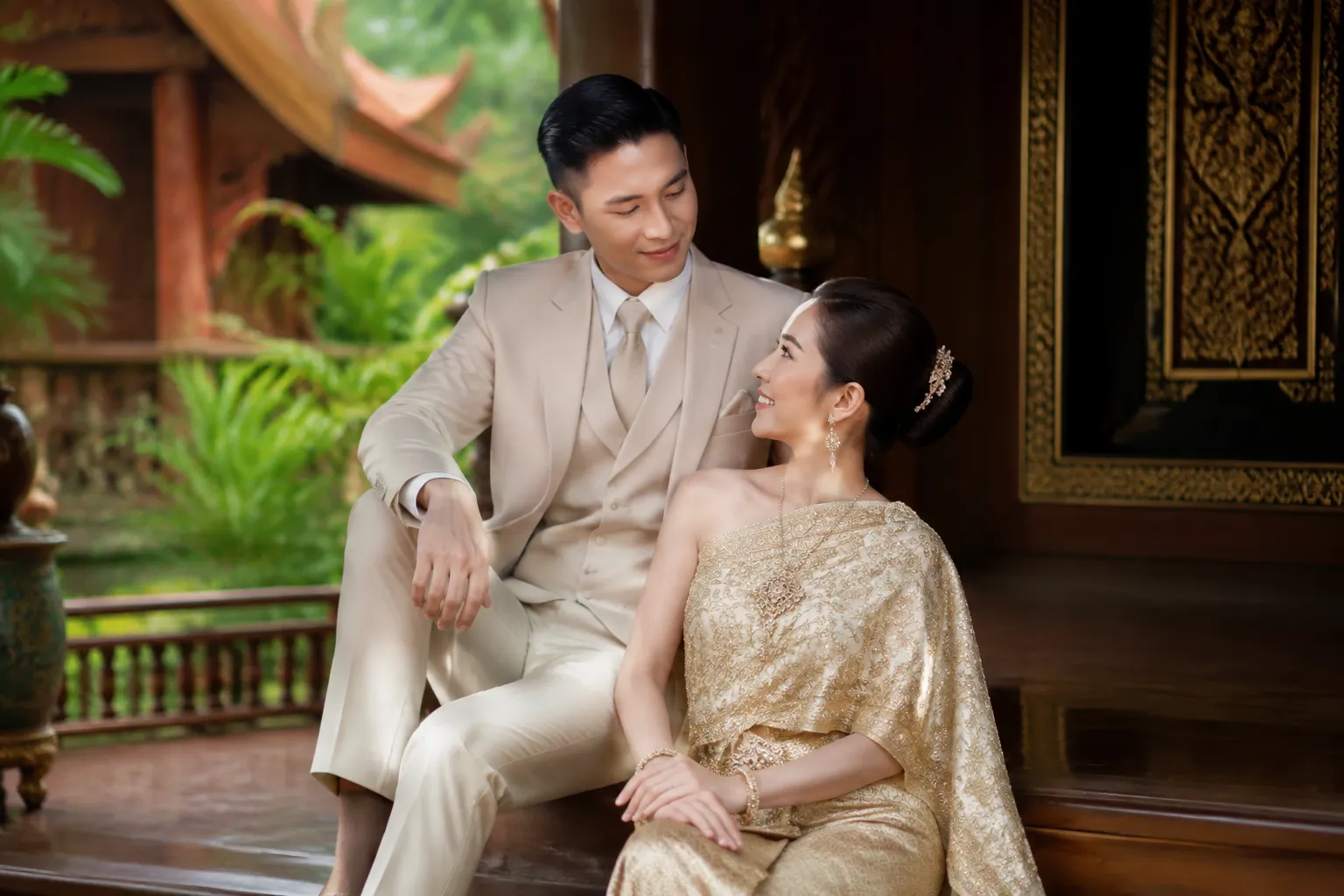
A complete-outfit test is more informative than trying on the main garment for a few minutes. Wear the outer garment, lining, underlayers, shoes, accessories, head covering, and sash that will form part of the ceremony outfit.
- Wear the outfit for a sustained period.
- Walk at a pace similar to the planned ceremony or procession.
- Sit, stand, turn, raise the arms, and pose for photographs.
- Spend time in both shade and the planned outdoor area when possible.
- Check the garment under natural and indoor lighting.
- Inspect likely mark zones at the end of the test.
- Note which layer becomes damp first and whether the moisture remains visible.
- Repeat the test after any tailoring change.
Photographs can reveal marks that are difficult to notice in a mirror. Ask a trusted person or the photographer to check the back, underarms, neckline, and waist from normal portrait distances.
This is a planning test, not proof of how the outfit will behave on the wedding day. Temperature, humidity, wind, movement, nerves, timing, and individual sweating patterns may differ.
Plan Photography, Shade, and Cooling
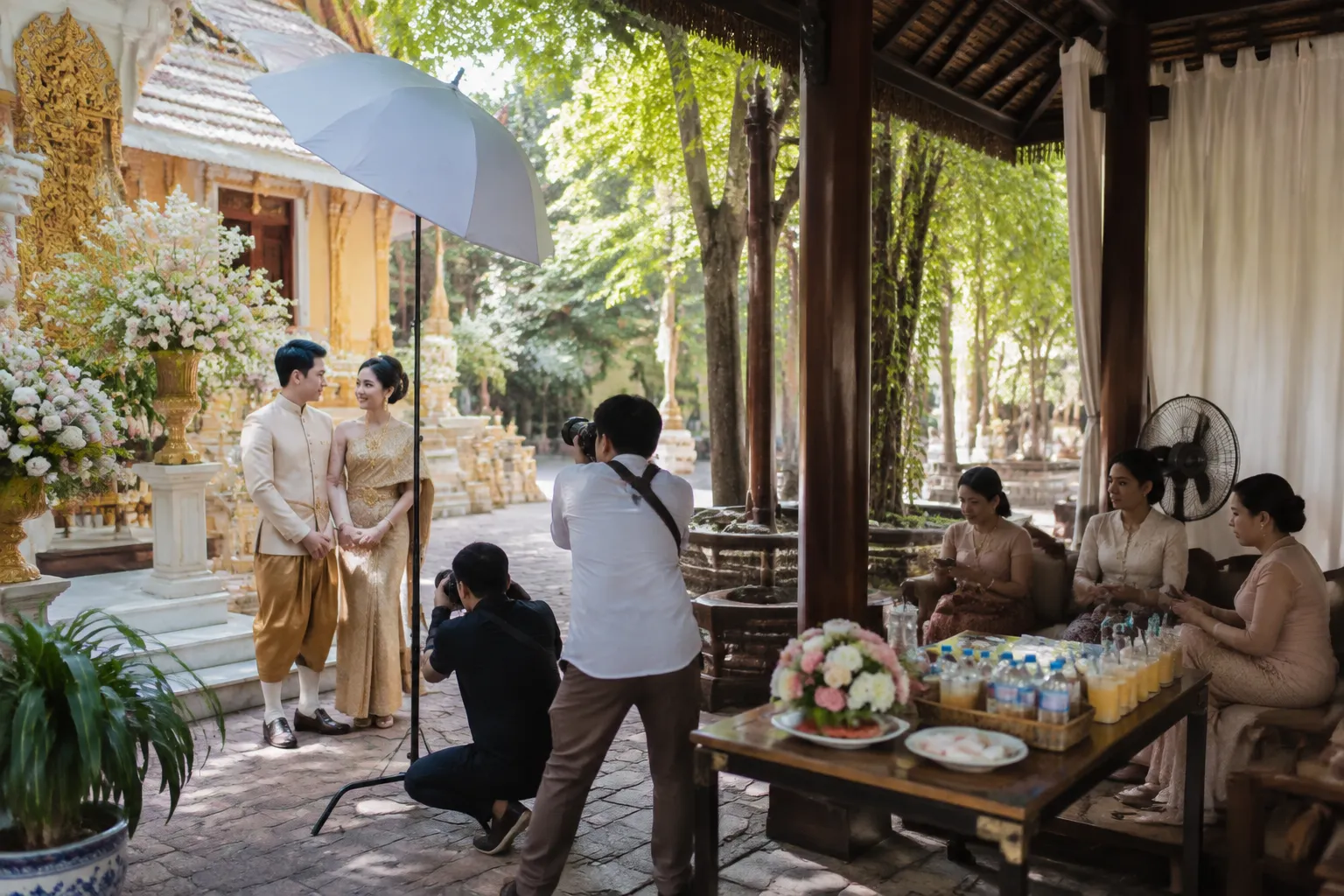
Outdoor portraits can extend the time spent in formalwear. Coordinate with the photographer and venue in advance so the schedule includes shade, ventilation, and short opportunities to cool down.
- Which photographs will be taken outdoors?
- Can portraits be scheduled for a cooler part of the day?
- Is there a shaded waiting area near the photo location?
- Can the couple return indoors between groups?
- Where can the outfit be checked or adjusted privately?
- Can family photographs be grouped to reduce repeated outdoor waiting?
- Is a nearby room available for airflow or cooling?
Shade, rest, cooling access, and water are sensible considerations in hot environments. General heat-planning material is not a set of wedding rules or individualized health instructions, so coordinate the practical arrangements with the venue and planner.
Keep a Tested Backup Garment
A backup plan is useful when the day includes an outdoor procession, multiple venues, or several hours of photography. Agree in advance with the tailor, venue, planner, and family about what may be changed and when.
Depending on the outfit, the backup could be:
- A replacement shirt or blouse
- A spare inner layer
- An additional sash or scarf
- A second removable outer piece
- A duplicate accessory that can be changed if damp
- A garment bag containing the agreed replacement
Keep it in a private, accessible, reasonably cool location. The designated helper should know when it may be used and whether the ceremony leader or family needs to be consulted. Test the replacement with the rest of the outfit because a different fit can create new pressure points, visible edges, or movement problems.
Antiperspirant Is an Optional Personal Step
If antiperspirant is part of your usual preparation, follow the product directions and test it well before the wedding. Trying a new product for the first time on the event day makes it harder to separate clothing problems from a skin reaction.
Stop using it if burning, redness, or other irritation develops. For persistent reactions, recurring irritation, or concerns about excessive sweating, seek advice from a qualified clinician or dermatologist. Product use should remain one optional part of preparation; it does not replace suitable clothing, shade, cooling access, or a backup plan.
What Textile Terms Can Tell You
Textile discussions may refer to absorption, wicking, spreading, drying speed, water-vapor permeability, or evaporative resistance. These terms are related but not interchangeable.
- Absorption concerns how moisture is taken into a material.
- Wicking concerns movement of liquid through or along the material.
- Spreading concerns how widely moisture moves across a surface.
- Drying concerns how moisture leaves the material.
- Water-vapor permeability concerns movement of vapor through fabric.
- Evaporative resistance concerns how much clothing impedes evaporation.
Laboratory and human-sweat studies can help explain why clothing construction and moisture distribution matter. They cannot establish that a particular silk, cotton, synthetic, blended, lined, or traditional-style outfit will prevent visible sweat marks. Ask what was tested, on which garment, under what conditions, and whether the result applies to the finished outfit you will wear.
Wedding-Day Check
- Confirm that every layer is the planned layer.
- Check the underarms, upper back, chest, waist, and neckline.
- Make sure the wearer can sit, walk, turn, and raise the arms.
- Confirm access to shade, airflow, water, and a private cooling space.
- Place the backup garment where the designated helper can reach it.
- Tell the photographer which parts of the schedule are outdoors.
- Agree with the venue or planner when a cooling or changing break can occur.
- Ask the family or ceremony leader before making a visible adjustment during a formal sequence.
The aim is to reduce avoidable visible marks while keeping the outfit manageable and respectful of the planned ceremony. Weather checks, complete-outfit testing, coordinated photography, cooling access, and local confirmation provide a more useful planning basis than a fabric label or a single product claim.
Sources
- Thailand Climate
- Heat and Clothing
- How to Choose and Use Antiperspirants
- Exploring the effect of clothing moisture content on heat and moisture transfer from the human body using a sweating thermal manikin
- Spatial and temporal migration of sweat: from skin to clothing
- The Role of Sports Clothing in Thermoregulation, Comfort, and Performance During Exercise in the Heat: A Narrative Review
- Climate Warming and Occupational Heat and Hot Environment Standards in Thailand