Rainy Season Thai Wedding Attire Tips
For a rainy-season Thai wedding, choose formal clothing that remains comfortable in heat, manageable during wet-weather travel, and appropriate for the ceremony setting. Lightweight layers, secure footwear, and a simple rain plan are usually more practical than delicate fabrics or highly structured outfits.
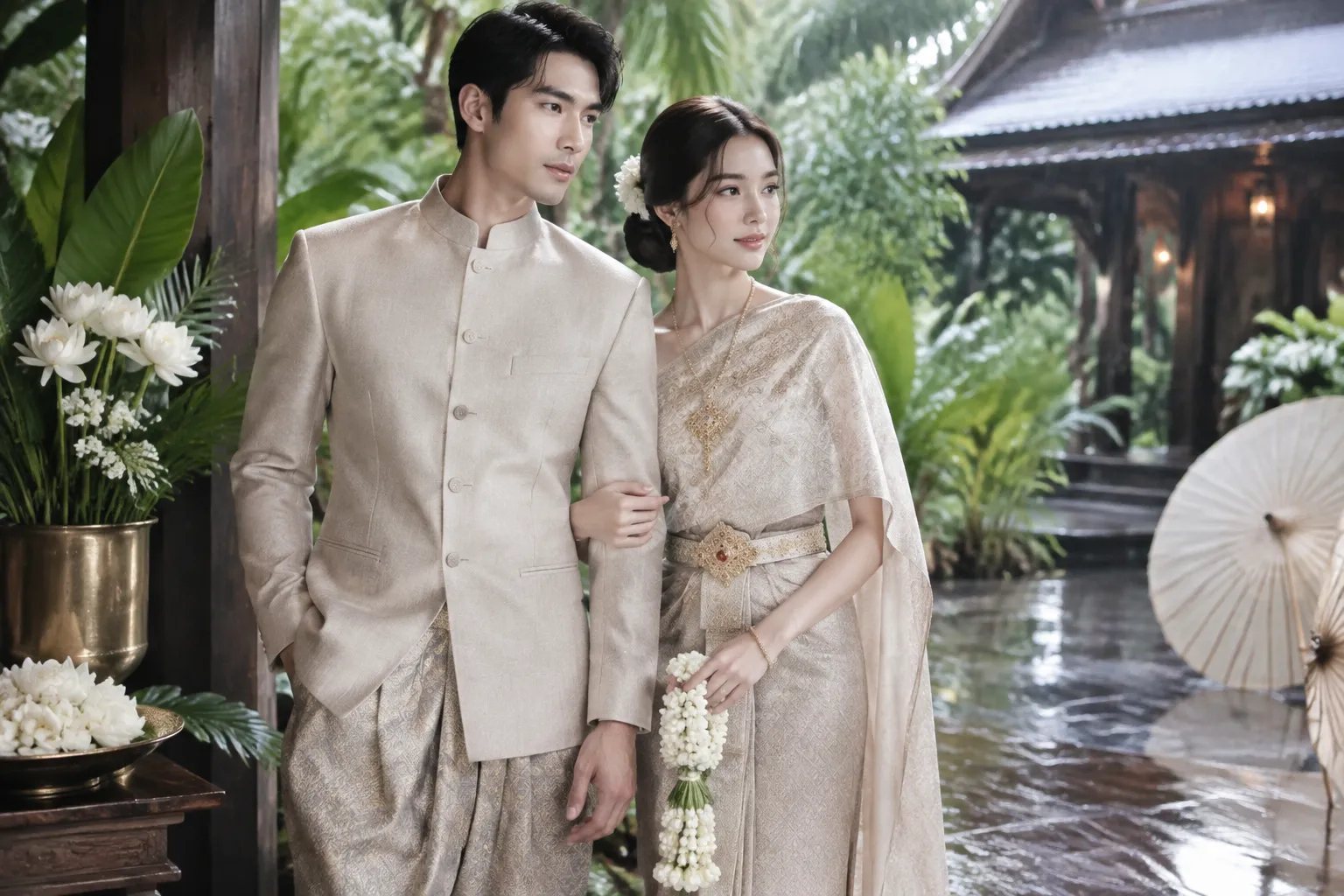
First confirm the schedule with the couple or family contact. A temple visit, Thai Buddhist blessing, khan maak procession, rod nam sang water-pouring ceremony, formal reception, or several venue changes can each affect what is comfortable and respectful. Expectations may differ by family, region, ceremony leader, temple, and venue.
Start With the Ceremony Setting
The same outfit may suit an indoor reception but become awkward during an outdoor procession or temple visit. Before choosing clothing, ask:
- How much time will guests spend outdoors?
- Is a temple or other religious setting included?
- Will the route involve grass, gravel, stone, stairs, or wet paths?
- Will guests join a procession, receiving line, or water ceremony?
- Is there a dress code, color request, or formal theme?
- Does the couple expect traditional Thai clothing, Western formalwear, or a respectful adaptation?
Wedding images, resort packages, and formal costume studies can show terminology or styling ideas, but they do not establish expectations for every contemporary Thai wedding. Research describes Thai weddings as varied, with traditional and Western elements sometimes appearing together. When the invitation is unclear, ask the couple, a family elder, the ceremony leader, or the venue coordinator.
Choose Formal Clothing for Heat and Rain
Rainy-season weather can combine heavy rainfall with heat and humidity. Climate research describes broad seasonal patterns in Thailand, while also showing meaningful differences in rainfall, temperature, topography, and monsoon influence between regions. “Rainy season” is therefore a planning context, not a forecast for one destination.
Look for clothing that:
- Allows comfortable movement between indoor and outdoor spaces
- Does not become excessively heavy when damp
- Matches the invitation’s level of formality
- Can be covered during short transfers
- Remains presentable if the day becomes warm or humid
- Does not need complicated adjustments during the ceremony
The available material does not establish one universally preferred fabric, color, cut, or outfit for rainy-season Thai weddings. Treat fabric choice as a comfort and logistics decision, then confirm cultural or family-specific preferences separately.
What Guests Can Wear
Depending on the invitation, a weather-conscious formal outfit might be a tailored dress, smart jumpsuit, lightweight suit, formal trousers with a polished shirt, or another coordinated look. The ceremony setting and the couple’s request should guide the final choice.
- Read the invitation for formality, colors, and ceremony details.
- Ask whether a temple visit or Buddhist blessing is included.
- Check whether the venue is indoors or partly exposed to rain.
- Choose clothing that permits easy walking and remains comfortable in heat.
- Plan shoes and outer layers around the route between locations.
- Pack a modest backup item if the schedule involves substantial outdoor travel.
A formal Thai national costume or a Western bridal image should not be treated as the default for every guest. Costume research identifies several formal Thai styles used in ceremonial contexts, including weddings, but that terminology does not determine what a particular guest should wear.
If the couple requests Thai dress, ask whether they mean a specific formal style, a color direction, a locally selected outfit, or a Thai-inspired adaptation. These are different instructions and may require different preparation.
If a Temple Is Included
A temple setting calls for closer confirmation than a hotel reception. The supplied research does not provide a current, universal temple dress guide, so ask the temple or ceremony leader about local expectations.
- Whether shoulders or knees should be covered
- Whether guests will sit on the floor
- Whether shoes must be removed in a particular area
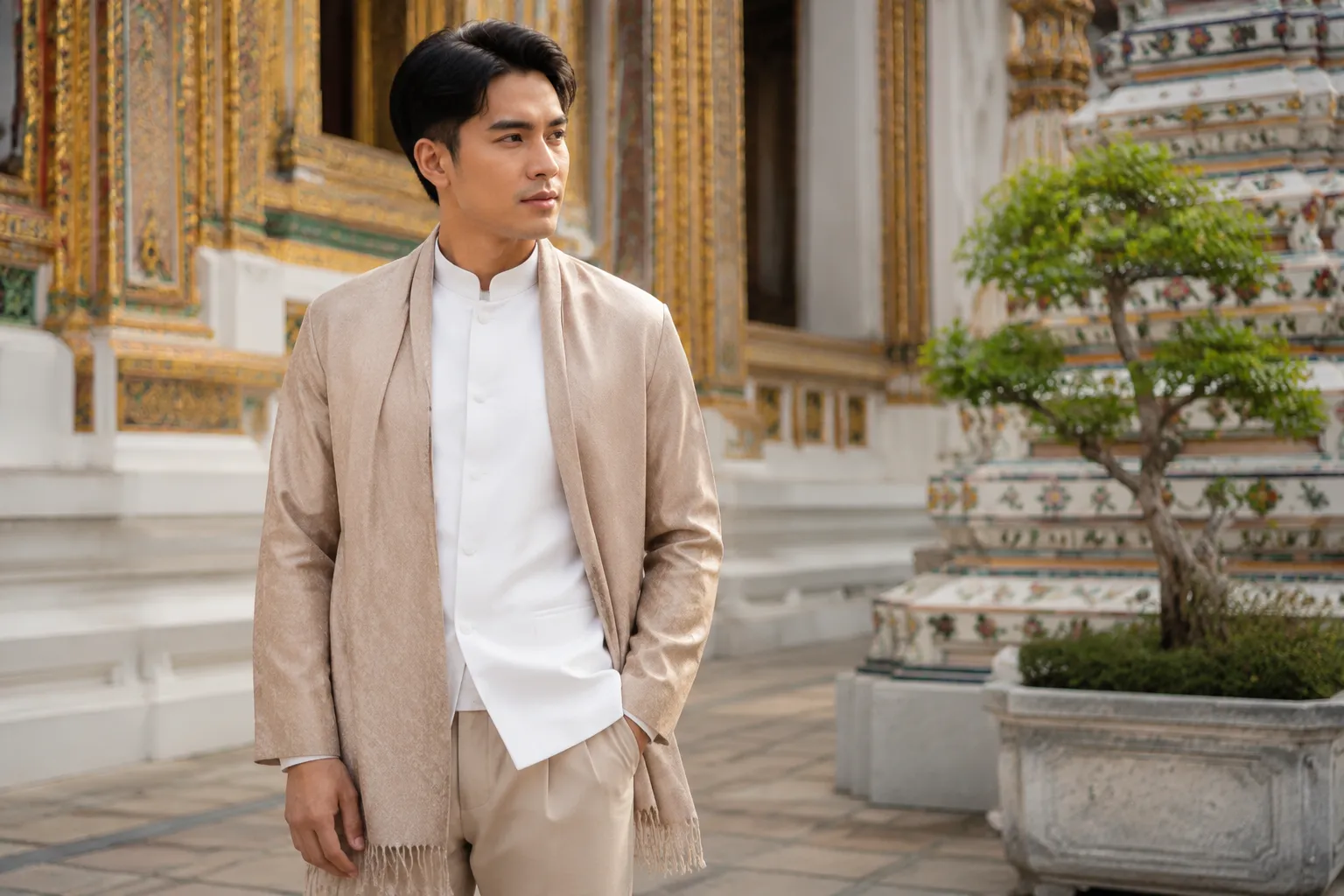
- Whether a shawl, overshirt, or other covering would be useful
- Whether photography is restricted during any part of the ceremony
A removable layer may help when the day includes both a temple and a reception, but its suitability should be confirmed rather than assumed. Ask whether guests should dress for the religious portion, the reception, or both.
Plan for a Procession or Water Ceremony
Some Thai weddings include a khan maak procession in which the groom’s side travels toward the bride’s family. The sequence and participation can vary. If you will walk, participate, or photograph the procession, prioritize secure shoes, clothing that allows standing and movement, a small hands-free bag, and a cover for sudden rain.
Ask the family organizer or planner where participants should gather, how much outdoor movement is expected, and whether there will be time to change or dry clothing before the reception.
A rod nam sang ceremony involves water being poured over the couple’s hands by guests or elders. Whether it is included, who participates, and how it is arranged depends on the family’s schedule and preferences. If you will take part, confirm whether your sleeves, jewelry, or loose accessories could interfere, and whether you will sit, stand, or move through a receiving line.
The practical question is how the planned ceremony will work for these participants at this venue. A water ceremony does not create one universal clothing rule.
Give Footwear Its Own Plan
Wet paths, stairs, polished floors, gravel, and transport between locations can make otherwise suitable clothing difficult to manage. Before selecting shoes, find out:
- How much walking is involved
- Whether shoes may need to be removed
- Whether the route includes grass, stone, stairs, or uneven ground
- Whether covered walkways are available
- Whether a second pair can be stored nearby
- Whether formal footwear is expected for photographs
Formal shoes that stay secure may work for the ceremony, with a separate weather-ready pair for travel. This is conditional planning advice, not a universal Thai wedding etiquette rule. Ask the venue or family contact where spare shoes and wet items can be kept so they do not interfere with a procession or receiving line.
Pack for Rain Without Losing Formality
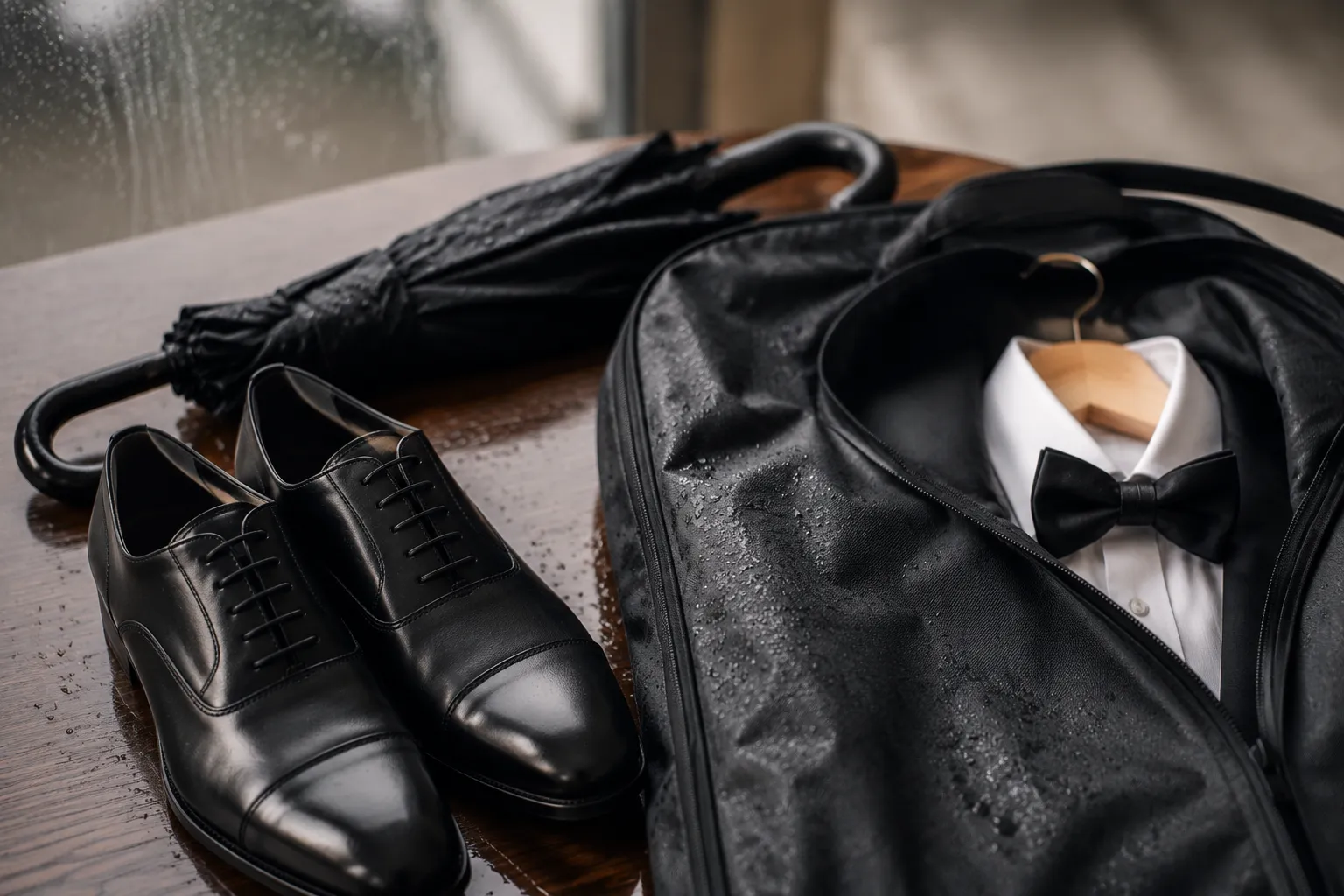
Plan for the journey to and from the ceremony as well as the photographs. Useful items may include:
- A compact rain layer
- A protective garment bag
- A small cloth for minor splashes
- A spare pair of suitable footwear
- A backup shirt, blouse, or easily changed item
- A covering for formal clothing during transport
A complete second formal look may help during a long outdoor schedule, but it is unnecessary for every wedding. Check the current local forecast and route close to the event. The available material does not provide authoritative firsthand testing of rain protection, garment performance, or footwear suitability for Thai weddings, so base the decision on the itinerary and your own travel needs.
Coordinate Couple, Attendant, and Photography Details
Couples and attendants may have more detailed requirements than ordinary guests. A wedding can combine several ceremony stages, formal Thai clothing, Western wedding clothing, and a reception look. Before finalizing an outfit, confirm which clothing belongs to each ceremony, whether colors are coordinated, whether the clothing allows sitting and walking, and where changes will take place if rain delays an outdoor portion.
Formal costume references include names such as Thai Ruean Ton, Thai Chit Lada, Thai Amarin, Thai Borom Phiman, Thai Siwalai, Thai Chakkri, Thai Dusit, and Thai Chakkraphat. These terms can help in a conversation with a specialist or family member, but they should not be used to assume that one style is expected. Ask the person coordinating the ceremony which terminology applies to the planned clothing.
Rain can change the order and location of photographs. If you are in the wedding party, ask the couple or photographer whether portraits are planned outdoors, whether a sheltered backup location exists, and when an outfit change should happen. For ordinary guests, choose clothing that stays neat and comfortable if the schedule moves indoors.
Regional Weather Changes the Details
Thailand’s northern mountains, central plains, eastern areas, southern peninsula, and coastal locations do not present identical rainy-season conditions. For a specific destination, check the local forecast, travel route, distance between venues, covered access, and the couple’s rain contingency plan.
A national seasonal label cannot replace a local forecast. Climate research explains why regional variation matters; it does not prescribe an outfit or predict the weather for a particular wedding.
Common Misunderstandings
“A Thai wedding requires traditional Thai clothing.”
Not necessarily. Contemporary weddings may combine traditional and Western elements, and a particular family may request formal Thai clothing, Western formalwear, both, or no special clothing beyond the invitation. Confirm the request with the couple or family contact.
“A resort wedding image shows the normal dress expectation.”
A polished image may represent a styled package, magazine presentation, or carefully arranged photography. Use it for inspiration or terminology, not as a universal dress guide.
“Rainy season means the same clothing plan everywhere.”
The destination, exact venue, transport, and outdoor schedule matter more than the season label alone. Check the local forecast and ask the venue about covered access.
“A historical wedding example explains what couples should wear today.”
Historical material can show that ceremony formats and clothing expectations change. A narrow historical case is useful for understanding that distinction, not for setting current attire guidance.
A Short Confirmation Message
I am planning my outfit for the wedding and want to dress appropriately for each part of the day. Will there be a temple, procession, or water-pouring ceremony? Is there a preferred level of formality, color, or Thai-style clothing? I am also planning for rain and would like to know how much walking or outdoor time to expect.
Final Attire Check
- Ceremony sequence and venue locations
- Any temple setting or shoe-removal arrangement
- Requested formality, colors, or clothing style
- Amount of outdoor walking
- Current local weather forecast
- Rain cover and backup footwear
- Place to change or store wet items
- Photography or ceremony restrictions
The most workable rainy season Thai wedding attire is clothing that fits the stated ceremony, respects the family’s request, and remains manageable in the actual weather and venue conditions. Current temple, venue, celebrant, and family guidance is not covered by the available public material, so confirm those details locally before finalizing the plan.
Sources
- Fake Cake: Thai Weddings
- A Study on Korean-Thai Traditional Wedding Dresses
- Weddings and Thai Women: The Construction of Weddings and the Portrayal of Thai Women Through Wedding Stories in Thai Wedding Magazines
- Formal Thai National Costume In The Reign Of King Bhumibol Adulyadej
- Investigation of Temperature, Precipitation, Evapotranspiration, and New Thornthwaite Climate Classification in Thailand
- Advancements in daily precipitation forecasting: A deep dive into daily precipitation forecasting hybrid methods in the Tropical Climate of Thailand
- The Policy and Politics of Influencing Interbreeding to Increase Population during the Regime of General Phibun and Its Unintended Consequence on the Status of Thai Women