
Thai Silk Wedding Dress in Hot Weather
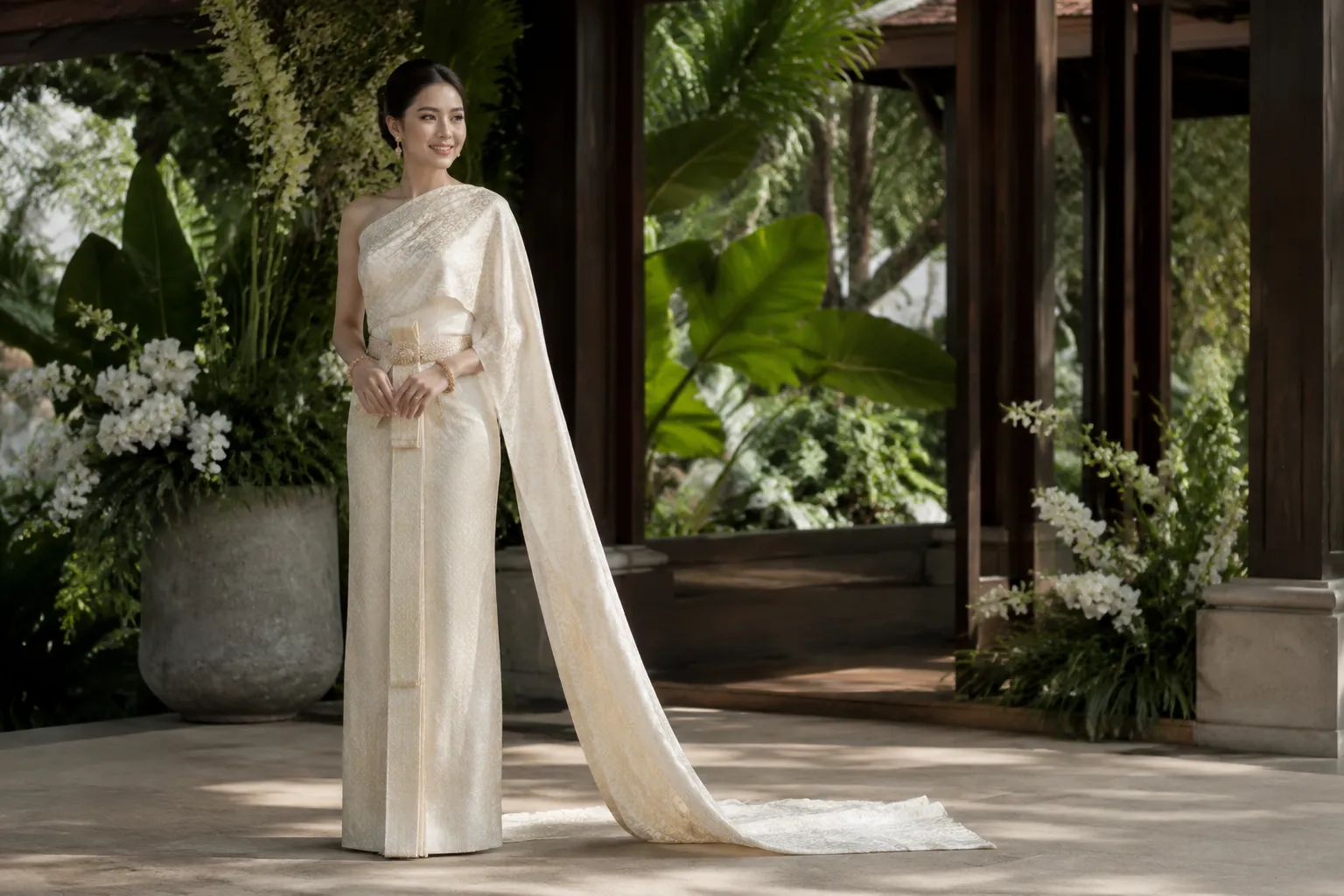
A Thai silk wedding dress can work for a hot-weather ceremony, but the word “silk” does not tell you whether a particular gown will feel manageable. The practical decision depends on the complete garment: fabric composition, lining, interfacing, boning, embroidery, sleeve coverage, fit, total layer count, time outdoors, humidity, airflow, and access to cool spaces.
Before committing, ask for the construction details in writing, try on the substantially completed gown with the intended undergarments, practice the ceremony movements, and map every outdoor, shaded, and air-conditioned part of the schedule. If the dress feels restrictive or difficult to manage during that trial, discuss alterations, removable layers, or an outfit change before the final fitting.
Start With the Actual Fabric and Construction
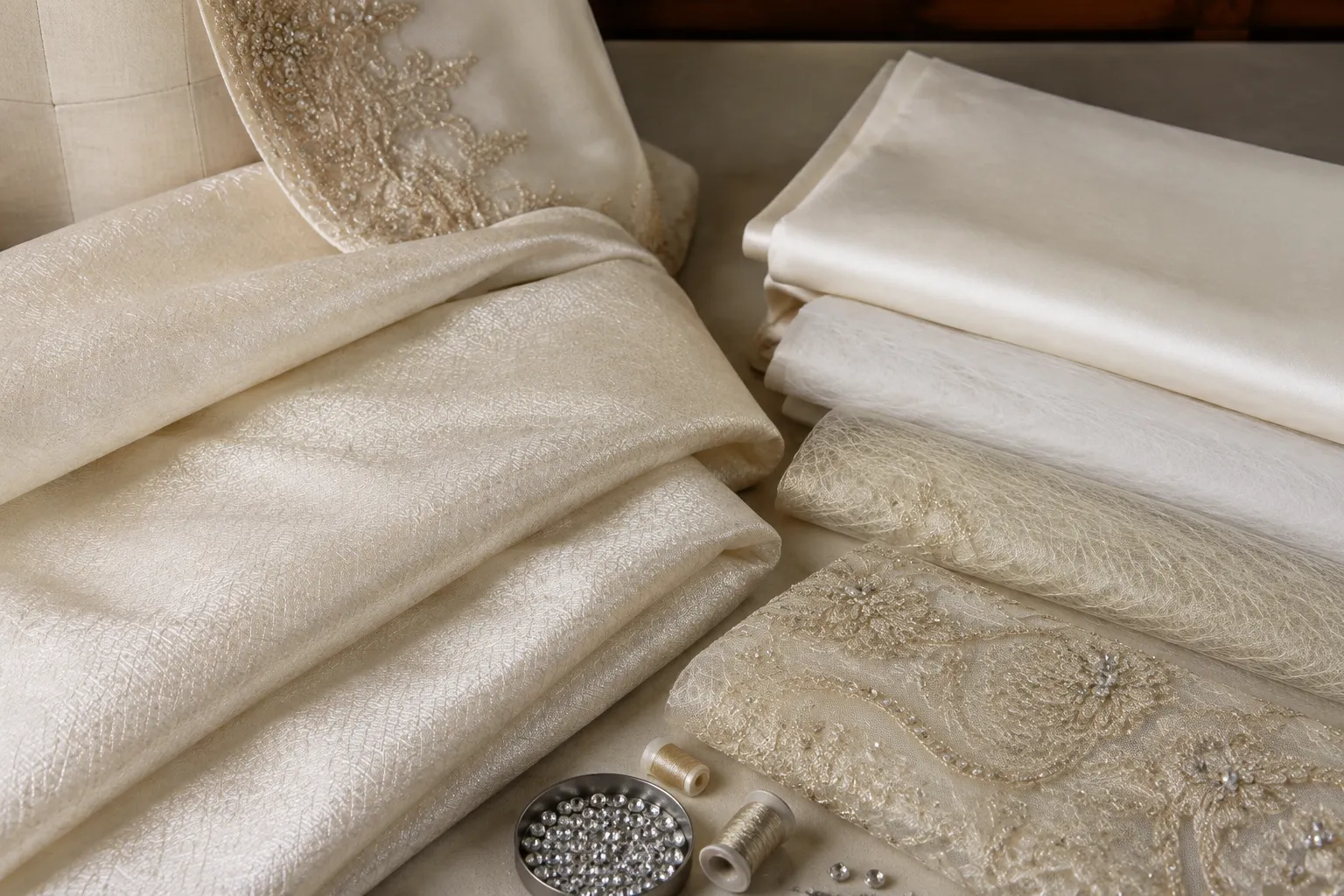
“Thai silk,” “lightweight,” “airy,” and “structured” are broad market descriptions rather than complete specifications. Ask the dressmaker or seller to identify:
- Exact fiber composition, including blend percentages
- Fabric or weave name, if known
- Approximate fabric weight and surface finish
- Shell, lining, and interlining materials
- Where fusible interfacing has been added
- Boning, bust cups, waist stays, padding, or other internal support
- Number of layers at the bodice, waist, skirt, and sleeves
- Embroidery, metallic thread, crystals, pleating, or appliqué
- Train, overskirt, crinoline, shawl, jacket, or sabai
- Closure type and possible alteration points
- Cleaning, pressing, storage, rain, and transport requirements
The outer cloth is only one part of the clothing system. A relatively light Thai silk can become a highly structured gown when combined with a full lining, reinforced bodice, fitted sleeves, dense embellishment, and several skirt layers.
Research on selected handwoven Thai textiles has examined thermal comfort and the effect of adding fusible backing. It offers a useful construction clue: material added behind a woven shell can change thickness and airflow. That evidence does not describe every Thai silk fabric, and a fabric-level measurement cannot predict the comfort of a finished, lined bridal gown.
Examine the Lining and Layer Count
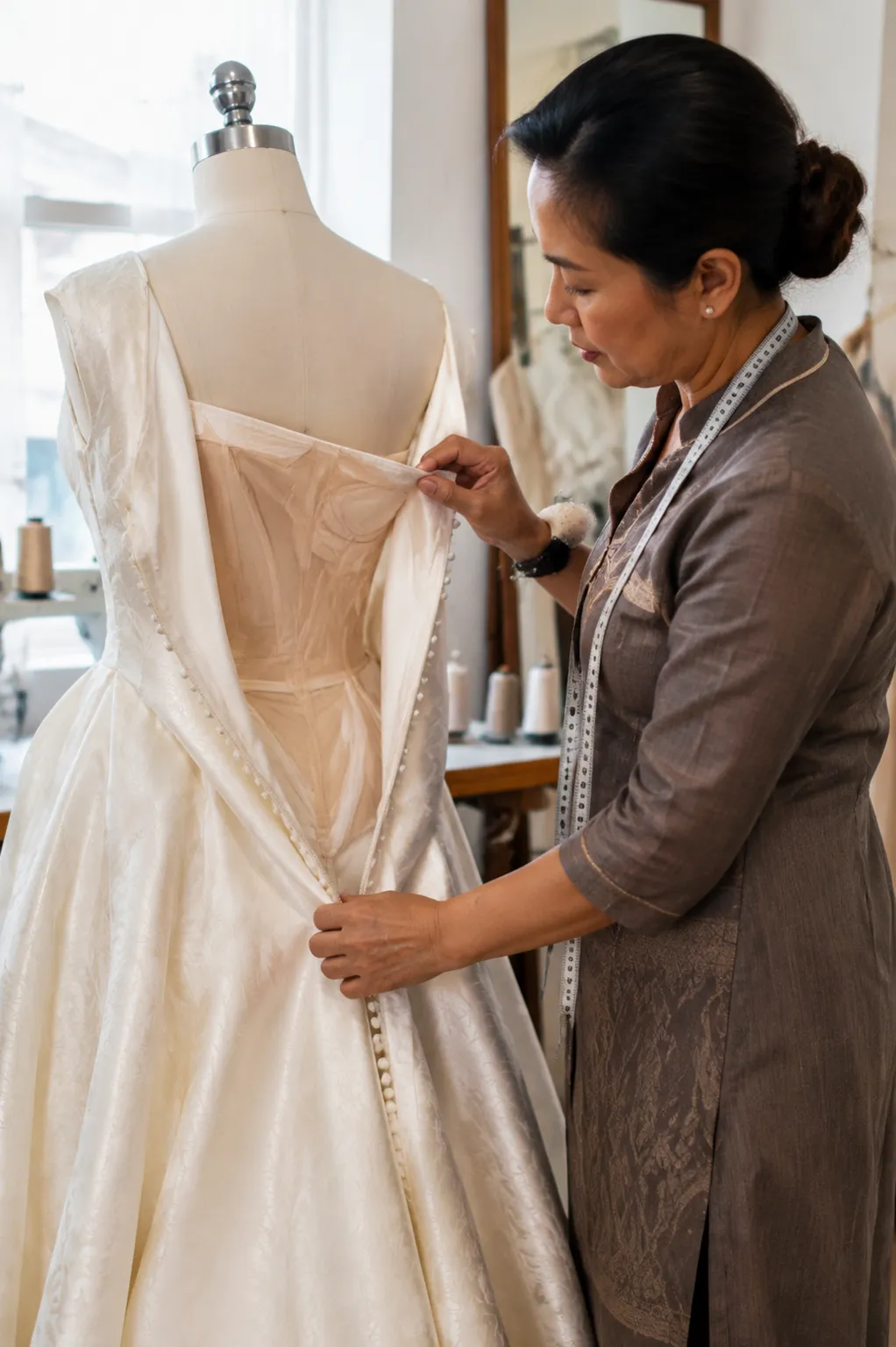
The lining deserves as much attention as the visible silk. Ask where the dress is fully lined, where extra backing is used, and whether different sections can be constructed differently. A bodice may need support for fit and opacity while a skirt may use fewer layers, but that is a dressmaking decision rather than a universal rule. Removing structure can affect the silhouette, seam stability, drape, or support.
| Dress area | Construction questions |
|---|---|
| Bodice | Is it lined, interlined, boned, padded, or tightly fitted? |
| Waist | Are there overlapping layers, a waist stay, or dense pleating? |
| Skirt | How many shell, lining, underskirt, and support layers are present? |
| Sleeves | Are they fitted, lined, embroidered, or detachable? |
| Train | Can it be bustled securely, removed, or carried during movement? |
| Draped elements | Do they add layers across the torso, shoulder, or waist? |
When a seller calls a gown lightweight, ask whether that description includes the finished layer count and embellishment. There is no well-supported fabric-weight or temperature threshold that determines hot-weather suitability by itself.
Test the Substantially Completed Gown
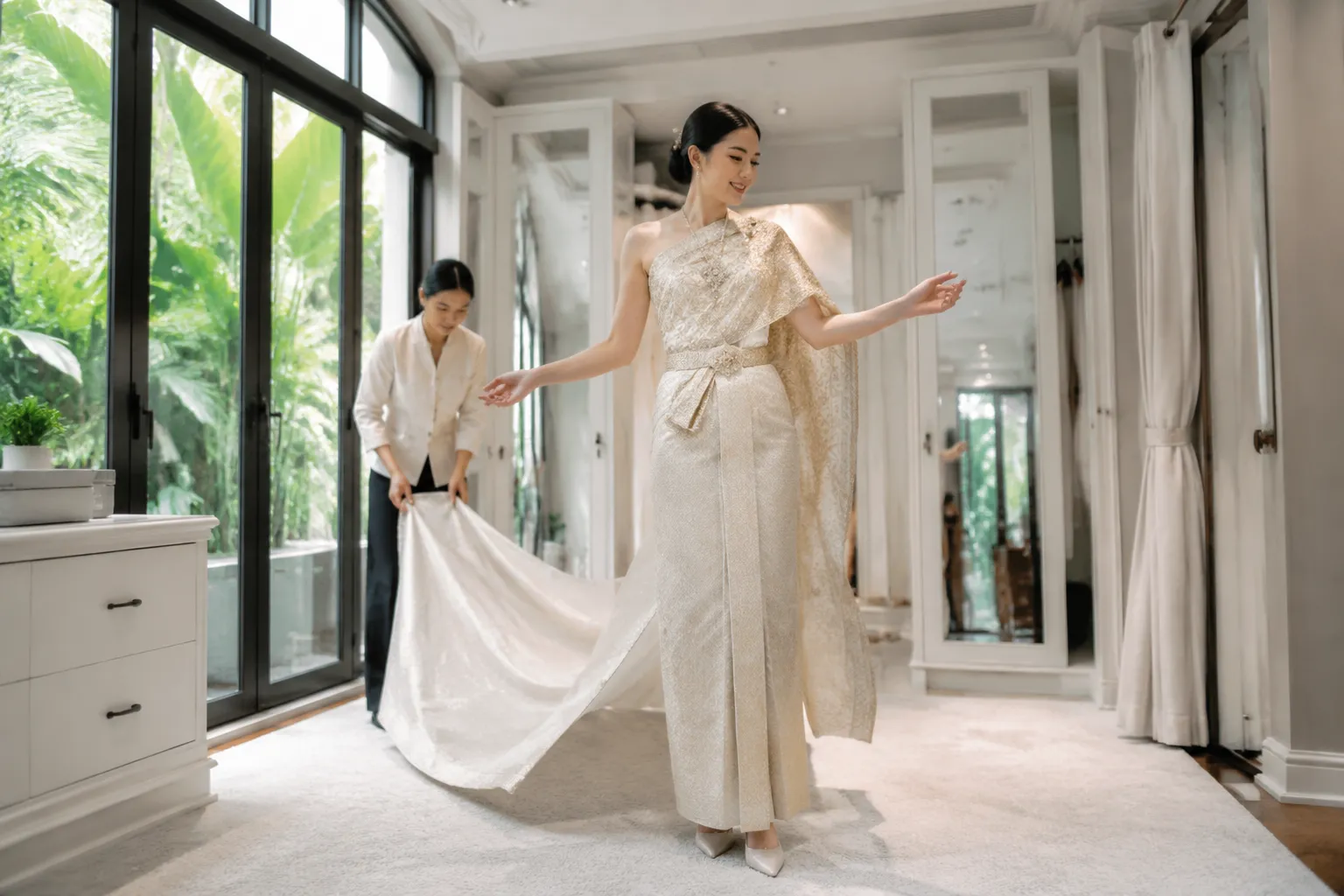
A short fitting in a cool room cannot answer the whole question. Arrange a longer trial after the main construction, lining, and support elements are in place. Use the planned undergarments, shapewear, shoes, jewelry, and removable layers wherever practical.
- Stand in the gown long enough to move beyond the first impression.
- Walk at both processional and ordinary pace.
- Sit in seating similar to that used at the ceremony.
- Rise without assistance, then repeat with the expected helper.
- Raise both arms and bring your hands together at chest level.
- Bend your elbows and reach forward for greetings or ceremonial actions.
- Kneel or sit on the floor only if that position is part of the confirmed ceremony sequence.
- Climb any steps expected at the venue.
- Walk with the train down, bustled, and carried.
- Remain still as though waiting for photographs or the next ceremony stage.
Check for restriction at the shoulders, underarms, ribcage, waist, and knees. Notice whether the lining twists, the skirt clings, the bodice shifts, or the fabric becomes translucent in strong light. Moisture visibility, static, cling, opacity, and visible marks should be treated as fitting questions because the available material does not establish one response for all Thai silk fabrics and linings.
Where practical, repeat part of the fitting in conditions that resemble the expected warmth. The purpose is to observe the completed gown during a realistic workload, not to conduct an extreme endurance test.
Map the Dress Against the Ceremony Schedule
Hot-weather suitability depends on exposure and duration as well as construction. Separate the wedding day into actual clothing periods instead of labeling the entire event simply “indoors” or “outdoors.” A schedule may include:
- Dressing and pre-ceremony portraits
- Outdoor arrivals or a khan maak procession
- Door games and waiting periods
- A monk blessing or another indoor ceremony
- Rod nam sang water pouring
- Family photographs
- Couple portraits in direct sun or open shade
- Travel between locations
- Reception entrance, meal, and dancing
Confirm how long the bride will wear the gown during each period and where delays are likely. A short outdoor passage followed by an air-conditioned room creates a different planning problem from extended portraits, waiting, travel, and a reception in the same dress.
For an outdoor ceremony, ask the venue or planner:
- Where will the bride wait before entering?
- Is that space shaded and ventilated?
- Which areas have air conditioning or fans?
- Does the ceremony position receive direct sun?
- Can portraits move into open shade?
- How far is the walk from transport to the ceremony?
- Is a private changing room nearby?
- Can water and personal items remain accessible?
- Who will manage the train, overskirt, shawl, or jacket?
- What is the wet-weather route?
- When will the destination-specific forecast be reviewed?
A single city forecast or seasonal description cannot represent another location, time of day, or venue. Review conditions closer to the wedding date and adjust the portrait or waiting plan when necessary.
Plan Cooling Around the Gown
Do not rely on the fiber label to manage heat. Build cooling opportunities into the ceremony sequence: a cooled dressing room, shaded transport pickup, fans where the venue permits them, shorter outdoor portrait blocks, indoor recovery periods, and a private place to adjust or change the dress.
Assign one attendant to carry the train and another person, where needed, to coordinate timing with the planner or photographer. “There will be air conditioning” does not establish that the waiting room, ceremony position, portrait route, and changing space will all be cooled. Ask which rooms are available, when cooling begins, and whether doors will remain open during guest movement.
Photography can create more exposure than the ceremony itself. Agree in advance on priority photographs, shaded alternatives, and a stopping point so that a nominally short outdoor session does not become a prolonged period in a fitted, multilayer gown.
Decide Whether Alterations Can Reduce the Burden
When the completed dress feels too warm, bulky, or restrictive, ask the dressmaker which changes are structurally feasible. Possible discussion points include:
- Reducing unnecessary skirt layers
- Revising sleeve lining or sleeve fit
- Limiting interfacing to areas that need support
- Adding movement allowance at the shoulders or knees
- Creating a secure bustle for the train
- Making an overskirt, jacket, shawl, or other layer removable
- Adjusting closures without weakening support
- Preparing a second outfit for the reception or extended portraits
These are options to evaluate, not tested solutions for every gown. A change that reduces one layer may affect opacity, drape, seam control, or the intended silhouette. Ask what each alteration changes and test the revised gown again. Complete major comfort-related alterations early enough to allow another fitting before additional backing, embroidery, or support is added.
Confirm Family and Ceremony Preferences
Thai bridal attire terminology can start a useful conversation, but it does not settle what a particular family or ceremony expects. Chut Thai is not a synonym for every Thai silk wedding dress, and families may differ in their preferences for silhouette, shoulder coverage, neckline, sleeves, draping, color, and changes of clothing.
Show the proposed finished look to the relevant family members and, when applicable, the ceremony leader or venue. Ask:
- Is this neckline and shoulder treatment suitable for the planned setting?
- Is a jacket, shawl, or draped element expected during a particular stage?
- Can that layer be removed afterward?
- Will the bride need to sit, kneel, walk in procession, or receive water while wearing it?
- Are there family photographs for which a particular element should remain in place?
- Is an outfit change acceptable within the schedule?
This matters especially when Thai textiles are combined with a contemporary or Thai-inspired silhouette. Visual labels and seller descriptions may mix unrelated garment traditions, so photographs alone should not be treated as confirmation of material or ceremonial suitability.
When an Outfit Change Makes Sense
Consider a second outfit when the main gown is heavily structured, the schedule includes prolonged outdoor exposure, or the bride cannot move comfortably during the completed-garment trial. It may also help when a formal ceremonial look includes removable layers that would be difficult to manage through travel, dinner, and dancing.
Schedule the change rather than leaving it as a vague possibility. Confirm the changing room, travel time, assisting person, storage method for the first dress, hair and jewelry adjustments, photographs that require the first outfit, and the effect on the reception entrance.
If family members expect a specific garment element during a ceremony, agree in advance about when it may be removed. This keeps the comfort plan aligned with family preference without treating one attire arrangement as universal.
What the Available Evidence Can and Cannot Tell You
Published textile research helps explain why weave, porosity, thickness, backing, humidity, and air movement can matter. Garment research also supports treating fit, drape, pattern, and construction as interacting variables. The available material does not include a completed Thai silk wedding-dress trial during a hot, humid ceremony.
It therefore cannot establish that Thai silk is inherently cooling, that one lining suits every gown, or that a particular fabric weight or temperature marks a universal boundary. Test the finished garment under conditions that can reasonably be reproduced, then confirm the venue and ceremony details with the people responsible for them.
Final Decision Checklist
A particular Thai silk wedding dress is a workable hot-weather choice when you have:
- Verified the fiber content and fabric details
- Reviewed the lining, backing, support, embellishment, and total layers
- Tested the substantially completed gown with the intended undergarments
- Practiced walking, sitting, raising the arms, and relevant ceremony movements
- Checked moisture visibility, cling, opacity, and movement
- Mapped outdoor exposure, waiting, travel, portraits, and reception time
- Confirmed shade, airflow, cooling, and changing access with the venue
- Agreed on alterations, removable layers, or an outfit change
- Confirmed attire preferences with relevant family members and ceremony participants
Thai silk may suit a hot-weather wedding, including one with limited outdoor portions, but suitability belongs to the finished gown and the actual schedule. Make the decision after checking construction, movement, venue conditions, cooling arrangements, and family preferences together.
Sources
- Traditional handwoven textiles: a case study of thermal comfort
- Traditional Handwoven Textiles: A case study of thermal comfort
- Investigation of Air Permeability of Handwoven Fabrics
- Quantitative Study on the Relationship Between the Thermal Comfort Performance of Textile and Apparel Materials and Their Thermodynamic Properties
- The Effects of Woven Fabric Structures and Thermoresponsive Finishes on Thermal Comfort Properties
- Effects of Laundering and Washing Temperatures on Commercially Dyed Thai Silk Fabrics
- Perbedaan Hasil One Shoulder Dress Ukuran M ditinjau dari Bahan Thai silk, Rayon, dan Polyester