Thai Wedding Detail Shot List for Accessories
A useful list of Thai wedding detail shots starts with confirmed objects, not a generic inventory. For each accessory that will be present, record when it can be photographed, who holds it, where it will be, and whether the photographer may move or arrange it.
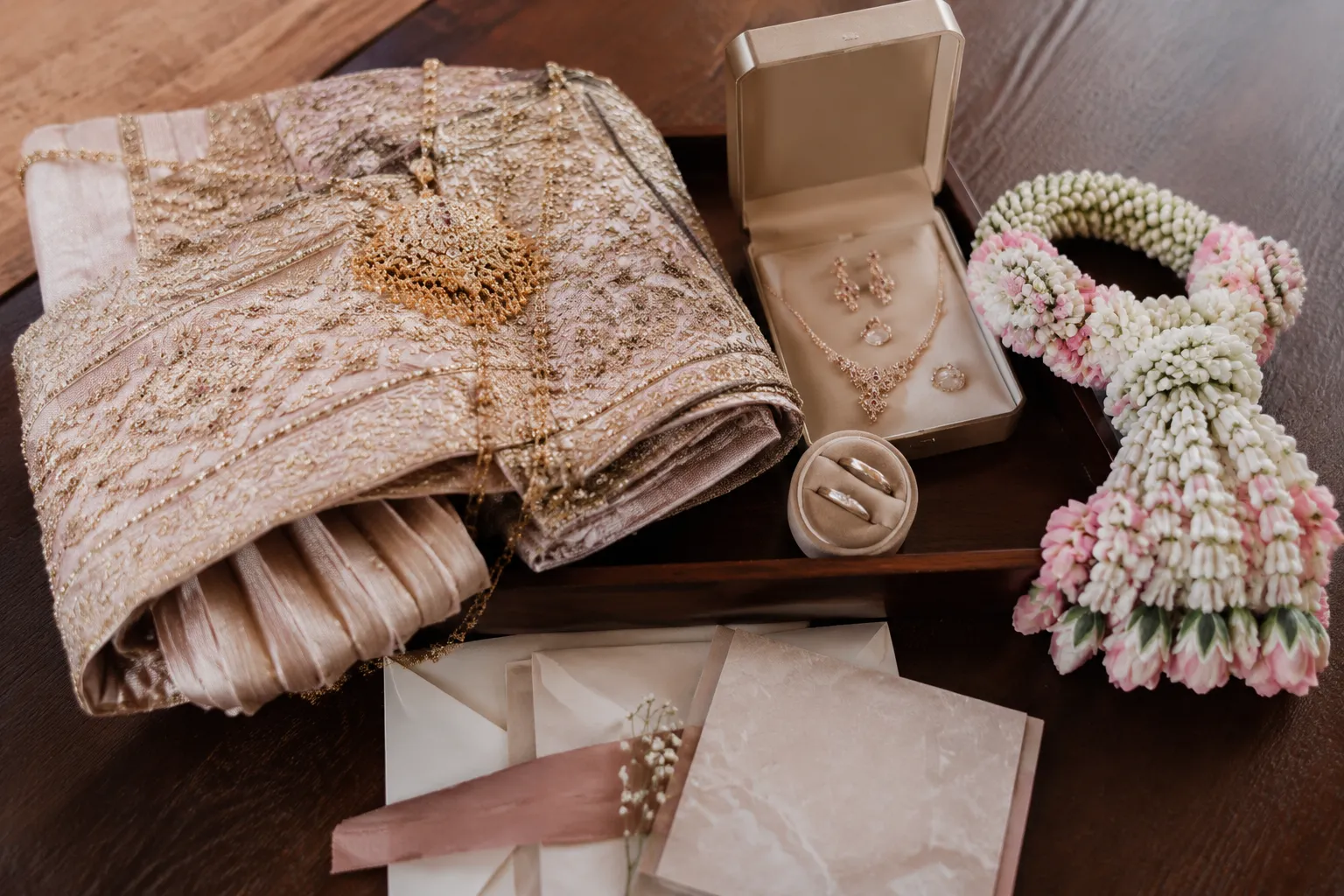
Possible subjects include attire, jewelry, floral pieces, invitations, rings, khan maak procession items, water-pouring accessories, family gifts, reception stationery, and personal keepsakes. These are examples rather than expected elements. The final list should reflect the couple's ceremony sequence and family preferences, with uncertain details confirmed by the relevant family member, ceremony leader, planner, venue, or photographer.
Thai Wedding Detail Shot List
Use this table as a working checklist. Delete anything that does not apply and replace broad categories with the names of the objects that will actually be present.
| Detail to confirm | Possible photographs | Planning window | Confirm with |
|---|---|---|---|
| Wedding attire | Full garment, fabric, embroidery, fastenings, coordinated pieces | After preparation and before dressing | Couple, dresser, or stylist |
| Shoes and personal accessories | Individual items, matching pair, details beside the attire | Before the items are worn | Couple or stylist |
| Jewelry and watches | Full set, individual pieces, presentation box, item being worn | Before or during dressing | Wearer and the person holding the items |
| Rings, when included | Rings together, boxes, close details, exchange or placement | Before guests arrive and during the relevant moment | Couple, ring custodian, and ceremony leader |
| Hair and floral accessories | Individual pieces, placement, garlands, bouquet, finished appearance | After delivery and before or during styling | Wearer, stylist, florist, or planner |
| Invitations and stationery | Invitation suite, envelopes, program, place cards, menu cards | Before the wedding day or before guests enter | Couple, stationer, or planner |
| Khan maak procession items, when included | Group arrangement, containers, decoration, hands carrying items | After preparation and before the procession | Family coordinator, procession lead, or planner |
| Door-game items, when included | Prepared barriers or tokens, participant hands, exchange moments | Before participants take position and during use | Couple, family representatives, or coordinator |
| Sinsod or family gifts, when displayed | Wider arrangement, selected details, presentation and handling | Only during the period agreed by both families | Couple and designated family elders |
| Monk-blessing items, when applicable | Prepared setting and permitted details | Before participants enter, if access is permitted | Ceremony leader, temple contact, or venue |
| Water-pouring accessories, when included | Prepared setting, vessels, presentation pieces, hands during use | Before and during the rod nam sang sequence | Ceremony leader, family coordinator, or planner |
| Reception details | Guest gifts, cake details, glasses, table markers, guest book | After setup and before guest entry | Planner, venue, couple, or relevant supplier |
| Personal keepsakes | Family heirloom, handwritten note, photograph, memorial item | During private preparation time | Owner of the item |
| Evening accessories | Outfit changes, jewelry changes, later reception pieces | Before the change or during a scheduled portrait period | Couple, stylist, and photographer |
Record Six Details for Each Requested Photograph
An object name alone does not give the photographer enough information. Add these six planning details to every priority item:
- Presence: Will the item actually be at the wedding?
- Supplier: Who prepares, delivers, or brings it?
- Custody: Who holds it before and after use?
- Availability: When and where can it be photographed?
- Handling: May the photographer move, open, group, or arrange it?
- Priority: Is the photograph essential, preferred, or optional?
For example, “rings” leaves several questions unanswered. A workable entry names the person bringing them, gives the photographer a short access period in a specific room, and states whether the rings may leave that person's sight.
This level of detail matters most for valuable jewelry, family gifts, ceremonial pieces, and anything needed at a precise point in the ceremony.
Choose the Right Photography Window
Most accessories can be photographed before use, during use, or afterward. The clearest option depends on the object and the role it plays.
Before use
This is often the easiest period for controlled detail photographs. Attire can be photographed before dressing, stationery before guests handle it, and procession or ceremony items after preparation is complete.
Give the photographer a start time, location, and contact person. “Before the ceremony” is too broad when dressing, deliveries, room setup, and family arrivals are happening together. Include a backup period for items due to arrive on the day.
During use
Some details make more sense when they are worn, carried, presented, or used. These photographs show participant roles and ceremony context that an isolated arrangement cannot.
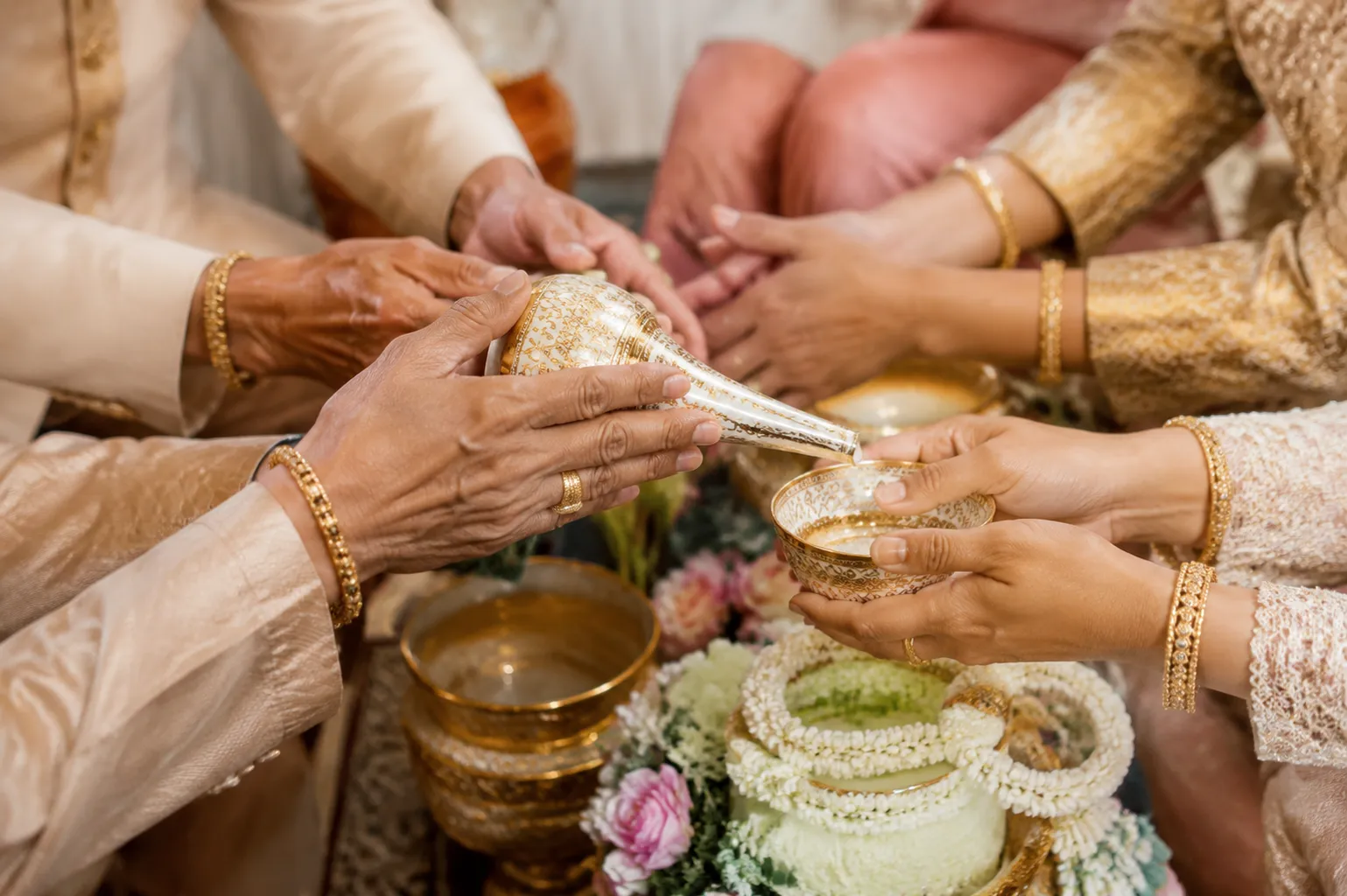
Do not rearrange ceremonial handling solely for the camera without agreement. The photographer should ask the ceremony leader where movement is permitted and prepare a position before the moment begins.
After use
An after-use photograph can recover an item missed earlier, but it is a backup rather than a dependable plan. Flowers may have been handled, gifts may have changed custody, and staff may already be clearing the setting.
Confirm who can retrieve the item and whether the area needs to be reset. Do not assume that participants can recreate a ceremonial action later.
Set Custody and Handling Rules
Name one custodian for each high-priority accessory. That person makes the item available, stays nearby when necessary, and takes it back after the photographs. The photographer should not become the default custodian for rings, jewelry, family gifts, or ceremonial pieces.
Useful handling notes include:
- May be moved within the preparation room.
- May be photographed but not opened.
- Must remain on its presentation tray.
- May be handled only by the named family representative.
- Cannot leave the ceremony area.
- Photograph in place without changing the arrangement.
- Return directly to the custodian after the photograph.
For a ceremonial object, confirm handling with the ceremony leader. For a family possession, ask its owner or designated elder. Permission to enter a venue space does not replace the owner's permission to handle an item.
Set Priorities Before the Wedding Day
A long list can consume preparation time without producing a more meaningful record. Divide the requested photographs into three levels.
Essential details are the items the couple would be disappointed not to see in the final gallery. They may include selected attire details, rings when present, a family keepsake, or a key ceremonial arrangement.
Preferred details add useful context but can be skipped if a delivery is late or the ceremony schedule changes. Examples might include grouped stationery, floral close-ups, or gift packaging.
Optional details are photographed when time and access allow. Repeated angles of decorative objects should not displace photographs of participants or important ceremony moments.
Ask why each essential item matters. A modest keepsake may carry more family significance than a prominent venue decoration; price and size do not determine photographic priority.
Build the List Around This Wedding
A common misunderstanding is that published Thai wedding photographs represent a standard accessory list. Research on Thai wedding media describes a more selective picture: attire, objects, settings, and visual ideas of an ideal wedding are constructed for particular editorial and social contexts. Magazine imagery should therefore be treated as inspiration, not as a universal ceremony model.
Before finalizing the list, ask:
- Are family-provided objects still missing from the planning sheet?
- Who prepares, presents, and retrieves each item?
- Are any gifts or financial arrangements private?
- May displayed family gifts be photographed before guests enter?
- Should any object be photographed only while it is in use?
- Does the ceremony leader limit close photography or movement?
- Will attire or accessories change between ceremony stages?
- Who can resolve an access question on the day?
A requested photograph does not make an accessory culturally necessary, and an object's presence does not give it one fixed meaning across Thai families. Settle family and ceremony preferences before the photographer begins arranging anything.
Coordinate Deliveries, Rooms, and Setup
Confirm when preparation rooms and ceremony areas open, when each setup will be complete, and when the venue needs to clear or reset a space. Ask the relevant suppliers for realistic delivery times for attire, flowers, stationery, gifts, and decor.
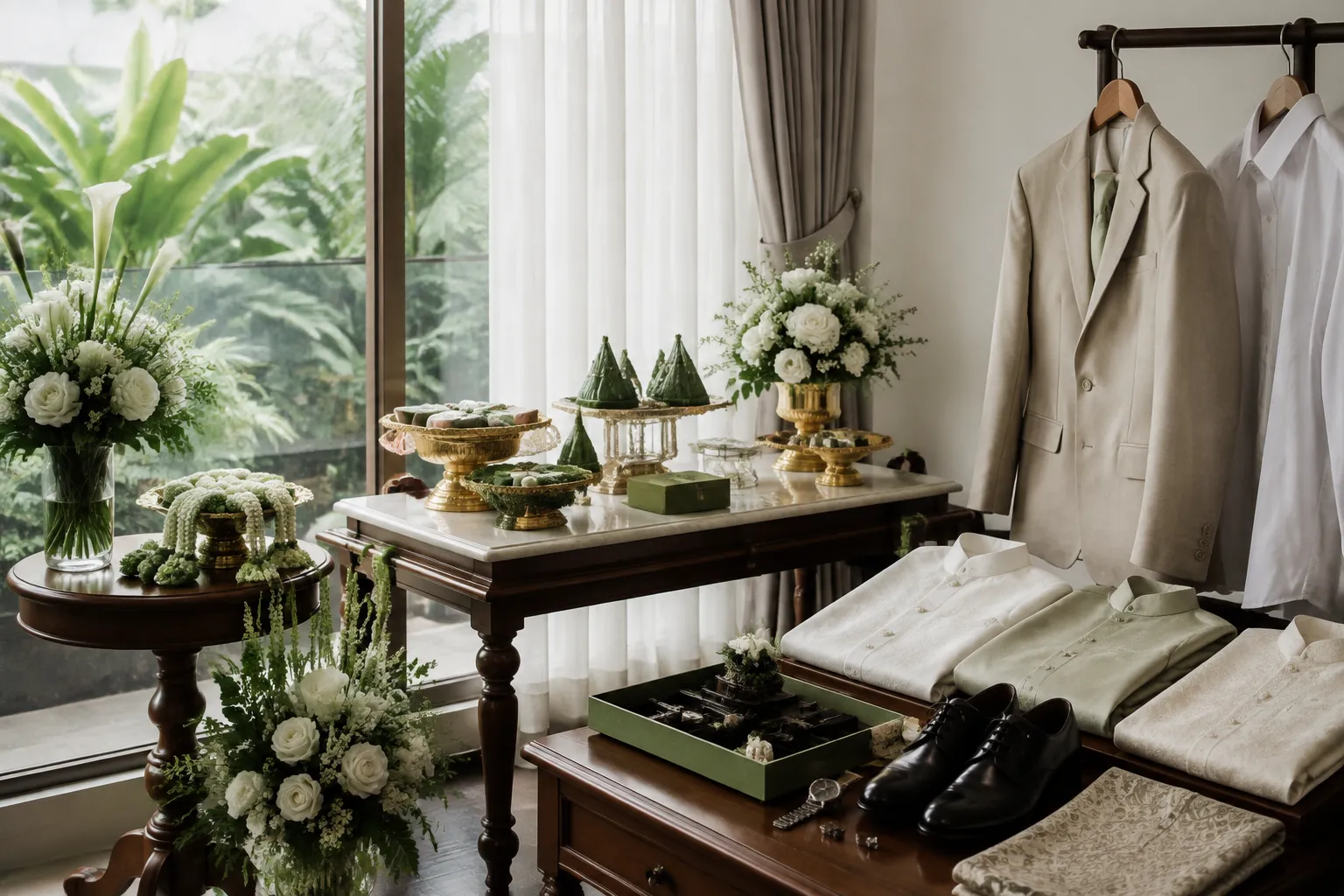
If an item arrives only moments before use, photographing it in place may be more practical than creating a separate arrangement. For evening details, discuss the actual lighting with the photographer and venue. Fine fabric, reflective jewelry, and printed stationery may need an earlier window or a nearby preparation area.
Photographer Handoff
Give the photographer a final sheet using this format:
| Priority | Item | Ready at | Location | Custodian | Handling note | Context |
|---|---|---|---|---|---|---|
| Essential | Confirmed item name | Exact time | Room or area | Named person | Move, do not move, or ask first | Isolated, worn, carried, presented, or used |
| Preferred | Confirmed item name | Planned time | Room or area | Named person | Specific restriction | Requested composition or moment |
| Optional | Confirmed item name | Flexible | Likely area | Contact person | Photograph only if available | Useful context, if time permits |
Review the sheet with the photographer, then share the relevant timing and access notes with the planner or family coordinator. Keep unconfirmed ideas on a separate planning document so they are not mistaken for expected ceremony elements.
The final Thai wedding detail shot list should answer four practical questions: what will be present, who is responsible for it, when it can be photographed, and whose permission governs access.
Sources
- Fake Cake: Thai Weddings
- Weddings and Thai Women: The Construction of Weddings and the Portrayal of Thai Women Through Wedding Stories in Thai Wedding Magazines
- 'Thainess' and bridal perfection in Thai wedding magazines
- For Ever and Ever the Perfect Wedding Picture: Converging Religious and Secular Norms and Values in Wedding Photography
- Promising images of love: a qualitative-ethnographic study about the mediatised memories of weddings