Thai Wedding Flower Garlands and Floral Accessories
Plan Thai wedding flower garlands as part of the ceremony sequence, rather than as a separate decoration purchase. First confirm which ceremony segments are included, who will use each floral item, and whether the family, ceremony leader, temple, or venue has a preferred arrangement. Then order only the garlands and accessories with a clear purpose on the day.
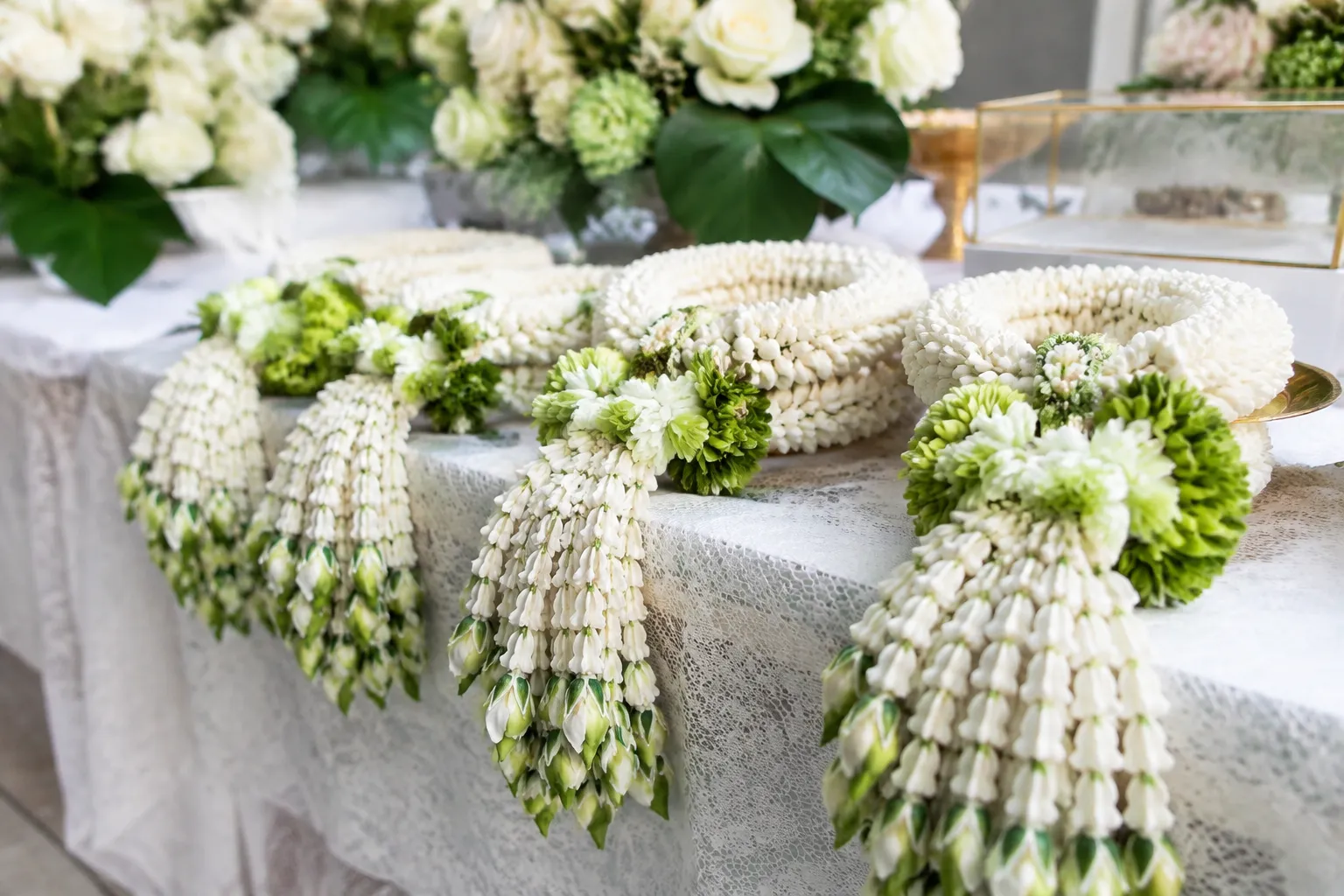
Common planning categories include:
- Garlands for the couple or selected family members
- Garlands used during greetings, blessings, or presentation moments
- Floral pieces associated with the rod nam sang water-pouring ceremony
- Floral trays or arrangements placed beneath the couple’s hands
- Hanging garlands and festoons for venue decoration
- Fresh-flower details for the ceremony table, entrance, seating area, or photographs
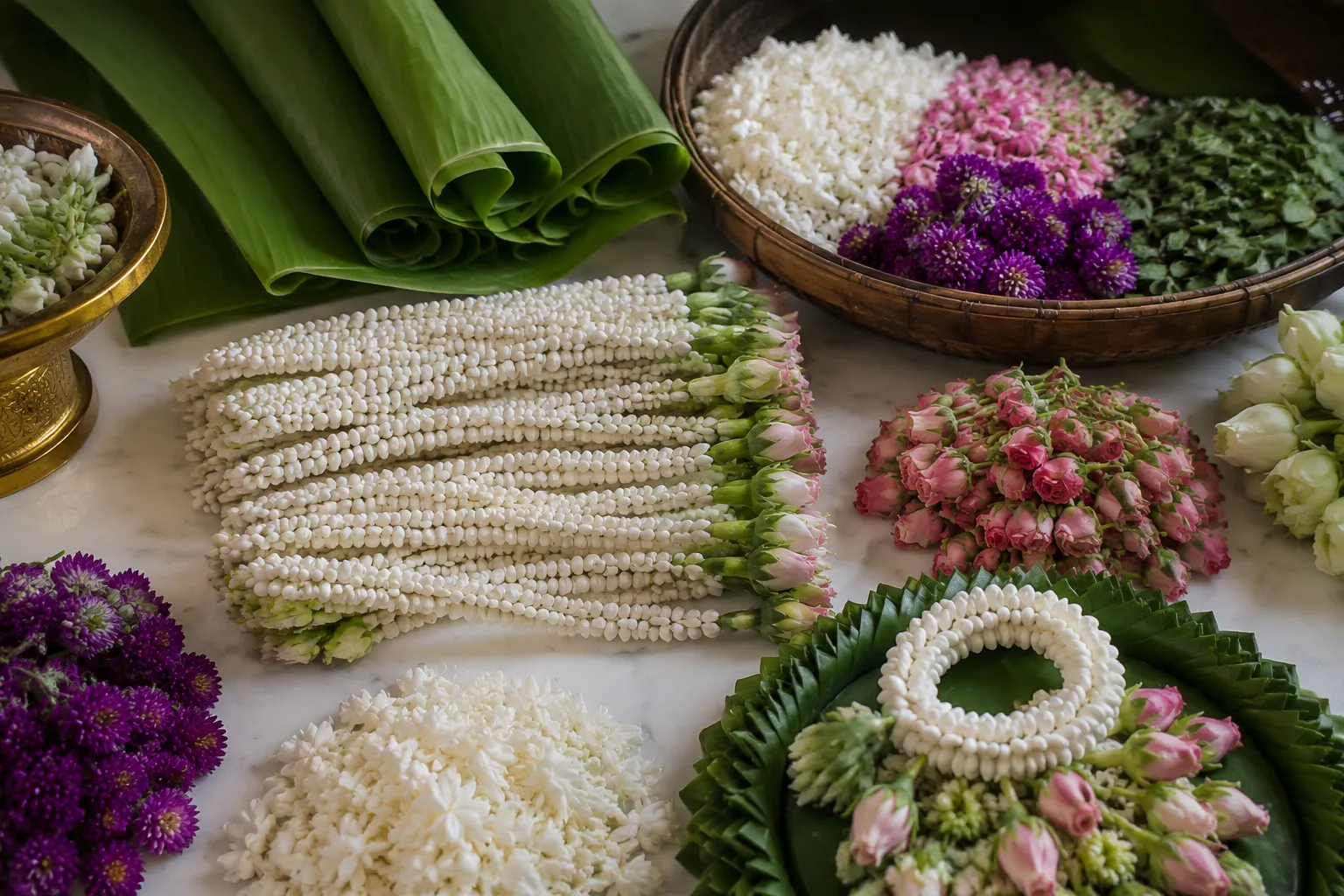
- Banana-leaf and fresh-flower craft elements used as decorative accessories
There is no single flower list or accessory arrangement for every Thai wedding. Ceremony structure, family preference, region, religious setting, venue rules, and available materials can all affect the order.
Choose the Form Before the Flowers
The first decision is the form and function of the accessory. A wearable garland, a presentation garland, a hanging decoration, and a table arrangement have different practical needs.
Wearable or Presented Garlands
A garland may be worn, held, or presented during a greeting or blessing. Before ordering, ask:
- Who will receive or wear it?
- Will it remain in place for photographs?
- Will the person need to move, bow, sit, or join a procession?
- Should the design be lightweight and compact?
- Does the ceremony leader have a preferred form?
A garland made for display may be too heavy or fragile for someone moving through a khan maak procession. A simple wearable piece may also look too small as a central ceremony decoration. Do not assume that every couple, parent, elder, or participant receives the same item. The family should confirm who is included.
Hanging Garlands and Festoons
Thai floral craft includes suspended and woven forms, such as festoons, tassel-like details, flower nets, and patterned arrangements. Studies of Thai hanging-garland decoration are useful for understanding craft forms and design adaptation, but they do not establish one universal wedding arrangement.
For a wedding, use hanging pieces only where the venue can support them and where they will not interfere with guests, cameras, fans, doors, or ceremony movement. Confirm the installation method with both the venue and the florist. A drawing or placement photograph can help settle the intended height and position before production.
Floral Trays and Table Arrangements
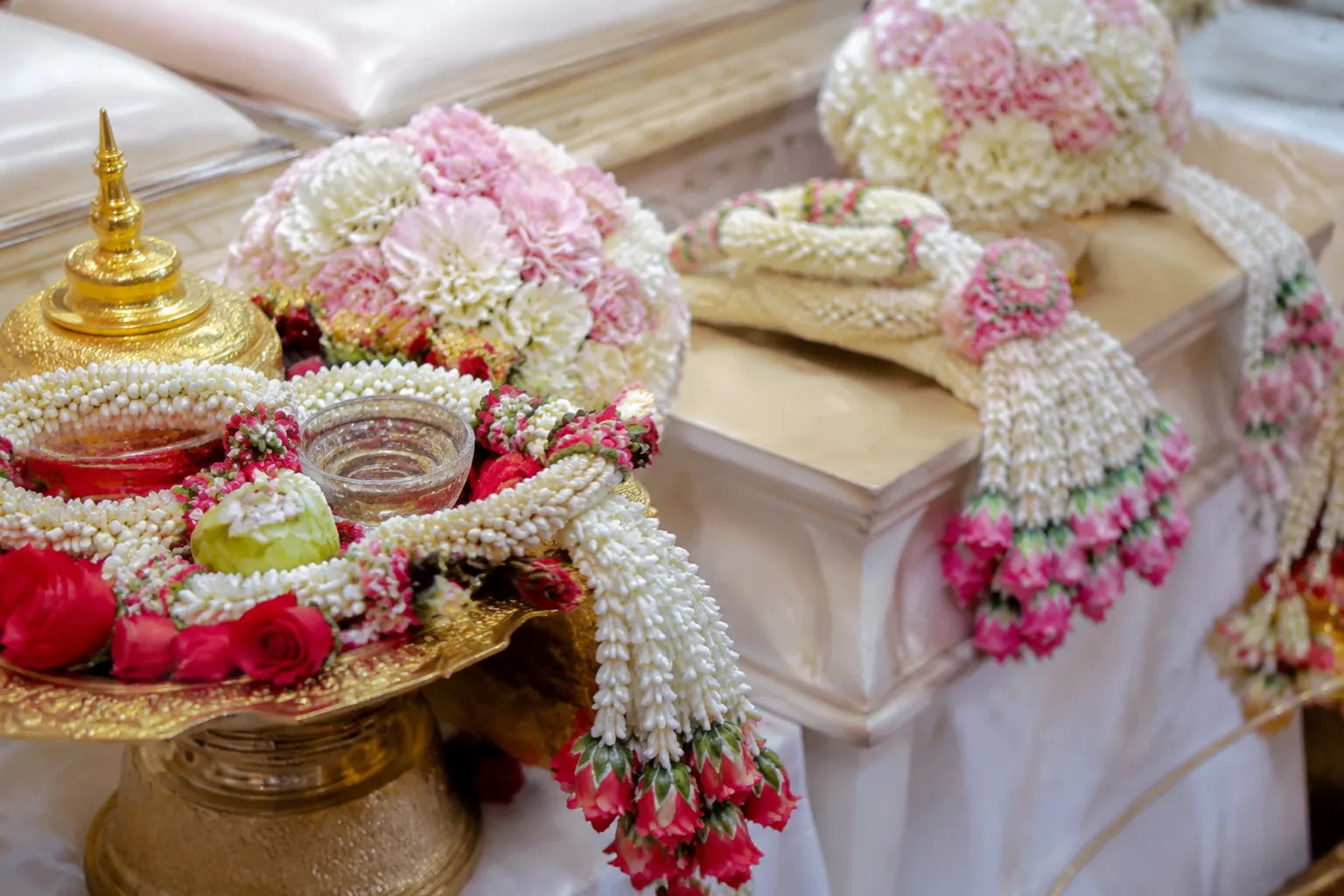
Some descriptions of the rod nam sang ceremony include a water-pouring table, a floral arrangement or tray beneath the couple’s hands, and a ceremonial conch shell used by elders. Whether these elements appear, and how they are arranged, depends on the ceremony plan.
Discuss the table area with the person leading the ceremony. Confirm the tray dimensions, the position of the couple’s hands, the location of the water container, and whether the venue supplies the table or tray. These details affect comfort, movement, and photography.
Match Each Accessory to the Ceremony Sequence
A useful order follows the day’s schedule rather than the florist’s product catalogue.
Before the Ceremony
Fresh garlands and arrangements may arrive before guests are seated, but the exact timing should be agreed with the florist and venue. Assign a receiving person and a clean, cool holding area away from direct sun, heat, heavy traffic, and accidental contact.
If monks are involved in a blessing, ask the ceremony coordinator or family representative whether floral items are placed before or after that part of the day. The appearance of a floral accessory in one ceremony plan does not make it a religious requirement for every wedding.
During the Khan Maak Procession
A khan maak procession may include people carrying ceremonial items as the groom’s side approaches the bride’s family. If flowers are part of the procession, clarify who carries them and whether the route includes stairs, outdoor heat, narrow entrances, or door games.
Choose secure construction for pieces that will travel. Long stems, loose petals, delicate loops, and heavy water tubes may be unsuitable for a moving procession. Give the florist the route, expected duration, and number of handlers.
During Rod Nam Sang
During the rod nam sang water-pouring ceremony, the couple may sit at a designated table while elders pour water over their hands using a conch shell. Some ceremony plans include flowers beneath the hands or around the table.
Treat this area as a working space. Flowers should not block the couple’s hands, obscure the elders’ faces, or create a slippery surface. Ask the photographer to check the arrangement from the front and side, and ask the ceremony leader whether the proposed placement suits the ceremony.
During Photographs
A garland can look different when the couple is standing, seated, walking, or photographed in close-up. Tell the florist which moments matter most:
- Couple portraits
- Family blessing photographs
- The khan maak entrance
- The rod nam sang table
- Group photographs with elders
- Close-up photographs of the floral craft
If flowers will be worn for several hours, ask whether the design can be adjusted or replaced between ceremony segments. The answer depends on the material, construction, weather, and schedule.
Give Every Item a Participant or Location
A floral accessory should have an identified user or location. A simple order sheet can keep the ceremony sequence clear:
| Item | Person or location | Ceremony moment | Person responsible |
|---|---|---|---|
| Couple’s garland | Bride, groom, or both | Confirmed ceremony segment | Named family member or coordinator |
| Elder or family garland | Selected recipient | Blessing or presentation | Assigned attendant |
| Floral tray | Water-pouring table | Rod nam sang | Ceremony leader or venue |
| Hanging decoration | Entrance, backdrop, or pavilion | Before guests arrive | Florist and venue |
| Spare flowers | Coordinator or florist | Repairs or replacement | Named handler |
This prevents a common planning problem: an item is ordered, but nobody knows when it should appear or who should carry it.
Family members should confirm the recipient list. The ceremony leader should confirm ceremonial placement. The venue should confirm installation and access. The florist should confirm construction, delivery, and handling.
Select Flowers With Availability and Handling in Mind
Thai floral craft uses fresh flowers and may also incorporate banana leaves, woven forms, and other plant materials. Research on Thai floral traditions describes many materials and construction styles, but it does not establish that one species is needed for every wedding.
When discussing flowers with a florist, focus on the practical result:
- Desired color range
- Garland size and weight
- Scent tolerance
- Wearable or table-based use
- Indoor or outdoor placement
- Expected duration
- Transport needs
- Compatibility with clothing and photographs
- Whether the design should reference formal traditional craft or use a simpler contemporary arrangement
Ask the florist to identify substitutions in advance. Availability can change, and a substitute may alter the color, texture, weight, scent, or durability of the piece. If the family has a preferred flower, show the florist a reference image and ask whether the requested construction suits the ceremony schedule.
A formal royal-style floral craft tradition should not automatically be presented as the expected format for a family wedding. It may be an inspiration, a specialist style, or a design reference. Confirm the intended level of formality with the family and ceremony leader.
Plan Freshness and Delivery
Fresh garlands should arrive close enough to the ceremony to remain presentable while allowing time for inspection and placement. The useful delivery window depends on the flower type, construction, temperature, travel distance, and venue conditions.
Agree on these details in writing:
- Delivery date and time
- Receiving person
- Storage location
- Transport container
- Assembly or adjustment time
- Backup contact
- Procedure for damaged or incomplete items
- Whether the florist will install hanging pieces
- Whether the venue has restrictions on water, pins, tape, hooks, or suspended weight
Keep the flowers in their intended container until the coordinator is ready to place them. Avoid leaving them beside a sunny window, hot equipment, or a crowded entrance. Do not place a delicate garland under heavy fabric or inside luggage without the florist’s instructions.
General cut-flower logistics can help identify questions about cooling, transport, and delivery timing, but those observations are not a complete handling protocol for every wedding garland. Use them as prompts for a practical discussion with the florist.
Separate Ceremony Use From Decoration
A wedding package may combine ceremonial flowers, stage decoration, table arrangements, and photo props under one floral heading. Separate them before comparing proposals.
- Items connected to a ceremony action
- Items worn or carried by people
- Items placed on tables
- Items installed at the venue
- Decorative flowers used only for photographs
- Delivery, setup, replacement, and removal services
This makes it easier to see what belongs to the chosen ceremony sequence and what is an optional design decision. It also reduces the chance of ordering a decorative adaptation that the family assumes has a specific ceremonial role.
What to Confirm Locally
Use these questions in the planning meeting:
- Which ceremony segments are included?
- Are garlands used by the couple, elders, procession participants, or selected guests?
- Is a floral tray planned for the rod nam sang table?
- Who supplies the conch shell, table, water, and other ceremonial accessories?
- Does the ceremony leader have a preferred arrangement?
- Does the family recognize a particular flower, color, or construction style?
- Can the venue support hanging decorations?
- Where will fresh flowers be received and held?
- How long will the items remain outside refrigeration or climate control?
- Who checks the order before guests arrive?
- Which details are ceremonial, and which are decorative?
- If civil registration is part of the plan, which questions should be taken to the relevant local registration office?
The ceremony and civil registration are separate planning matters. A customary or religious ceremony does not by itself answer the registration process for every couple or jurisdiction. Confirm current details with the appropriate local office.
Common Planning Misunderstandings
“One Garland Design Works for Every Thai Wedding”
Garland forms and participant roles vary. A design documented in one region, study, ceremony, or craft tradition should not be treated as a nationwide pattern.
“A Flower Used in a Thai Ritual Must Be Part of the Wedding”
Floral research may concern religious offerings, local ceremonies, museum examples, or craft traditions rather than weddings. These sources can provide context, but they do not establish a wedding flower list.
“The Florist Knows the Family Expectations”
A florist can advise on materials, construction, timing, and visual coordination. Family members and the ceremony leader should confirm etiquette and ceremonial placement.
“More Flowers Make the Ceremony More Traditional”
Scale and density are design choices. A large arrangement may restrict movement, hide the couple’s hands, or compete with the ceremony table. Discuss proportion and function before increasing quantity.
A Practical Order of Work
Start with the ceremony leader and a family representative. Confirm the sequence and participants. Then ask the venue about installation, access, and storage. Give the florist the schedule, route, table dimensions, clothing details, and photography priorities. Review a written item list, including substitutions and delivery responsibilities, before production.
The most useful planning decision is usually not choosing the most elaborate accessory. It is making sure each floral item has a clear purpose, a named user or location, an agreed arrival time, and a person responsible for placing it. That leaves room for family preference and respectful adaptation while keeping the wedding day manageable.
Sources
- Conservation and publicizing of Thai flowers art : Wedding case study
- Wedding In Thailand: Traditional And Business
- Plant Species Diversity and the Interconnection of Ritual Beliefs and Local Horticulture in Heet Sip Song Ceremonies, Roi Et Province, Northeastern Thailand
- Thai Traditional Hanging Garland Decoration to the Pattern Design Adapted on Suan Sunandha Rajabhat University Souvenir
- The Wisdom Study of Thai Traditional Fine Craft of Fresh Flora Art and Green Banana Leaves Fine Craft
- การสืบทอดคุณค่างานช่างดอกไม้สดแบบราชสำนัก