Gold Jewelry in Thai Weddings
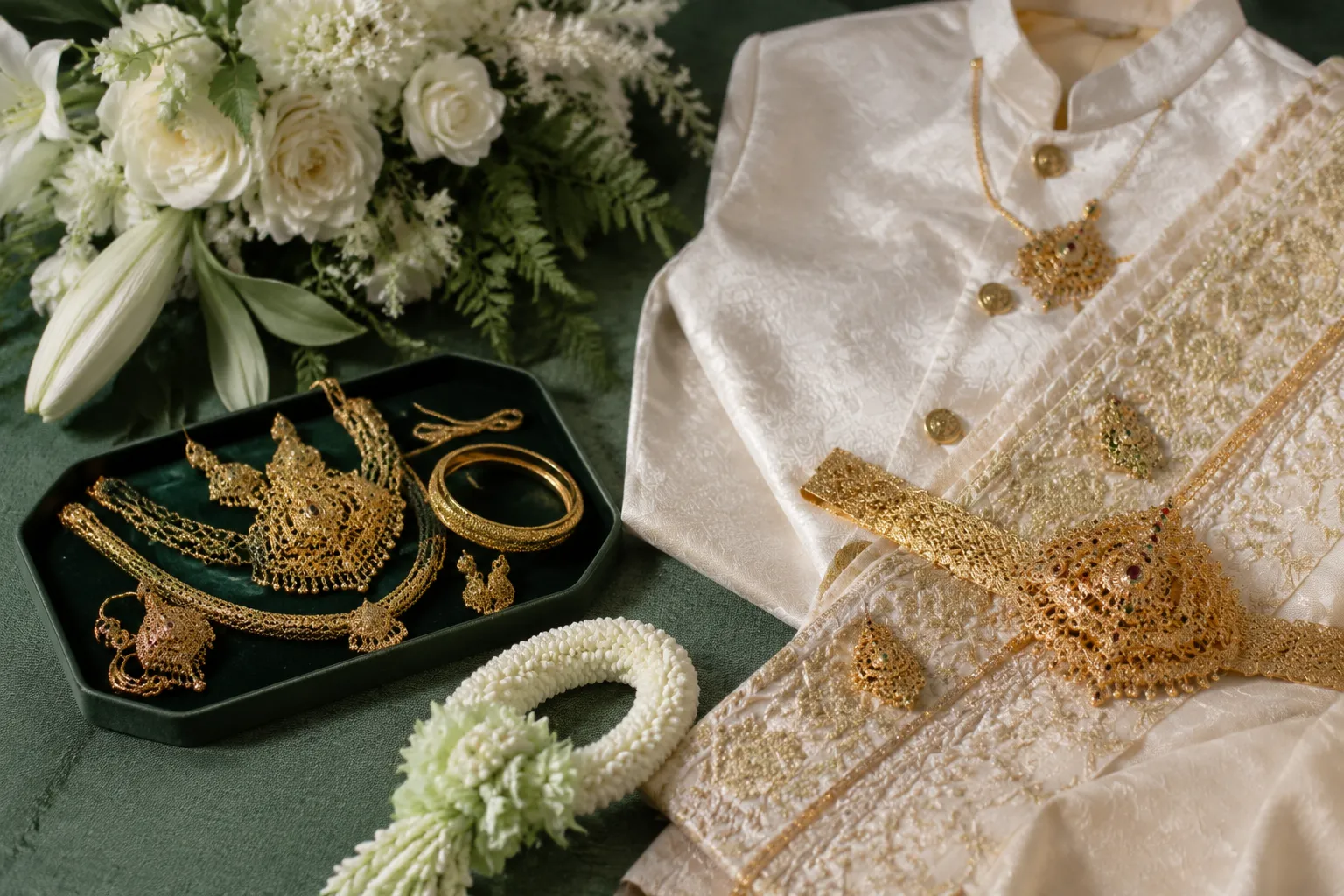
Thai wedding gold jewelry does not follow one universal pattern. In some weddings, families may discuss gold as part of broader marriage-gift arrangements. In others, jewelry may be a personal gift, part of the couple's attire, used for photographs, or absent from the ceremony. Before choosing or transporting an item, agree on what it represents, who will bring it, when it will appear, who may handle it, and where it will be kept.
The available research does not establish one standard form, quantity, recipient, presentation sequence, ownership arrangement, or regional rule for gold jewelry in Thai weddings. Treat those details as family and ceremony decisions to confirm locally.
Start With the Family Conversation
Ask both families what role the jewelry is expected to play before making a purchase or adding it to the ceremony timeline.
- Is it part of a family gift discussion, a personal present, or wedding attire?
- Who will bring it, present it, and receive it?
- Should it be displayed, worn, exchanged, or kept private?
- Should it appear during a formal ceremony, at the reception, or only in photographs?
- Does either family have preferences about timing, wording, or who should be present?
- Is the couple comfortable with the arrangement?
Thai weddings may combine traditional and contemporary elements according to family preference, venue, budget, ceremony setting, and the sequence the couple chooses. A planner or retailer may describe one arrangement as traditional, but commercial language cannot establish what every Thai family expects.
Ask the elders or family members coordinating the event first. If the schedule includes a monk blessing or another religious component, ask the ceremony leader whether the jewelry should appear during that part. An item connected with a family gift discussion does not automatically belong in a religious ceremony.
Place Gold in the Ceremony Sequence
Assign the jewelry to a specific moment rather than bringing it to the wedding without a clear handover plan. Depending on the event, that moment may relate to:
- a family or engagement discussion;
- a khan maak procession or the arrival of the groom's family;
- a family-gift presentation;
- a monk blessing;
- the rod nam sang water-pouring ceremony;
- a portrait session; or
- the evening reception.
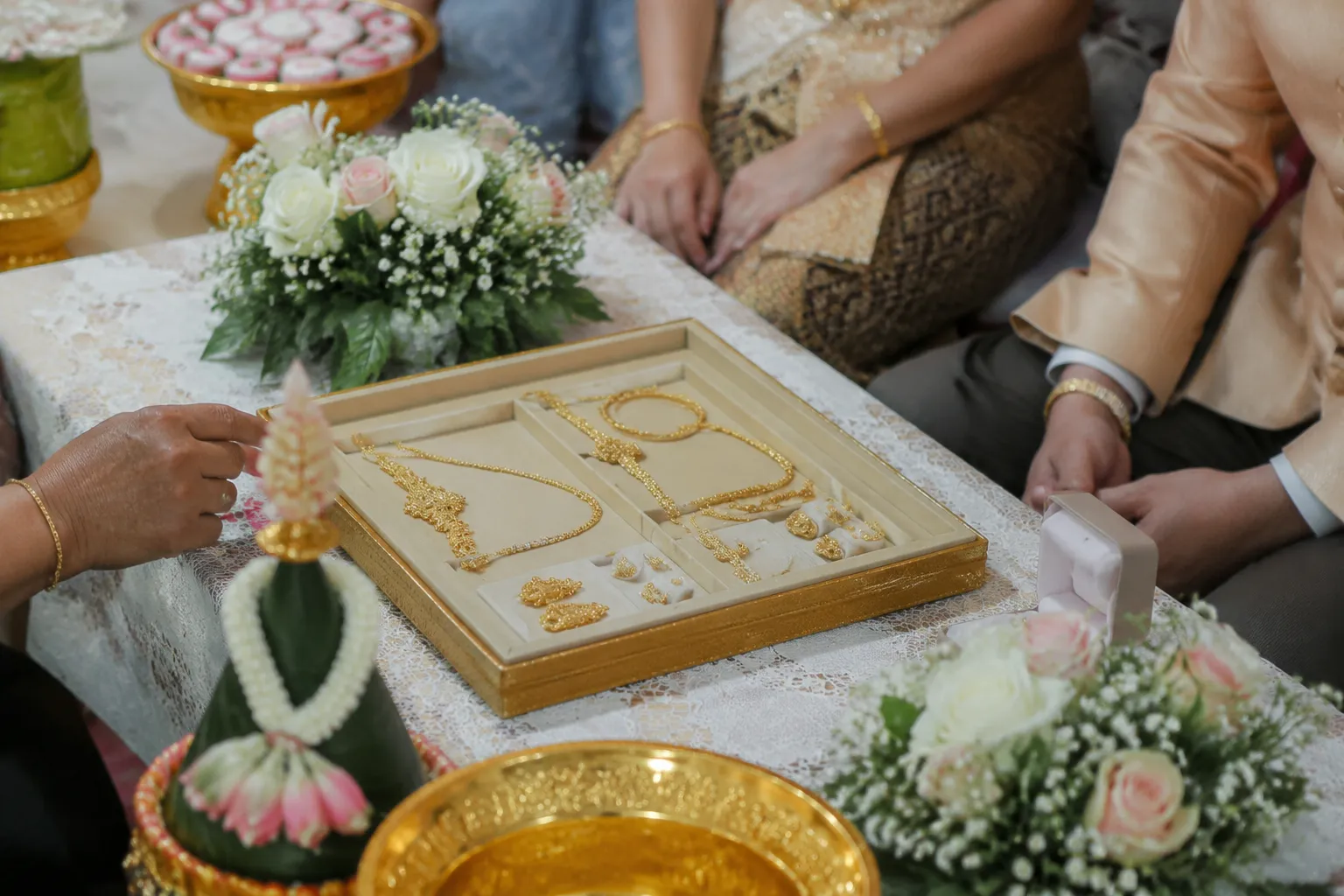
The presence and order of these elements can vary. Contemporary weddings may shorten a traditional sequence, move activities into a hotel or reception venue, or arrange several events around photography and guest schedules. Wedding research describing changes in ceremony and presentation can help explain that variation, but it does not establish a universal gold custom.
Give the ceremony leader, family coordinator, and venue the same written timeline. Mark the jewelry moment and confirm:
- Who brings the item?
- Who receives it?
- Who presents or announces it?
- Is it placed on the couple, handed over, or shown without being worn?
- Does the photographer need advance notice?
- Where does it go immediately afterward?
If the jewelry is presented during a family-facing moment, the family coordinator should confirm the wording and order. If it is used for portraits, tell the photographer whether it is significant to the family, part of the couple's attire, or simply an accessory.
Clarify Participant Roles
Several people may be involved, but responsibility should not remain assumed. Assign each task before the wedding day.
The couple
The couple should agree on the jewelry's purpose, whether one or both partners will wear or receive it, the preferred presentation time, who may handle it, whether it will be photographed, where it will be stored, and what happens to it after the ceremony. A family gift discussion and a photography detail do not need to be treated as the same part of the wedding.
Parents and family elders
Parents or elders may explain family expectations, the preferred ceremony sequence, and which relatives should participate. Confirm rather than assume their role. One family may prefer a private handover; another may want a visible presentation involving several relatives.
Ask the relevant family member who speaks for the family about the arrangement, whether the jewelry is connected to another gift discussion, who the intended recipient is, and whether a particular relative should be present.
The ceremony leader
The ceremony leader can explain whether the jewelry belongs in a particular part of the ceremony and whether it should remain separate from a monk blessing or water-pouring ritual. This is a ceremony-planning question, not one for a jewelry seller to decide. When Thai Buddhist elements are combined with a civil or Western-style celebration, confirm the order with the person leading each part.
The venue and planner
Tell the venue or planner when the jewelry arrives, who may access it, where it will be stored, who escorts it between ceremony areas, whether staff may handle it, and whether photography access is permitted. A destination wedding can add transport and timing questions. Confirm those matters with the relevant venue, airline, embassy, insurer, customs authority, or local professional rather than assuming that general event procedures cover valuable personal jewelry.
The jeweler
For the actual piece, request itemized information such as its description, documented weight, fineness or karat statement, markings, receipt or purchase record, sizing information, and care guidance. A secondary reference may use terminology associated with Thai gold at 96.5 percent fineness, but the supplied material does not establish a current technical standard for every item or seller. Confirm specifications directly with the jeweler and, when the detail matters, with a current Thai standards, assay, testing, trade, or consumer-protection authority.
Prepare the Jewelry Before the Wedding
Thai wedding gold jewelry planning is easier when the item is treated as part of the event schedule, not as a last-minute accessory. Keep a short preparation record with:
- a description and photograph of the item;
- the documented specifications supplied by the jeweler;
- the person responsible for transport;
- the handover time and location;
- the person receiving it at the venue;
- the storage location during the ceremony;
- the person returning it after use; and
- the post-ceremony recipient.
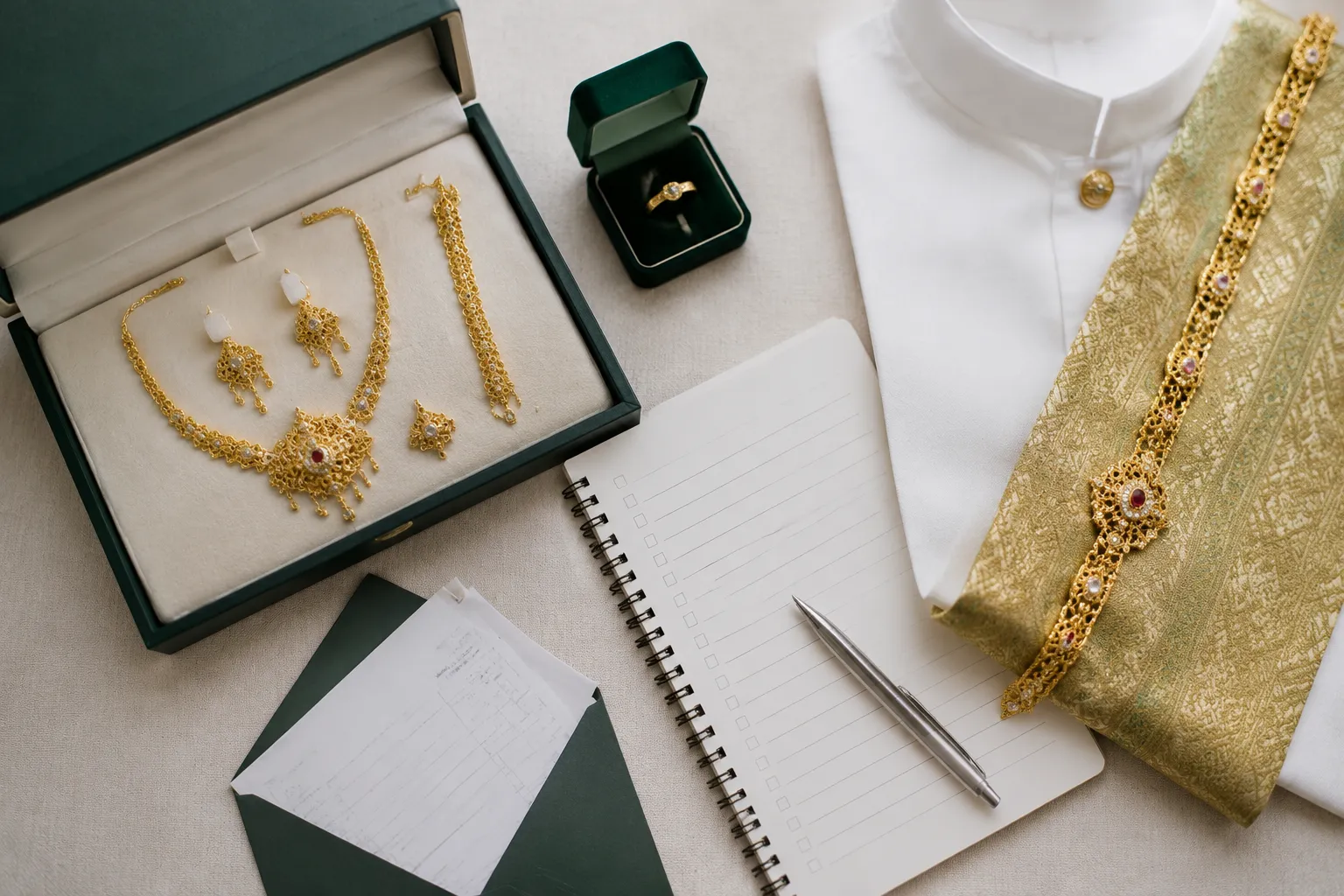
Keep receipts and item information with the person responsible for the jewelry, while avoiding a single easily misplaced pouch for both the item and every document. Agree who may inspect or photograph the documentation.
Check the fit
If the jewelry will be worn, arrange sizing early enough to resolve problems before the ceremony. Confirm which person will wear it, where it will sit, whether it works with the final attire, whether it catches on lace, embroidery, flowers, or ceremonial accessories, and whether it can be removed during a clothing change. The wearer should be able to sit, greet elders, and move comfortably.
Do not infer customary placement from a product photograph or one wedding example. Fit and placement should follow the family's plan, the ceremony leader's instructions where relevant, and the couple's comfort.
Coordinate attire and photography
Jewelry may affect the neckline, collar, sleeves, hairstyle, headdress, or ceremonial clothing. Tell the attire provider what will be worn and when.
If the family wants photographs, give the photographer a short shot list. The priority might be the item before it is worn, the handover, the couple wearing it, a close portrait, a wider family photograph, or a private record for the couple. Photography may be important in contemporary wedding planning, but it does not establish that gold must be displayed or photographed.
Plan Access and Storage
The practical question is who has custody of the jewelry at each stage. Use a named handover plan:
- The named person collects or transports the item.
- The recipient confirms its arrival.
- The venue or family coordinator records where it is stored.
- Only agreed participants access it before presentation.
- A named person returns it to storage after photographs or the ceremony.
- The couple confirms who takes it away at the end of the event.
Avoid leaving it in an unattended dressing room, an open gift table, or a camera bag that moves between locations. Ask the venue or ceremony coordinator about its own access procedures for a hotel, temple, private residence, or other setting. If the event moves between a procession, ceremony room, portrait area, and reception, assign one person to accompany the jewelry during each transition.
The available material does not support specific conclusions about insurance, transport restrictions, valuation, authenticity, or personal-security outcomes. For those questions, consult the relevant insurer, carrier, venue, jeweler, customs authority, or local professional.
Keep Ceremony and Civil Registration Separate
A wedding ceremony and civil registration are different planning matters. A Thai wedding may include family rituals, a monk blessing, a khan maak procession, water pouring, a reception, or a combination of these. Whether gold appears in one of those activities does not by itself determine the couple's civil status.
Confirm current registration requirements with the relevant district or local registration office. Couples marrying across jurisdictions may also need information from an embassy or another appropriate authority. Requirements can depend on nationality, location, documents, previous marital status, and individual circumstances.
Keep the responsibilities distinct: the family decides how the jewelry fits the celebration, the ceremony leader confirms its place in the sequence, the venue confirms handling and access, the jeweler confirms item information, and the relevant registration office confirms civil matters. A ceremonial gift or presentation is not a substitute for civil procedures.
Final Confirmation Questions
Family expectations
- Has each family agreed on the jewelry's purpose and recipient?
- Is the presentation private or public?
- Does anyone expect it to appear during a particular ceremony?
- Who will speak or hand it over?
Ceremony sequence
- Is the jewelry present during the procession?
- Is it separate from the monk blessing?
- Does it appear before or after water pouring?
- Does the ceremony leader need to confirm its timing or placement?
Venue, documentation, and fit
- Where does the item arrive, and who receives it?
- Where is it stored, and who escorts it between locations?
- Has the photographer been told when it should be included?
- Do the receipt and item details match the actual piece?
- Has the fit been checked with the final attire?
- Who takes custody after the event?
Civil matters
- Has the relevant registration office been contacted?
- Are ceremony plans separate from civil-registration tasks?
- If one partner is traveling internationally, has the appropriate embassy or local authority been consulted?
Common Misunderstandings
“Gold is always part of a Thai wedding.”
The available evidence does not support that universal statement. Some families may include gold, but its role, form, timing, and recipient should be confirmed for the particular wedding.
“Gold must be presented during the khan maak procession.”
Do not assume this. A procession may be included, shortened, adapted, or omitted, and the supplied research does not establish a standard gold presentation within it. Ask both families and the ceremony leader.
“The bride is always the recipient.”
The recipient depends on the family's arrangement. Confirm whether the item is for one partner, both partners, another family member, or a shared family presentation.
“The ceremony makes civil registration unnecessary.”
Ceremonial and civil matters should be handled separately. Check current requirements with the relevant registration office rather than relying on the presence of a traditional ceremony.
“A seller's description proves the item's specification.”
A product description may be incomplete or promotional. Request itemized information from the jeweler and confirm technical questions with an appropriate current authority when necessary.
“A single wedding photograph shows the standard practice.”
One wedding shows what happened at that wedding. It cannot establish a rule for every family, region, religious setting, or venue.
A Practical Decision Rule
If the family has a clear expectation, record it in the ceremony timeline and assign custody to a named person. If the family is uncertain, do not invent a tradition to fill the gap. Ask the elders, ceremony leader, venue, and jeweler the specific question that belongs to each of them.
A useful Thai wedding gold jewelry plan is a shared agreement covering purpose, participant role, ceremony setting, presentation timing, documented specifications, fit, access, storage, and the distinction between ceremonial choices and civil registration.