Thai Wedding Hair Accessories and Headpieces
Choose Thai wedding hair accessories as part of the ceremony plan, not as a last finishing detail. Start with the bride's outfit, the order of the day's events, the hairstyle, and the people whose preferences may affect the look. Then choose a piece that stays secure, feels comfortable through each setting, and remains visible in photographs.
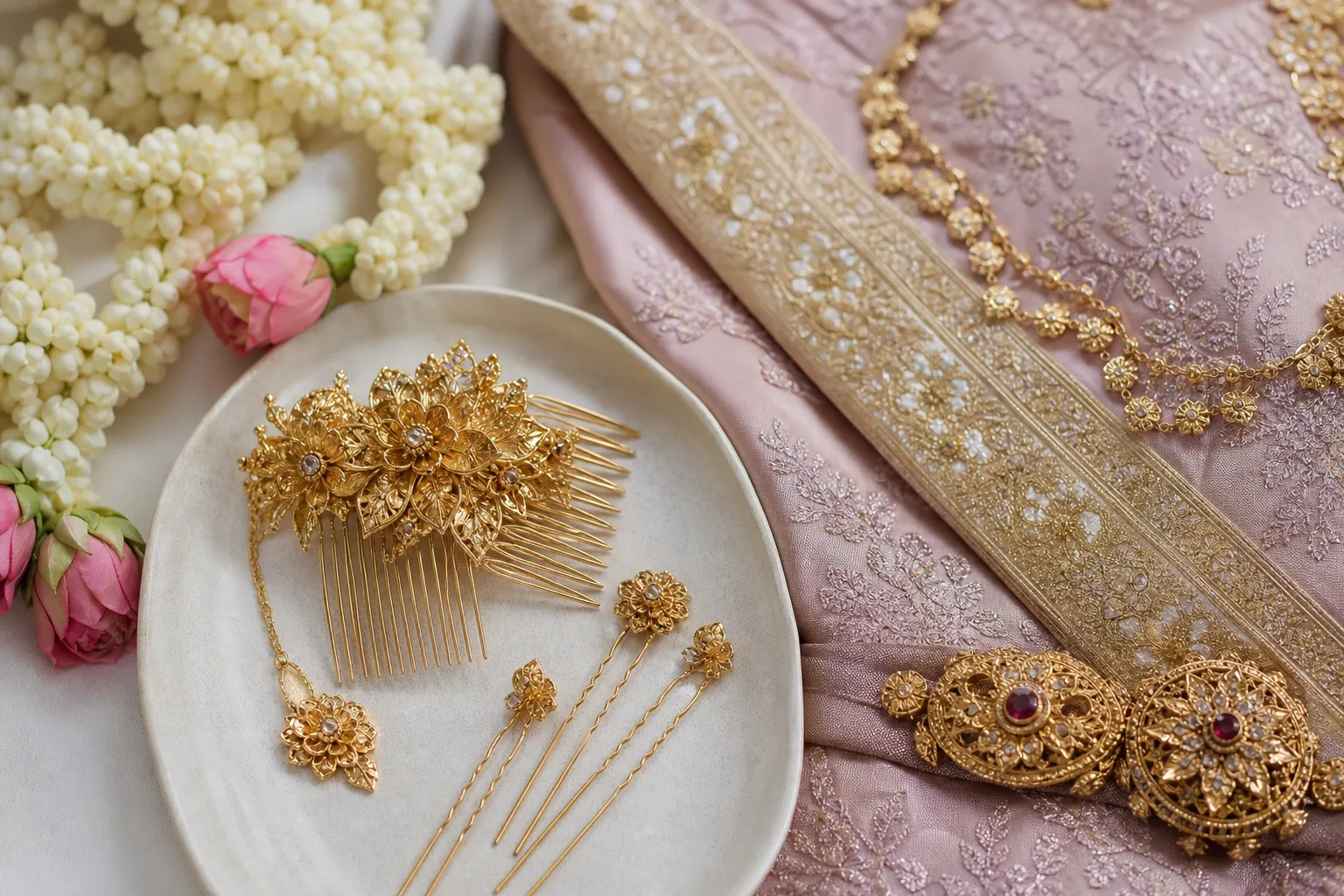
There is no single headpiece for every Thai wedding. A tiara, floral detail, comb, veil, decorative pins, or another ornament is best treated as a styling option rather than a universal custom. The available research does not provide a dependable catalogue of accessories used across Thai families, regions, temples, or contemporary venues. Confirm the final choice with the family member coordinating the ceremony, the ceremony leader, venue, stylist, and photographer when their preferences or practical requirements may matter.
Choose Around the Ceremony Sequence
List the day's settings before you order or attach anything. A piece that looks balanced in a seated portrait may become uncomfortable during walking, standing, greetings, water-pouring customs, a procession, or a long reception.
- Note which ceremony comes first and how long each part may last.
- Record whether the bride will walk outdoors, bow, greet elders, stand for extended periods, or change outfits.
- Separate the styling needs of a monk blessing, family ceremony, procession, formal portraits, and reception where applicable.
- Mark when photographs will be taken and which side of the hairstyle will face the camera.
- Decide whether the piece needs to be removed or adjusted between settings.
Contemporary Thai weddings may combine customary and contemporary elements. Research on wedding presentation can help explain why photography and visual identity influence styling, but magazine or portfolio images do not establish that one accessory is customary for every couple. If the ceremony format is still changing, wait before finalizing the attachment plan and ask the ceremony leader or family coordinator whether the hair needs to remain accessible for any part of the proceedings.
Match Headpieces to the Attire
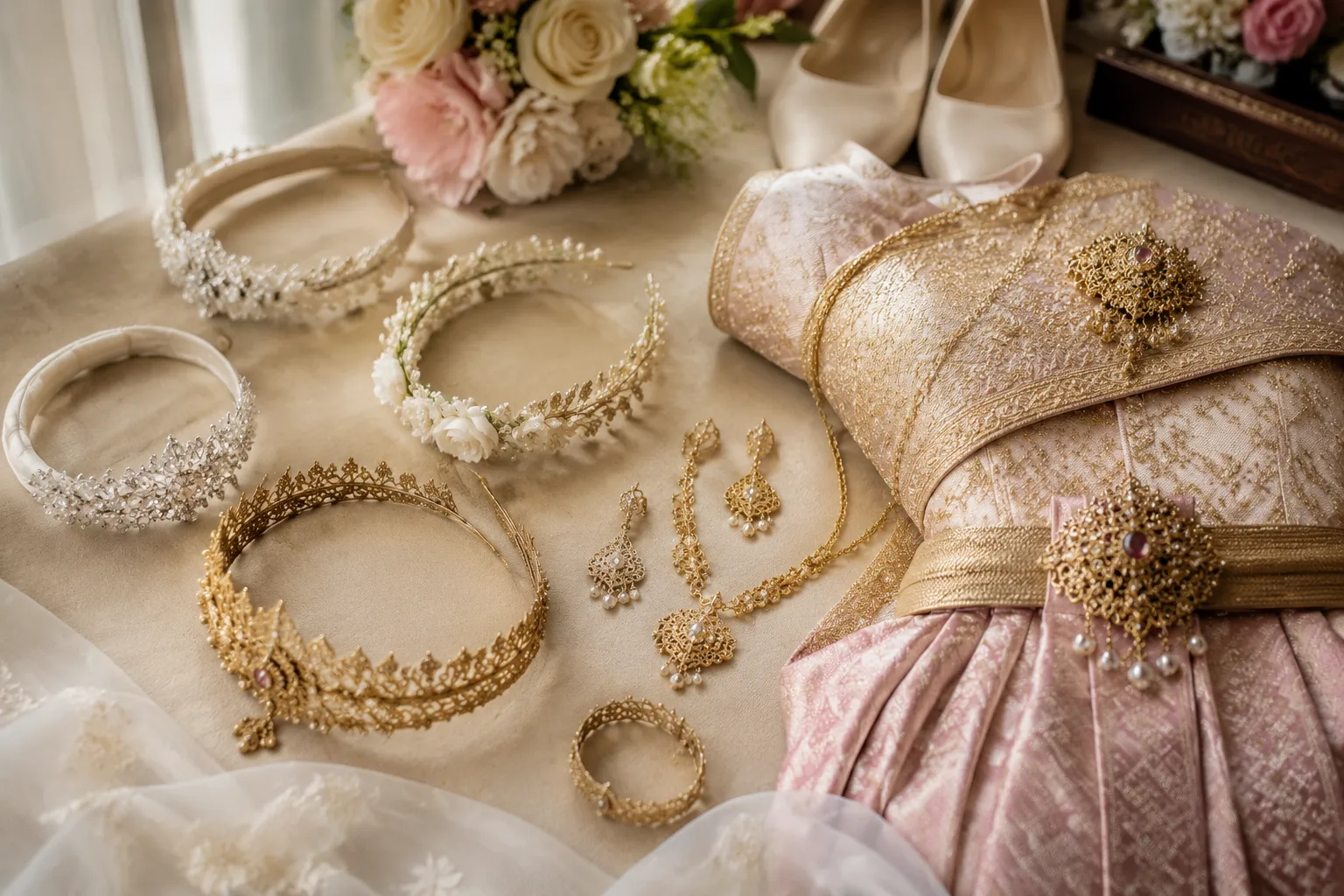
Let the outfit set the accessory's scale and visual weight. Formal Thai attire includes more than one recognized style, with differences in silhouette, fabric, and formal use. The headpiece should support the chosen outfit rather than compete with its neckline, jewelry, or woven pattern.
- With a highly patterned or structured outfit, a smaller comb, a few pins, or a restrained floral detail may keep the overall look balanced.
- With a simpler outfit, a more visible ornament may provide a focal point without adding extensive jewelry.
- With a high neckline or detailed shoulder area, check that the piece does not crowd the face and upper body.
- With a long veil or fabric element, test the weight and attachment point with the completed hairstyle.
- For a change from Thai formal attire to a Western-style gown, decide whether one accessory can be adjusted or a second piece will be more practical.
These are styling decisions, not rules about cultural correctness. Ask the person coordinating the outfit whether the accessory's color, size, and finish sit comfortably with the selected costume. For borrowed, rented, inherited, or newly made clothing, check fastening points and fabric before choosing a heavy ornament.
Compare Accessory Styles by Function
Sellers and stylists may use accessory names differently. Describe the placement, weight, visibility, and removal method you want instead of relying on a label or a claim that one style is more traditionally Thai.
Combs and Structured Ornaments
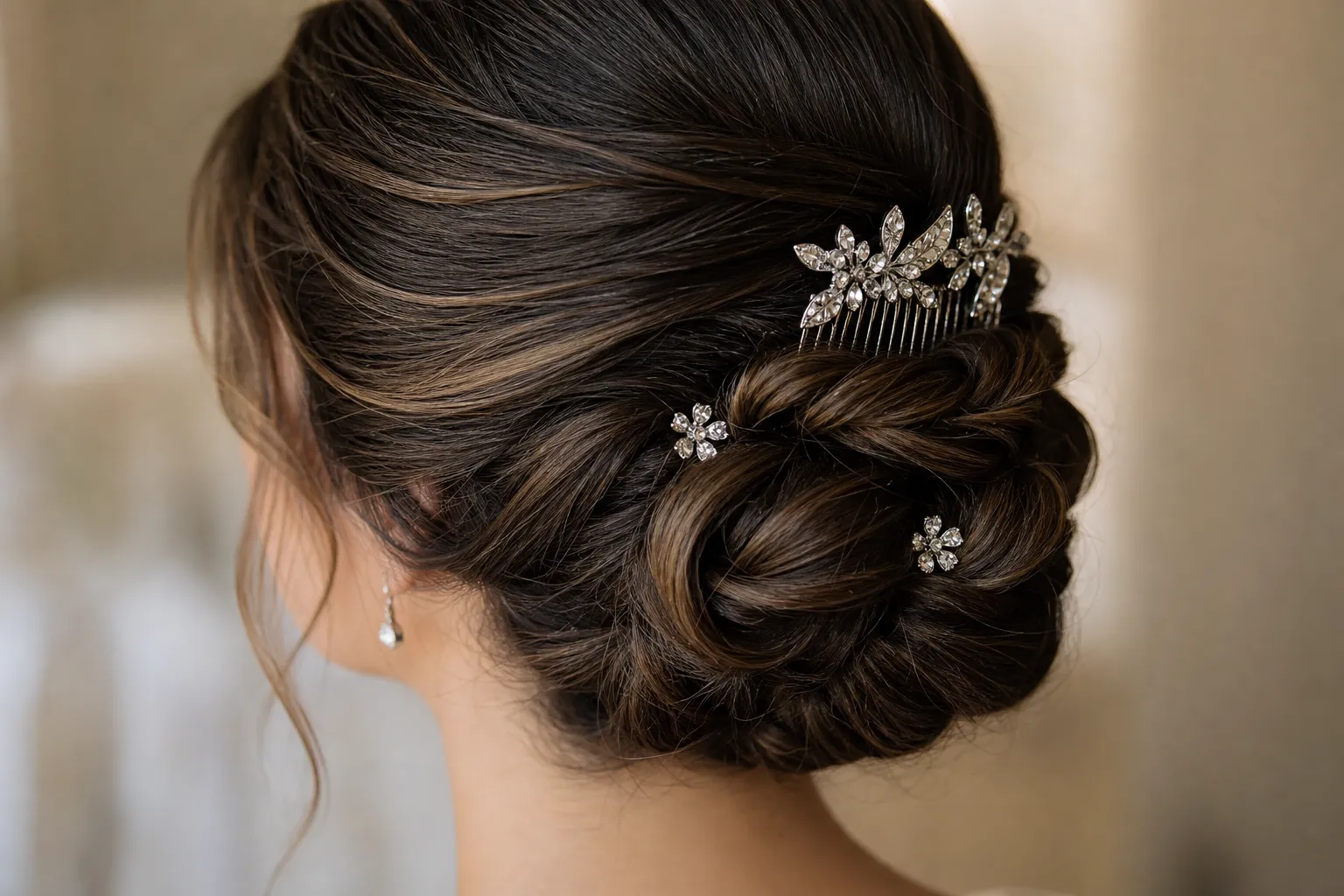
A comb can create a clear focal point at the back or side of an updo. During the fitting, test whether it holds in the bride's hair texture and stays stable while walking and greeting people. Ask how it will be removed without disturbing the rest of the hairstyle.
Decorative Pins and Smaller Pieces
Pins allow flexible placement and may suit a lower-profile look, movement, or a later outfit change. Several small pieces can be easier to reposition than one large ornament. Agree in advance on the number of pins, their attachment method, and where replacements will be kept.
Floral Details
Flowers can coordinate the hair with a bouquet or venue design, but the available material does not establish one universal Thai floral hair tradition. Treat a floral piece as a design choice shaped by the outfit, season, setting, and family preference. Check whether fresh, dried, or artificial flowers will remain practical if the bride moves between indoor and outdoor spaces.
Veils, Fabric, and Prominent Pieces
A veil or fabric accessory may suit one part of the celebration and become inconvenient in another. Test it with the hairstyle, earrings, neckline, and any movement required during the ceremony. Ask the photographer whether it will obscure the face, catch on jewelry, or need a separate portrait setup.
A prominent headpiece can create a formal or contemporary effect, but its size alone does not establish cultural meaning. Check its proportion against the outfit and ceremony space, and wear it long enough during the fitting to identify pressure points before the wedding day.
Plan the Fitting With the Stylist
Bring photographs of the actual outfit, jewelry, veil, and flowers or fabric accessories. If there will be more than one hairstyle, test each arrangement separately.
- Walk, turn, sit, and stand while checking whether the accessory stays secure.
- Check for scalp pressure, hair pulling, exposed pins, and wires that could catch on clothing.
- Test comfort for the expected ceremony and reception length.
- Confirm that the piece can be removed without undoing the complete hairstyle.
- Agree on replacement pins, combs, or fastening parts and assign them to one person.
- Consider how humidity, wind, and outdoor movement may change the attachment plan.
Take front, side, and back photographs. An ornament that looks balanced in person may disappear in a group photograph or dominate a close portrait. Tell the stylist the expected ceremony order so the final placement reflects the day's practical demands.
If a venue or planner includes hair and makeup, ask whether the accessory is supplied, rented, fitted, attached, transported, and removed as part of the service. Confirm extra charges and separate vendor arrangements with the person managing the booking. One studio or package description cannot establish what all Thai wedding stylists provide.
Confirm Family and Ceremony Preferences Early
Family preference may affect the final look, especially when customary elements are combined with contemporary styling. Show the complete outfit rather than presenting an accessory as though it has one fixed meaning or status.
- Does the family prefer a particular level of formality for this ceremony?
- Are there colors, materials, or shapes they would rather avoid?
- Will the bride change accessories between the family ceremony and reception?
- Does the ceremony leader have a preference about how the hair is arranged?
- Are there heirlooms or existing jewelry that the headpiece should coordinate with?
- Should the same styling be used for both partners' family photographs?
A historical field record from Mahasarakham documents one marriage ceremony with its own objects, roles, terminology, and sequence. It is useful as a bounded example, not as a general instruction for all Thai weddings. The same distinction applies when reading wedding-media research: a polished image can show how a look was presented without proving that it is expected in every family or region.
Coordinate With Photography
Photography should be part of the accessory decision. Tell the photographer about the piece before the event and confirm:
- Which side should face the camera during formal portraits
- Whether reflective surfaces may catch the light
- Whether the back detail needs dedicated photographs
- Whether a veil, flowers, or fabric will cover the hairstyle
- Which ceremony moments should be photographed without asking the bride to adjust the piece
- Whether a second look needs a short restyling window
Keep the agreed fastening supplies, a comb, spare pins, and a storage pouch together. Follow the stylist's attachment plan rather than improvising a new method on the wedding day.
Thai Wedding Accessory Checklist
- Photograph the selected outfit from several angles.
- Write down the ceremony sequence and outfit changes.
- Discuss the headpiece's size, weight, and placement with the stylist.
- Check comfort while standing, walking, sitting, and turning.
- Discuss family preferences with the relevant elder or coordinator.
- Ask the ceremony leader about any styling consideration connected with the event.
- Check the venue for movement, outdoor conditions, and changing areas.
- Tell the photographer about the accessory's front and back details.
- Assign fastening supplies and storage to one person.
- Confirm removal and return arrangements for borrowed or rented pieces.
What to Confirm Before Buying
Ask the stylist for an attachment and comfort plan, the photographer for visibility needs, the venue for practical restrictions, and the family or ceremony leader for preferences connected with the selected ceremony. If civil registration is part of the day, handle it as a separate administrative question with the relevant local office. Ceremonial styling does not determine civil registration status.
The research base for specific Thai wedding hair accessories remains limited. It supports a careful planning approach: coordinate hair, attire, venue, photography, timing, and family participation, while treating accessory names and symbolic interpretations as conditional. That leaves room for respectful adaptation without claiming that one headpiece is the right choice for every Thai wedding.
Sources
- Fake Cake: Thai Weddings
- 'Thainess' and bridal perfection in Thai wedding magazines
- Weddings and Thai Women: The Construction of Weddings and the Portrayal of Thai Women Through Wedding Stories in Thai Wedding Magazines
- Charles F. Keyes Field Notes, Thailand: 1963-03 (March 1963), Mahasarakham.
- Formal Thai National Costume In The Reign Of King Bhumibol Adulyadej