Modesty Layers for Thai Wedding Venues
When you are unsure how a particular Thai wedding venue or ceremony will affect your outfit, pack one light, removable layer and confirm when it should be worn. A shawl, wrap, cropped jacket, lightweight cardigan, or overshirt can give you flexibility without requiring a complete outfit change.
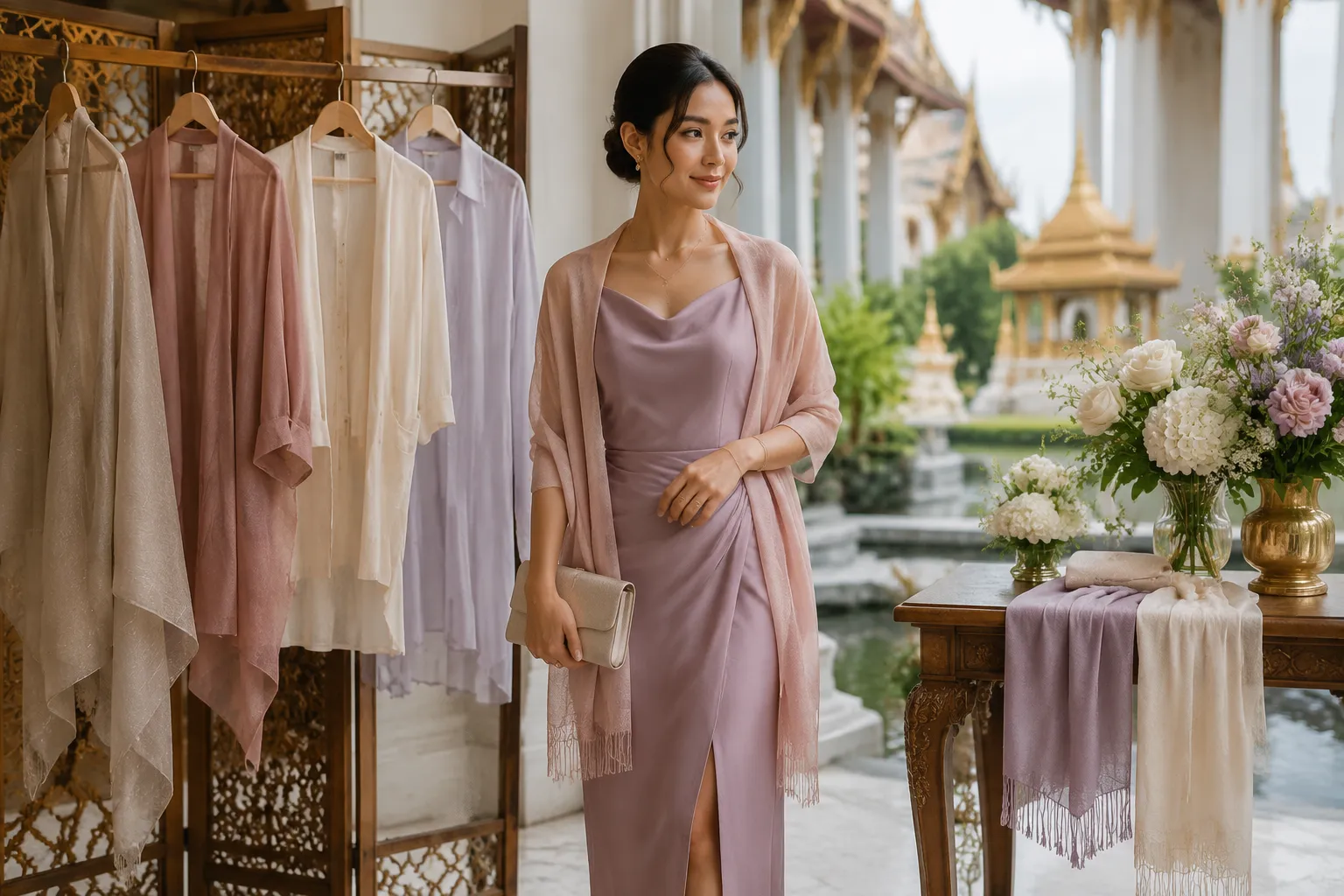
This is a planning option, not a universal Thai wedding dress rule. Ask the couple first, then confirm with the venue, ceremony leader, or family member involved in the ceremony. Expectations may vary by setting, family preference, ceremony sequence, and local practice.
Choose the Layer Around the Ceremony Setting
Start with the venue and the day's sequence rather than choosing a garment in isolation. A celebration may include a morning blessing, a khan maak procession, family photographs, a rod nam sang water-pouring ceremony, and an evening reception. These elements are not included in every wedding, and the clothing preference for one part of the day may not carry over to another.
- Will the ceremony take place at a temple, private home, hotel, resort, garden, beach, or another venue?
- Will guests move between indoor and outdoor spaces?
- Will monks or another ceremony leader take part?
- Will guests participate in family rituals or remain as observers?
- Is the formal ceremony separate from the reception?
- Will you wear the same outfit throughout the day?
A wrap may be convenient for a short indoor ceremony. A light jacket or overshirt may stay in place more easily if you will walk between locations, greet relatives, or join formal photographs. For an outdoor event, consider whether the layer will hold in wind and whether you can carry it comfortably after the temperature rises.
The venue coordinator or ceremony leader can clarify setting-specific expectations. The couple or an involved family elder can explain family preference.
What to Pack
Choose a layer that is easy to carry, put on, and remove. Check whether it:
- fits over the outfit without pulling or hiding important details;
- stays secure while walking, greeting relatives, or joining photographs;
- feels manageable in warm or humid weather;
- works with the outfit's colors and shape;
- remains comfortable while seated for a blessing or family ceremony;
- folds or hangs neatly between ceremony locations; and
- has no fastenings or decorations likely to catch on jewelry or flowers.
A shawl or wrap offers flexibility but may need adjustment. A cardigan or light jacket generally stays in place more easily. An overshirt can look more structured, although its cut may not suit every formal outfit.
These are comfort and logistics considerations, not universal Thai wedding guidance. If the venue or family has given specific instructions, follow those instructions for the relevant part of the day.
Confirm Coverage Expectations Instead of Guessing
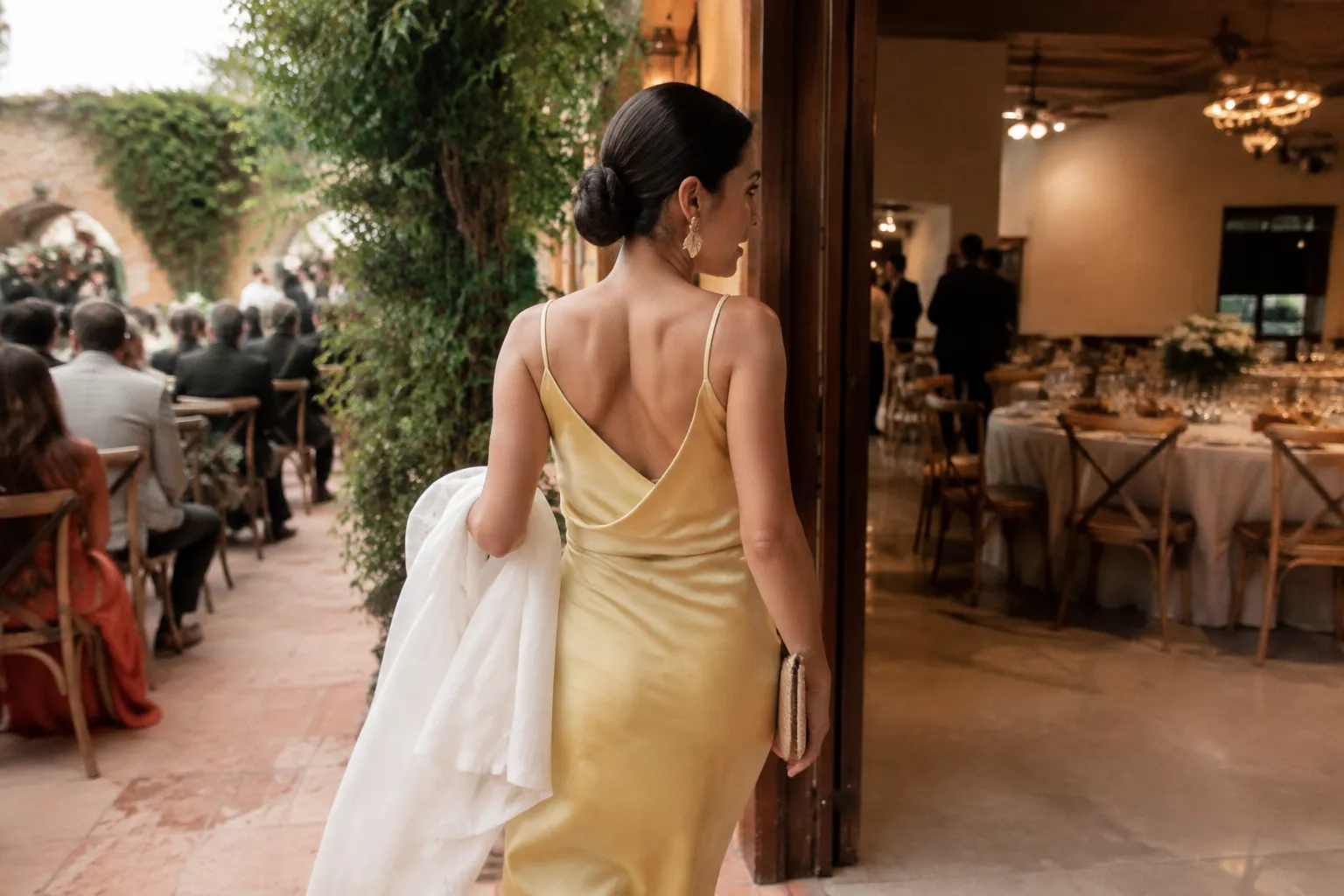
Available public material does not establish one standard for sleeves, shoulders, knees, necklines, fabrics, or colors across Thai wedding venues. These details may vary according to the family, ceremony leader, venue, region, religious setting, and the particular traditions being followed.
Send a specific question to someone who can confirm the situation:
“Will this outfit be suitable for the ceremony setting, or would you prefer me to bring a layer over it?”
You might also ask:
- “Is a shawl or light jacket sufficient for this ceremony?”
- “Should I keep the layer on during the blessing or water-pouring ceremony?”
- “Are there any colors, fabrics, or styles the family would prefer guests to avoid?”
- “Will the venue provide guidance for the ceremony area?”
- “Can the ceremony leader confirm what guests should wear?”
Photographs from another wedding, tourism imagery, or bridal magazines can show styling choices, but they do not establish what your venue or family expects. Use them as visual examples only.
Account for Family Preference
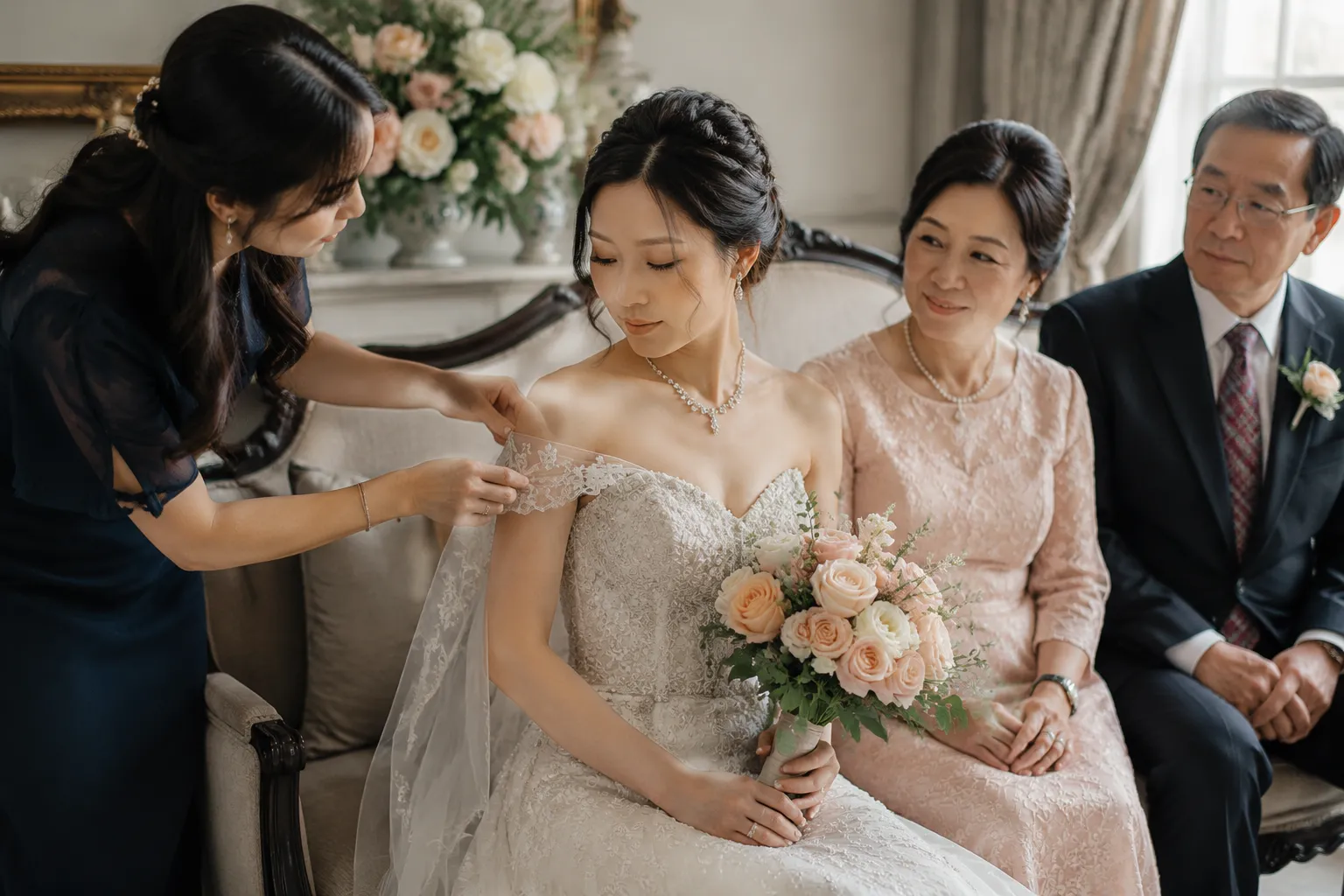
Family expectations may matter when relatives are involved in the ceremony sequence. A removable layer may be a respectful adaptation if the couple or family has requested a more covered look for one part of the day. That does not mean every family will make the same request.
The couple is often the most efficient first contact because they can coordinate information from relatives, the venue, and the ceremony leader. If an elder is organizing the ceremony, ask that person directly or ask the couple to confirm the preference with them.
Keep the question practical. It is easier to respond to a specific outfit and layer than to a broad question about what is “correct.” This also leaves room for family preference without turning one family's choice into a general rule.
Plan for Comfort and Weather
The venue design, time of day, and movement between locations can affect whether a layer is comfortable. An outdoor morning ceremony, shaded garden, strongly air-conditioned reception room, and evening beach setting may each create different clothing needs.
Before the wedding, check:
- whether the ceremony is indoors or outdoors;
- how long guests may remain in one place;
- whether there will be walking between areas;
- whether seating is formal, low, or on the floor;
- whether the reception follows immediately; and
- where the layer can be stored during the meal or reception.
A breathable, lightweight material may be easier in warm weather, while a thin jacket may be useful in a cool indoor room. These choices address comfort and movement. Confirm the ceremonial expectation separately with the relevant person.
Consider Photography Without Letting Images Set the Rule
Wedding photography may include formal family portraits, ceremony photographs, and images before or after the main events. A removable layer can create two coordinated looks without requiring a full outfit change.
Tell the photographer or planner in advance that you may wear the layer for one part of the ceremony and remove it later. They can then plan group photographs around the change.
Check how the layer behaves when you:
- raise your arms or greet someone;
- sit or move through the ceremony space;
- wear a sash, floral arrangement, or jewelry;
- move between indoor and outdoor lighting; and
- remove the layer quickly before a portrait.
Let venue and family guidance determine what you wear during the ceremony. Let photography planning determine when a change can happen smoothly.
A Simple Confirmation Sequence
- Ask the couple which ceremonies and venues are included.
- Check with the venue about any written or verbal clothing guidance.
- Ask the ceremony leader or temple contact about the setting if a blessing or religious element is included.
- Confirm with a family elder if relatives have expressed a preference.
- Tell the photographer or planner when you expect to wear or remove the layer.
- Pack the layer if the answers remain incomplete and carrying it is practical.
Keep each question tied to a specific location and part of the day. “What should I wear to a Thai wedding?” is less useful than “What should I wear for the morning ceremony at this venue, and should I keep a wrap on during the blessing?”
Do Not Confuse Ceremony Clothing With Civil Registration
A modesty layer concerns clothing and ceremony etiquette. It does not determine whether a marriage has civil status or whether registration documents are complete.
Some couples hold a customary or religious ceremony separately from civil registration. The legal effect of a ceremony depends on the relevant jurisdiction and the couple's circumstances. Direct registration questions to the appropriate local registration office or a qualified local professional rather than treating clothing guidance as legal guidance.
The Practical Decision
When the details are unclear, bring one clean, lightweight layer that coordinates with the outfit and allows comfortable movement. Wear it when the couple, family, ceremony leader, or venue confirms that it is appropriate for that part of the day. Remove it later only when the change fits the family's plans and ceremony sequence.
The useful choice is therefore not one fixed sleeve length, fabric, color, or garment shape. It is a layer that gives you flexibility while you confirm expectations for the exact Thai wedding venue.