Thai Wedding Outfit Changes for Ceremony and Reception
A second outfit can make a Thai wedding easier to manage, but it is not a universal part of Thai wedding customs. Some couples wear a formal or traditional look for a morning ceremony and change for an evening reception. Others keep one coordinated outfit throughout the day.
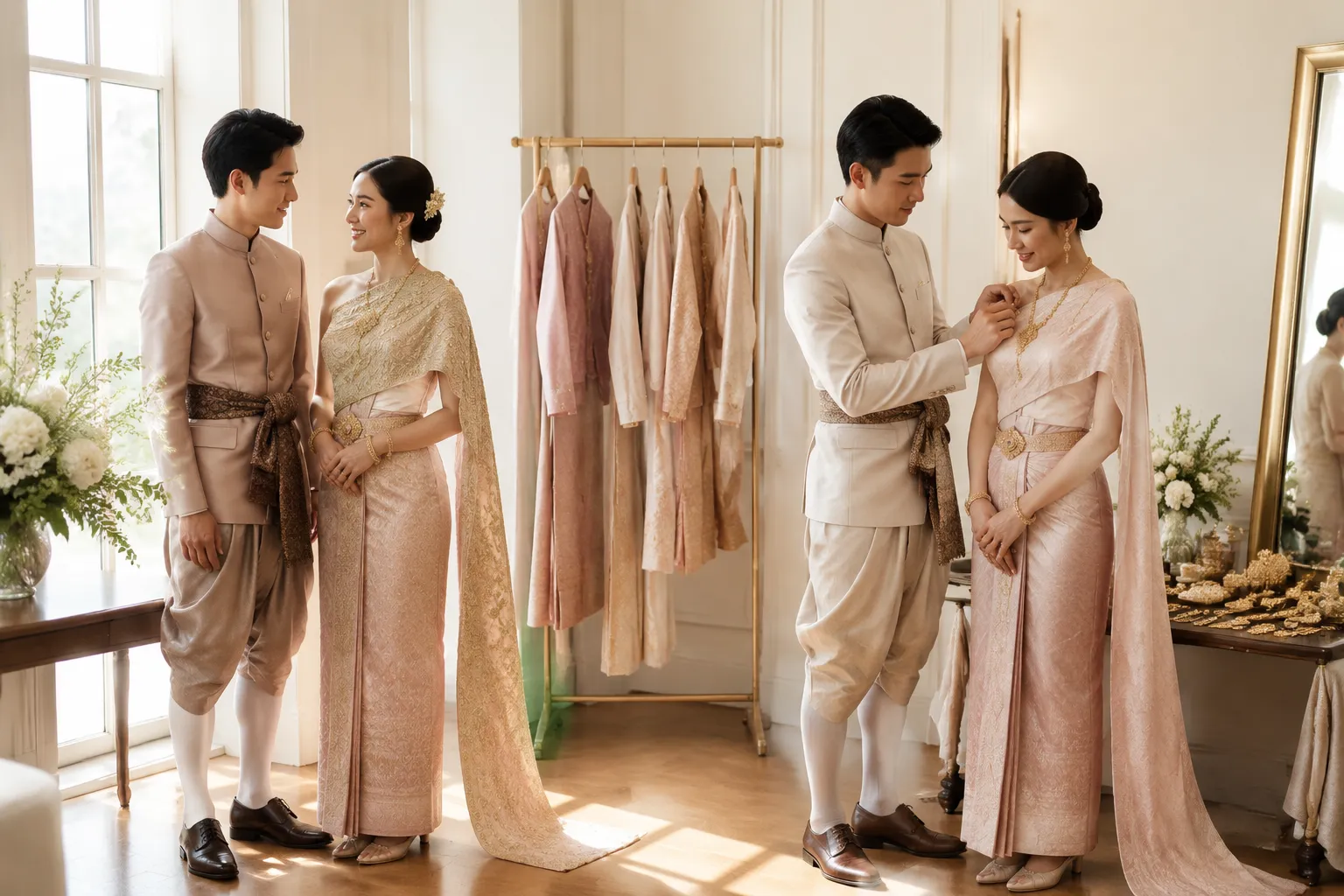
Base the decision on the ceremony sequence, family preference, venue, weather, photography schedule, comfort, and available changing time. Ask the couple or a family member whether a second look is expected, welcomed, or unnecessary. Clothing choices are separate from civil registration, which concerns legal status rather than the number or style of wedding outfits.
When Two Outfits May Make Sense
A ceremony-to-reception outfit change may be useful when:
- The morning includes a monk blessing, khan maak procession, elder participation, garlands, ceremonial threads, or Rod Nam Sang water pouring.
- The reception is at another venue or has a more relaxed, modern, or dance-focused format.
- The ceremony clothing includes heavy layers, a sabai, a long skirt, a train, a structured jacket, or accessories that limit movement.
- The ceremony takes place outdoors in heat or humidity and the reception venue is air-conditioned.
- Formal family photographs are planned before the reception.
- The couple wants a visible change between the ceremonial portion and the evening celebration.
One outfit may be more practical when the venues are close, the schedule is tight, or the clothing is comfortable for sitting, walking, and dancing. A second look adds fitting, transport, accessory handling, storage, and changing time. It should reduce practical pressure rather than create another task for the couple.
When to Change Wedding Outfits
The most workable window is often after the ceremony and formal family photographs, before guests are seated or before the reception entrance. This keeps the ceremony clothing available for important images and avoids interrupting the central parts of the sequence.
- Wear the ceremony outfit for the morning program and related family interactions.
- Complete the ceremony and the photographs that require that clothing.
- Change in a private space before the reception entrance, if the schedule allows.
- Wear the reception look for dinner, speeches, dancing, and later photographs.
If the reception begins immediately, changing during a cocktail hour or another guest transition may be possible. The venue needs to provide a private changing area, and the coordinator should protect enough time for the couple to return before the entrance. Ask the photographer when family portraits, couple portraits, and reception images are scheduled.
Changing before formal photographs may be less suitable when the family expects the couple to appear in ceremonial clothing. The photographer and ceremony coordinator should work from the same timing plan.
How Ceremony and Reception Looks Can Differ
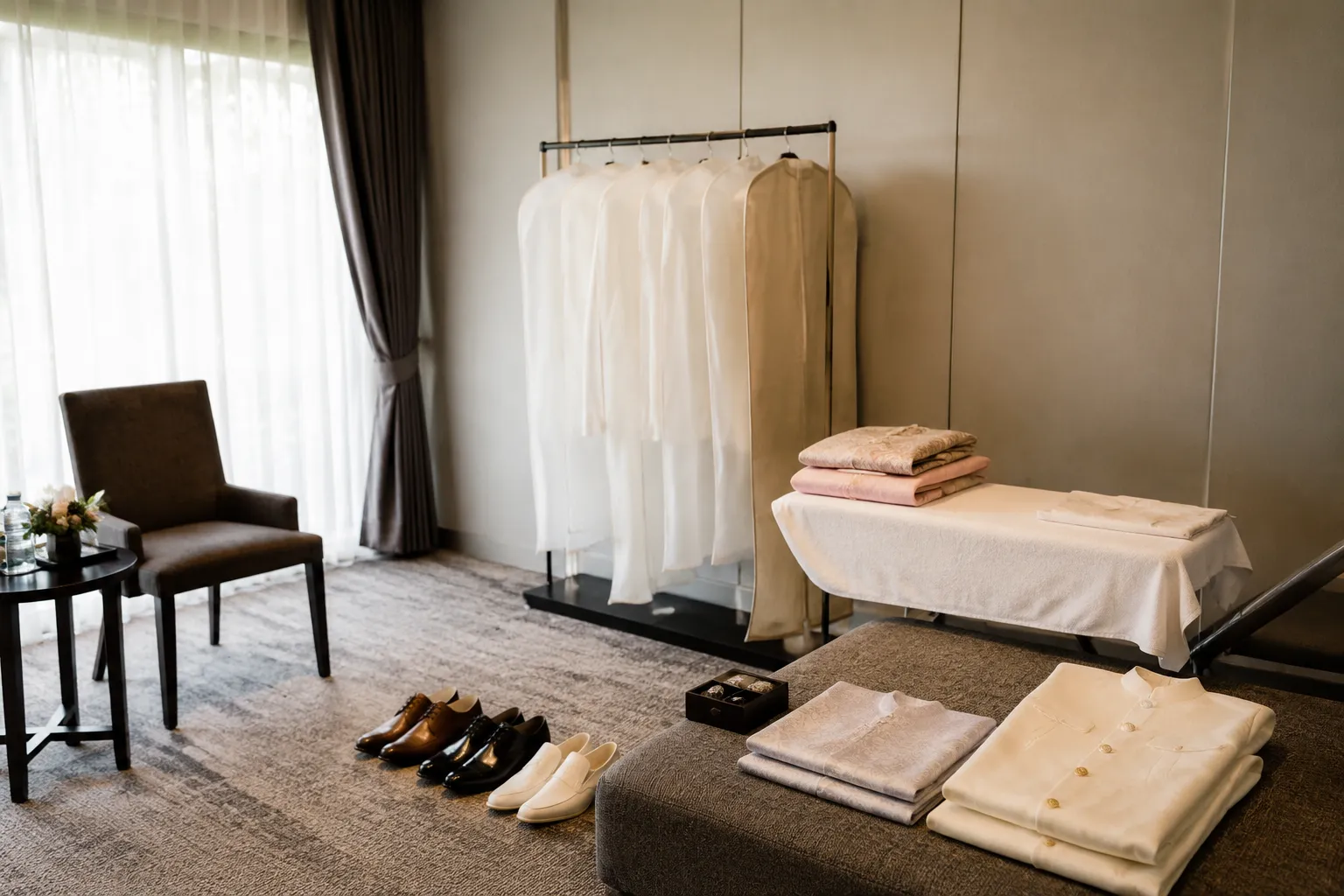
The ceremony outfit needs to work with the activities and participant roles in that particular wedding. Depending on the format, it may need to accommodate:
- Seated water pouring during Rod Nam Sang
- Garlands or ceremonial threads
- Mong Kol headwear
- Elder blessings and close family participation
- A khan maak procession
- Movement between indoor and outdoor areas
- Footwear changes or shoe removal
These elements are not present at every Thai wedding and may be adapted for a hotel, private home, beach venue, or another setting. Ask the family, ceremony leader, or venue what the sequence involves before ordering or altering garments.
The reception look can respond to movement, temperature, and the event's formality. A lighter dress, shorter hem, simpler accessories, or less restrictive jacket may be easier for dinner and dancing. A spare shirt can also be practical for the groom or bridal-party members during a hot outdoor schedule; it is a comfort measure, not a Thai wedding requirement.
Thai Ceremony and Reception Outfit Ideas
Traditional and contemporary clothing can appear on the same wedding day. The choice depends on personal preference, family expectations, formality, fit, and the ceremony setting.
When speaking with a tailor or family member, you may encounter terms such as Chut Thai, a broad term for Thai formal dress; Chakri or Chakkri, often discussed with a sabai or shoulder drape; Chakkraphat, a more elaborate related style; Boromphiman, a fitted formal style; Chitralada, associated with daytime formalwear; Amarin, a dressier formal style; and Ruean Ton, a less formal style within the Chut Thai group.
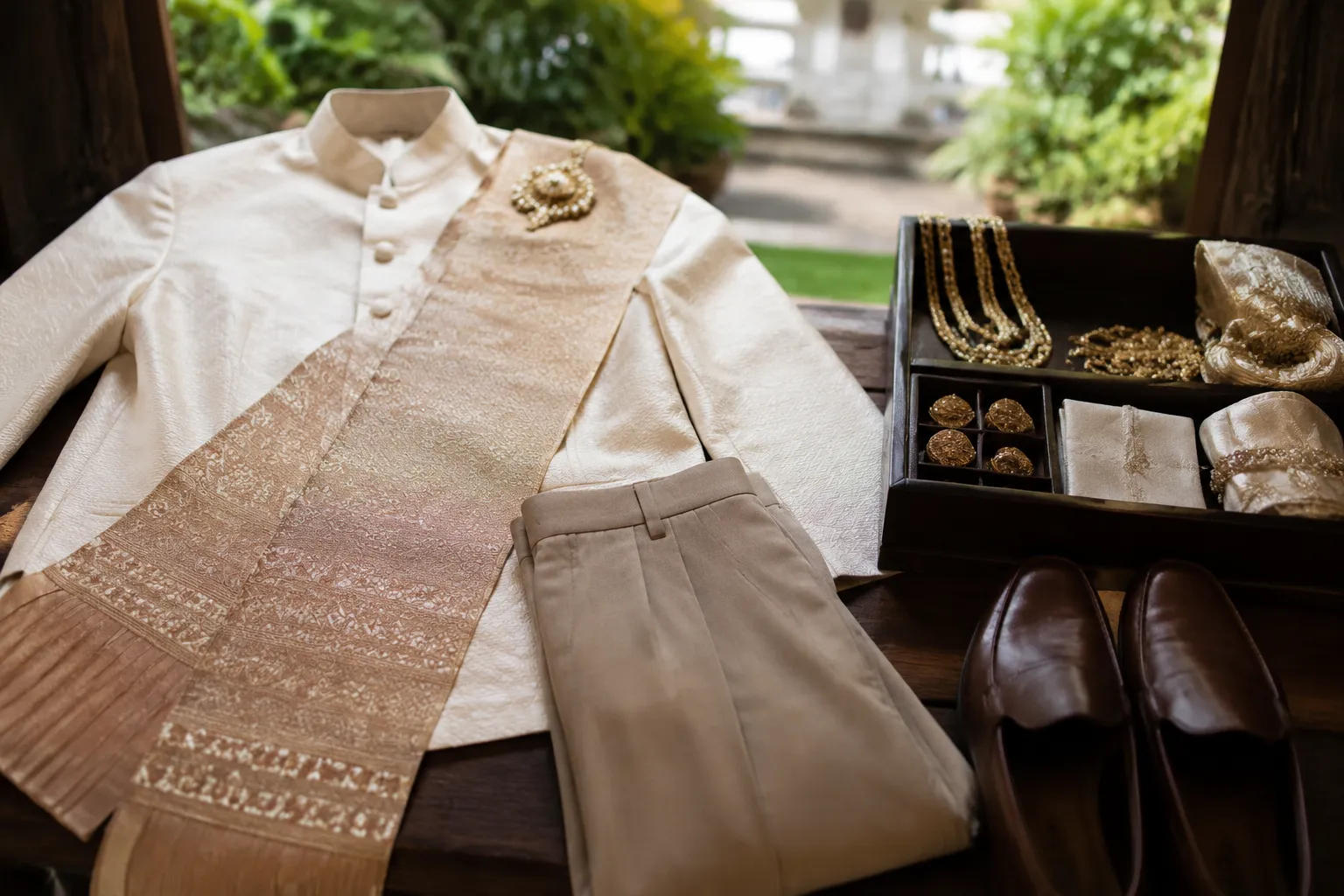
Discussions of men's clothing may include Chong kben trousers, a Raj-pattern jacket, or a Thai silk shirt. These names describe possible garments or references, not a mandatory dress code or ceremony order. A tailor can advise on sitting, walking, kneeling where relevant, raising the arms, wearing accessories, and changing between locations.
For the reception, some couples choose a modern gown or suit. Others continue with Thai formal clothing, pair a traditional textile with contemporary tailoring, or simplify the ceremony look. Agree on the intended level of formality before fitting or making alterations.
Heat, Humidity, and Movement
Venue conditions may matter more than the distinction between traditional and modern clothing. Heat and humidity can affect comfort, makeup, fabric choice, and photographs, especially when the ceremony includes outdoor waiting or a procession.
- Choose layers that can be adjusted after the ceremony.
- Allow the reception outfit enough room for walking and dancing.
- Plan how the ceremony garment will be stored during the reception.
- Use shoes that suit movement between locations.
- Keep a spare shirt available for anyone likely to spend substantial time outdoors.
- Consider a shawl, sarong, or other cover-up if additional coverage becomes useful.
Long trains, large skirts, restrictive silhouettes, and heavy jackets may be difficult during movement-heavy parts of the day. Ask the tailor about sitting, walking outdoors, raising the arms, and wearing ceremonial accessories over the garment.
Ask the venue whether a private changing room is available at the required time and where bags or clothing can be stored. Confirm those details before committing to a second look.
Temple or Monk-Led Ceremony Clothing Questions
A monk-led or temple-related ceremony may involve more conservative coverage, but expectations differ by temple, ceremony leader, family, and venue. Do not assume that one Buddhist ceremony dress code applies everywhere.
- Do the shoulders, chest, or knees need additional coverage?
- Would a shawl, jacket, or sarong be useful?
- Will shoes be removed during any part of the ceremony?
- Are hats or other headwear appropriate?
- Will the couple sit, kneel, walk in procession, or receive water blessings?
- Where and when may the photographer take pictures?
- Can the reception outfit be worn when returning to the ceremony space?
Confirm these points with the temple, celebrant, ceremony leader, or venue. Family members may also know what the planned format involves.
Who Needs to Change?
The Couple
The couple may change after formal ceremony photographs and before the reception entrance. Discuss the timing with both families when the ceremony clothing has particular family significance. The coordinator, photographer, tailor, and venue should use the same schedule.
The Bridal Party
Bridesmaids, groomsmen, and close relatives may stay in one outfit even when the couple changes. A group change may be worthwhile if they join an outdoor procession, wear restrictive clothing, or need a different level of formality for the reception. It also adds fitting, transport, and coordination work. Ask who is expected to change and who will manage the garments.
Guests
Guests generally should not be expected to bring a second outfit unless the couple or venue specifically requests it. Clothing choices may vary according to the guest's relationship to the couple, family preference, ceremony setting, and venue.
For a temple-related or formal ceremony, a guest might choose light formalwear with covered shoulders and a longer or less revealing silhouette. Plain trousers, a modest dress, and comfortable fabrics can be sensible options in some settings, but they are not universal requirements. Advice about black, white, and red also varies, so ask the couple or family about any requested palette.
Does an Outfit Change Have Traditional Meaning?
A change from ceremony clothing to reception clothing should not automatically be described as a Thai ritual. It may simply reflect a change in formality, location, weather, comfort, photography, or movement.
Wedding magazines and commercial presentations sometimes show multiple bridal looks, hotel receptions, or Western-influenced styling. These represent particular formats and should not be treated as evidence that Thai families generally follow the same pattern.
Historical and local records can show clothing changes within a ceremony sequence, but an observation from one community and period cannot establish a current nationwide practice. The useful planning conclusion is narrower: Thai weddings can combine different clothing styles and ceremony formats, so the outfit plan should be confirmed for the individual wedding.
A Simple Decision Check
Prepare a second outfit when several of these conditions apply:
- The ceremony and reception differ in formality.
- The day includes substantial heat or outdoor activity.
- The ceremony outfit limits walking, sitting, or dancing.
- Formal family photographs are scheduled before the reception.
- There is enough time and a private place to change.
- The couple and family support the change.
- The photographer and coordinator can protect the required ceremony moments.
Keep one outfit when the schedule is compact, the clothing is comfortable, or changing would cause more disruption than benefit. Confirm the ceremony sequence with the family or celebrant, coverage and footwear with the temple or venue, photograph timing with the photographer, and fit and movement with the tailor.
Sources
- Wear Thai Dresses to These Special Occasions
- Weddings and Thai Women: The Construction of Weddings and the Portrayal of Thai Women Through Wedding Stories in Thai Wedding Magazines
- Formal Thai National Costume In The Reign Of King Bhumibol Adulyadej
- Early childhood curriculum in Thailand: An investigation into perceptions of the cultivation of Thainess in young children
- Charles F. Keyes Field Notes, Thailand: 1963-05 (May 1963), Mahasarakham
- Thailand as World LGBTQ Wedding Destination