Thai Wedding Shoes, Bags, and Small Accessories
For Thai wedding shoes and bags, choose for the full ceremony sequence rather than the outfit alone. A practical combination is usually one pair of shoes that coordinates with the clothing and allows the wearer to stand, walk, greet relatives, and move between ceremony areas, together with a small bag for essential items that will not distract in photographs.
There is no single shoe, bag, color, or accessory standard for every Thai wedding. Family preference, regional background, ceremony setting, venue, clothing style, and the number of activities can all affect the decision. Treat accessories as a planning detail to discuss in advance, not as a test of whether an outfit is sufficiently Thai.
Start With the Ceremony Setting
Before comparing styles, list where the wearer will go and what will happen during the day. A wedding may combine family activities, a Buddhist blessing, a khan maak procession, water-pouring, photographs, and an evening reception. Other celebrations may take place mainly at a hotel, private venue, garden, or destination setting.
Check the following details:
- Will the wearer move between several rooms or outdoor areas?
- Could shoes need to be removed or changed?
- Are there stairs, uneven ground, outdoor walking, or long distances between activities?
- Does the venue have a policy about footwear, bags, or changing clothes?
- Will the ceremony and reception use the same outfit?
- Does the celebrant or family have a preference for a particular part of the ceremony?
The available cultural research does not establish universal footwear rules for Thai temples, venues, or wedding ceremonies. Confirm those details with the ceremony leader, venue, planner, or relevant family member.
Choosing Thai Wedding Shoes
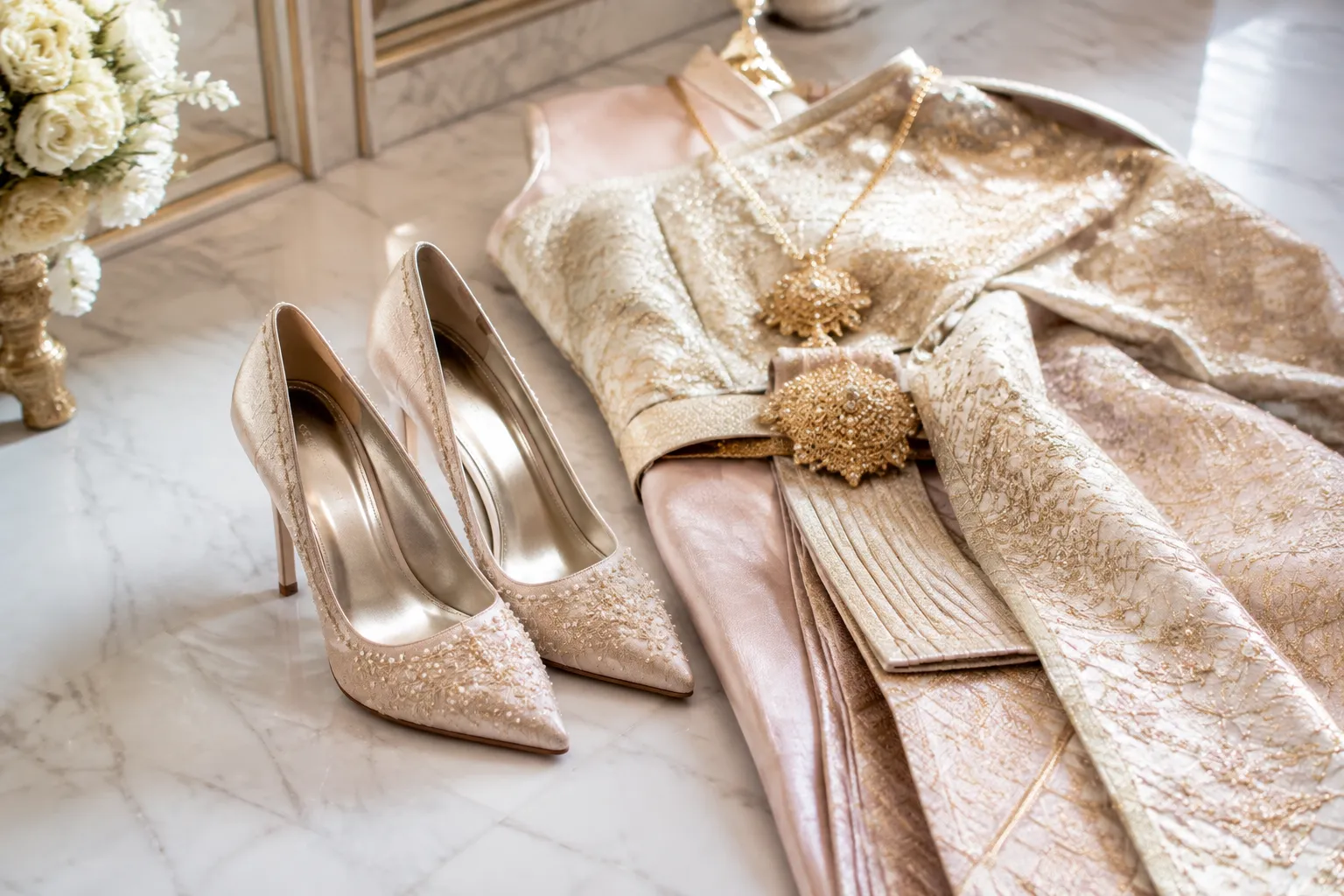
The main decision is whether the shoes support the planned movement while remaining visually consistent with the outfit. Footwear-design research offers a broad framework involving appearance, utility, intended use, materials, and consumer needs. It does not establish the comfort, fit, durability, or weather performance of a particular wedding shoe.
Match the shoes to the clothing
Compare the shoes with the complete outfit, including the hemline, fabric, embroidery, jewelry, and any traditional or regional details. A highly decorated outfit may work better with simpler shoes, while a restrained outfit may allow more visible embellishment.
Consider the clothing’s color family, metallic details, surface decoration, heel height, and silhouette. Also consider whether the shoes will appear in standing, walking, or seated photographs. Do not assume that one color carries the same meaning for every family or ceremony. If color has family significance, ask the couple or elders before finalizing the pair.
Plan for standing and movement
Try the shoes with the actual outfit and walk through the likely ceremony route. Check whether the wearer can:
- Walk without catching the hem
- Stand steadily during longer portions of the ceremony
- Use stairs or uneven surfaces
- Move while carrying flowers, gifts, or another ceremonial item
- Change shoes without disrupting the schedule
A lower heel, secure fastening, or second pair may be sensible when the day includes repeated movement. The choice depends on the wearer, clothing, and venue; no particular heel height or shoe type should be treated as a Thai wedding requirement.
Decide whether a second pair is useful
A second pair can be reserved for the reception or outdoor movement. Decide where it will be stored, who will carry it, and when the change can happen.
If the couple will wear a traditional outfit for one part of the day and a modern outfit later, compare both pairs before buying. The first pair may need to work for formal photographs, while the second may prioritize movement during the reception. A planner, dresser, or venue coordinator can help place the change in the running order.
Choosing a Wedding Bag
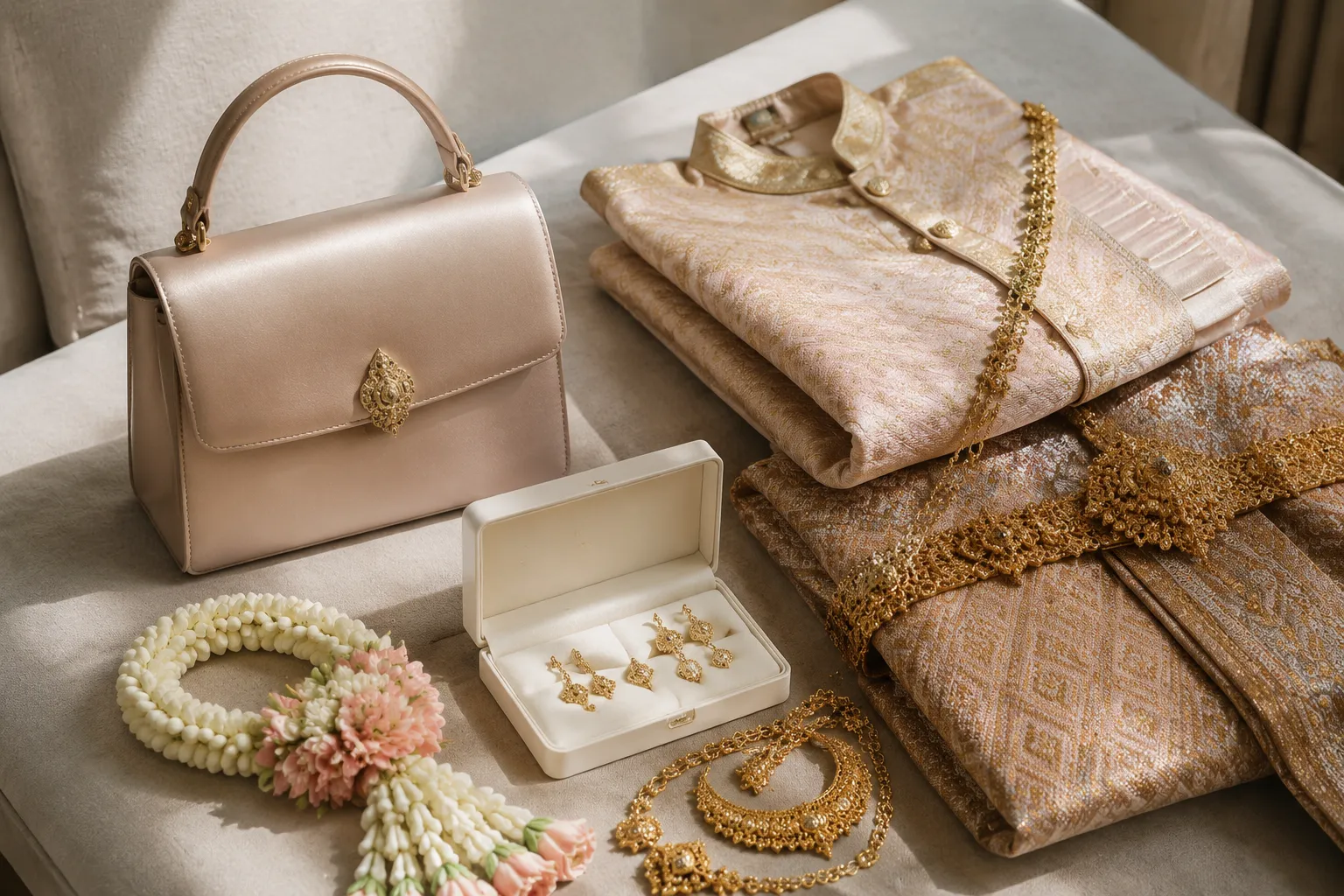
A wedding bag should hold what is genuinely needed without competing with the clothing or interfering with participation. A compact hand-held, shoulder, or crossbody design may work, depending on the outfit, ceremony setting, and family preference.
Plan space for:
- Identification and payment items
- A phone and tissues
- Small personal necessities
- Any item the wearer has been asked to carry
- Storage during photographs or ceremonial moments
The bag may not be carried continuously. Agree in advance who will hold it during group photographs, processions, greetings, or water-pouring. A trusted attendant, family member, or planner may manage it, but this should be discussed rather than assumed.
Coordinate without overmatching
The bag does not need to duplicate the shoes. It can coordinate through one shared detail, such as color, metallic trim, texture, or level of decoration. Matching every accessory exactly can make a formal outfit look overly arranged when the clothing already contains detailed patterns.
Regional references also need careful handling. Research on Phuket Baba wedding dress and material culture describes embellished bags, shoes, ceremonial containers, and costume details within a localized Phuket Baba context. These examples may help explain why some weddings feature richly decorated accessories, but they should not be treated as a standard for Thai weddings generally.
Keep Small Accessories Practical
Small wedding accessories may include jewelry, hair ornaments, pins, brooches, handkerchiefs, decorative containers, or items connected with the outfit. Their role is practical as well as visual: they should stay secure, coordinate with the clothing, and avoid disrupting the wearer’s responsibilities.
Check each item for four points:
- Placement: Will it stay in position while walking, greeting, bowing, or sitting?
- Visibility: Will it appear in the photographs where it matters?
- Interference: Could it catch on fabric, press against the wearer, or obstruct another item?
- Responsibility: Who will store it if it is removed during the ceremony?
If an accessory is connected with a family tradition or regional costume, ask the relevant elder or ceremony coordinator how it should be used. A decorative item can be meaningful to one family and simply stylistic to another.
Coordinate With Photography
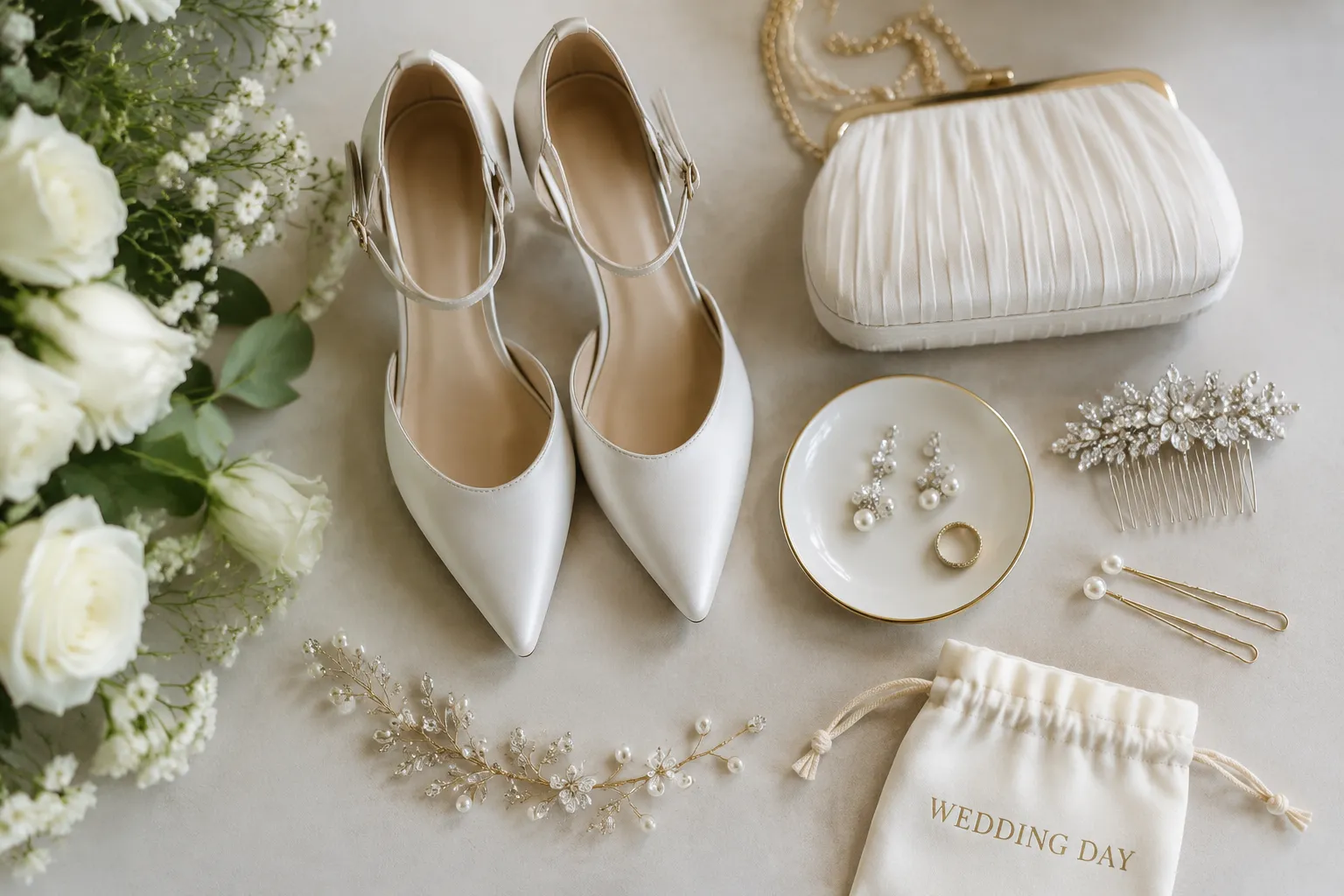
Research on contemporary Thai weddings discusses the role of photographs, video, wedding media, and visual presentation in arranging wedding elements. That does not create a universal styling rule, but it makes photography a useful planning question.
Give the photographer or planner a short accessory list before the day:
- Shoes that should appear in full-length portraits
- Bag details that are important to show
- Jewelry or hair pieces with family significance
- Accessories that should be photographed separately
- Items that should not appear in particular ceremony images
Also decide whether the bag will be carried, placed beside the wearer, or handed to someone else. This can prevent interruptions during photographs and greetings.
When to Make the Choice
Choose the main shoes and bag after the outfit has been selected, but early enough to allow adjustments. Shoes can affect the hemline and posture, while the bag and small accessories may change the balance of the outfit.
- Confirm the ceremony settings and outfit changes.
- Ask the couple and relevant family members about preferences.
- Select the shoes and test them with the clothing.
- Confirm venue, celebrant, or procession arrangements.
- Decide who carries the bag during ceremony moments and photographs.
- Prepare a small pouch for accessories that may be removed.
- Recheck the complete outfit before the wedding day.
For a destination wedding, include transport and storage in the plan. Keep shoes, jewelry, and fragile accessories with the clothing plan, and ask the airline, venue, or vendor about specific handling policies. Those are logistical questions rather than general Thai wedding customs.
Common Questions to Confirm
Because accessory expectations are not documented as one nationwide standard, direct confirmation is the most useful way to resolve uncertainty.
- Which shoes should be worn for each ceremony segment?
- Will shoes need to be removed or changed?
- Is there a preferred color or style from the family?
- Should the bag be carried during the ceremony?
- Who will hold personal items during photographs?
- Are there venue restrictions on footwear or accessories?
- Does the celebrant have instructions about clothing or movement?
- Are regional costume details being used, and who should explain their placement?
- Is the ceremony separate from civil registration, and which local office handles registration questions?
The relevant person may be an elder, ceremony leader, venue coordinator, planner, photographer, or local registration office. Ask the person responsible for that part of the day instead of applying a general online rule.
Sources
- Fake Cake: Thai Weddings
- A Study on Korean-Thai Traditional Wedding Dresses
- 'Thainess' and bridal perfection in Thai wedding magazines
- Footwear Design Strategies for the Thai Footwear Industry to Be Excellent in the World Market
- The Thai Chinese-Malaysian Bonding Story of Baba Nyonya’s Cuisine in Phuket to Contemporary Jewelry
- การพฒนารปแบบพสตราภรณในพธววาหบาบาสงานสรางสรรคคาบาเรต