
Beach Wedding Dress Comfort in Thailand
For Thailand beach wedding dress comfort, plan around movement, exposure, and the full ceremony route rather than appearance alone. The most practical dress is one that allows comfortable movement, remains manageable on sand and hard paths, works through outdoor and indoor transitions, and fits the ceremony expectations agreed with the couple, family, venue, and ceremony leader.
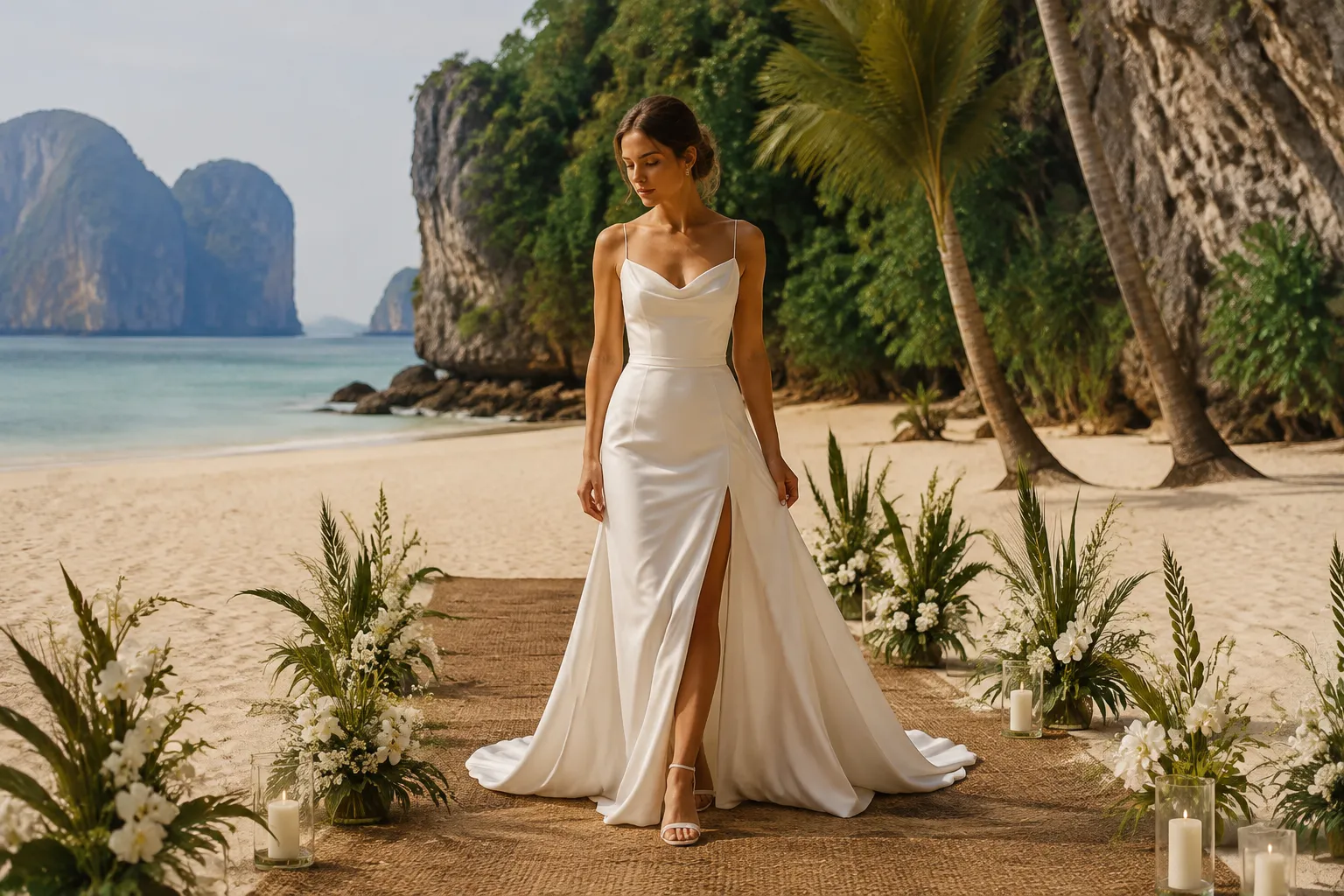
There is no single dress shape or fabric that suits every beach wedding in Thailand. Comfort can change with the surface, walking distance, humidity, wind, shade, ceremony length, photography schedule, footwear, and the construction of the complete garment. The available research helps explain these conditions, but it does not directly test bridal dresses on Thai beaches.
Start With the Ceremony Route
Map where the wearer will go before choosing the final hem or completing alterations. Ask the venue or planner:
- Will the ceremony take place directly on sand, beside the beach, or on a raised platform?
- Will the route include loose sand, firm sand, steps, grass, rocks, wet areas, or polished flooring?
- How far is the preparation room from the ceremony and photography locations?
- Will the couple move between the beach, a pavilion, a restaurant, and an indoor room?
- Where can the dress be adjusted, stored, or lifted during photographs?
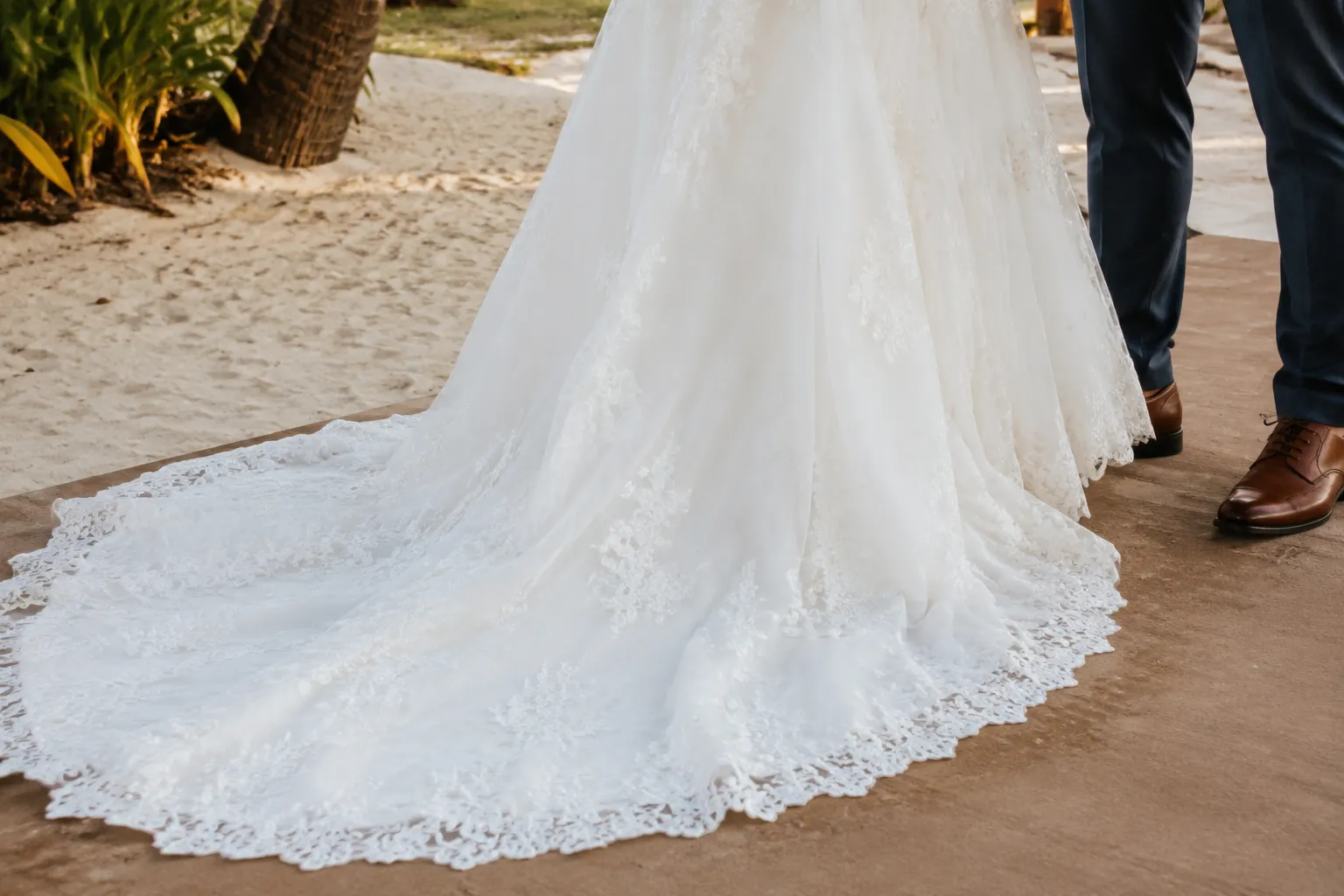
A long train may photograph well but become difficult when it drags through sand or catches on outdoor fixtures. A controlled hem, bustle, wrist loop, or detachable train may make the same design easier to manage, depending on its construction.
The fitting should include the movements required on the day: walking slowly, turning, sitting, standing for photographs, stepping up, and holding the hem. Test these movements in the intended shoes and with the planned undergarments.
Consider Heat, Humidity, and Airflow
Thai wedding venues may combine fully outdoor, semi-outdoor, naturally ventilated, and air-conditioned spaces. Clothing comfort can change between them. Research on thermal comfort in Thailand discusses factors such as humidity, air movement, acclimatization, and air-conditioned environments, while tropical-climate research considers how clothing conditions relate to perceived comfort. These findings are useful for forming questions, not for setting a universal dress rule.
A dress that feels manageable during a short indoor fitting may feel different after a long outdoor ceremony or a photography session with limited shade. Check the complete outfit and ask:
- Does the bodice still feel comfortable after several minutes of standing?
- Can air move through the skirt and upper layers?
- Does the lining add unwanted weight or warmth?
- Do decorative layers press against the skin or restrict movement?
- Can the wearer move into an air-conditioned room without needing a complete change?
A lighter construction may be worth discussing with the dressmaker, but no supplied source establishes one universally suitable fabric for Thai beach conditions. Performance depends on the specific fabric, lining, fit, decoration, and weather. Confirm the outdoor schedule with the planner and test the finished outfit as a whole.
Make Sand and Movement Part of the Design
Sand affects walking speed, balance, posture, and the way a skirt moves. For a beach route, consider:
- A hem that can be lifted without damaging the dress
- A train that can be bustled or removed
- Fewer fragile layers near the ground
- Secure fastening around the waist and bust
- Footwear that matches the planned surface
- A second pair of shoes for hard paths or indoor areas
- A small support kit for temporary hem management
The final hem should be checked against the actual footwear. A dress altered for a smooth indoor floor may need different handling outdoors. Ask whether the venue provides a clean path and whether the photographer expects the couple to walk away from the main ceremony area.
A short or tea-length dress is not automatically more comfortable, and a full-length dress is not automatically unsuitable. The useful question is whether the design works with the route, footwear, ceremony sequence, and photography plan.
Plan Footwear With the Dress
Decide on footwear before the dress is finished. Confirm whether the ceremony surface is loose sand, firm sand, timber or stone decking, grass, tile, polished flooring, or a combination of these.
The wearer may use one pair of shoes for formal photographs and another for walking. Agree the change with the planner so it does not interrupt the ceremony sequence or create confusion during group photographs. During the fitting, test standing, walking, turning, and climbing any steps on the route. If the dress covers the feet, check that the wearer can move without stepping on the hem.
Keep Ceremony Expectations Separate From Comfort Advice
Thai wedding attire varies with the family, ceremony format, location, and participants. A beach wedding may include a contemporary ceremony, a Thai Buddhist blessing, a rod nam sang water-pouring ceremony, or several events across the same day. Not every couple follows the same sequence.
Coordinate attire with the people who know the ceremony:
- Ask the family about preferred attire for any Thai ceremony segment.
- Confirm with the celebrant or ceremony leader whether practical adaptations are suitable.
- Ask the planner whether a second outfit would help for a blessing, water-pouring ceremony, reception, or photographs.
- Discuss traditional or adapted elements before final alterations.
- Confirm whether shoulder coverage, skirt length, modesty, or other details are family or venue preferences rather than universal rules.
A traditional, adapted, or contemporary outfit may each suit different circumstances. Dress research can provide cultural context, but it does not determine what is religiously correct, culturally suitable, or acceptable to every Thai family. Confirm those details with the relevant family member, ceremony leader, or planner.
Check Venue Conditions Before the Final Fitting
Specific venue information is more useful than a general description of a beach destination. Destination-wedding research in Thailand points to variation in facilities, access, location, capacity, and service arrangements. Planning studies involving Phuket venues also describe the importance of timing, coordination, and site limits.
Ask for clear answers about:
- The time the wearer will first go outdoors
- The expected duration of the ceremony and photographs
- Shade at the ceremony site
- A nearby changing or rest area
- Staff assistance for a train or delicate hem
- Photography routes and access restrictions
- Whether the couple must cross sand more than once
- A covered or indoor alternative if the planned route changes
- Hanging space for the dress
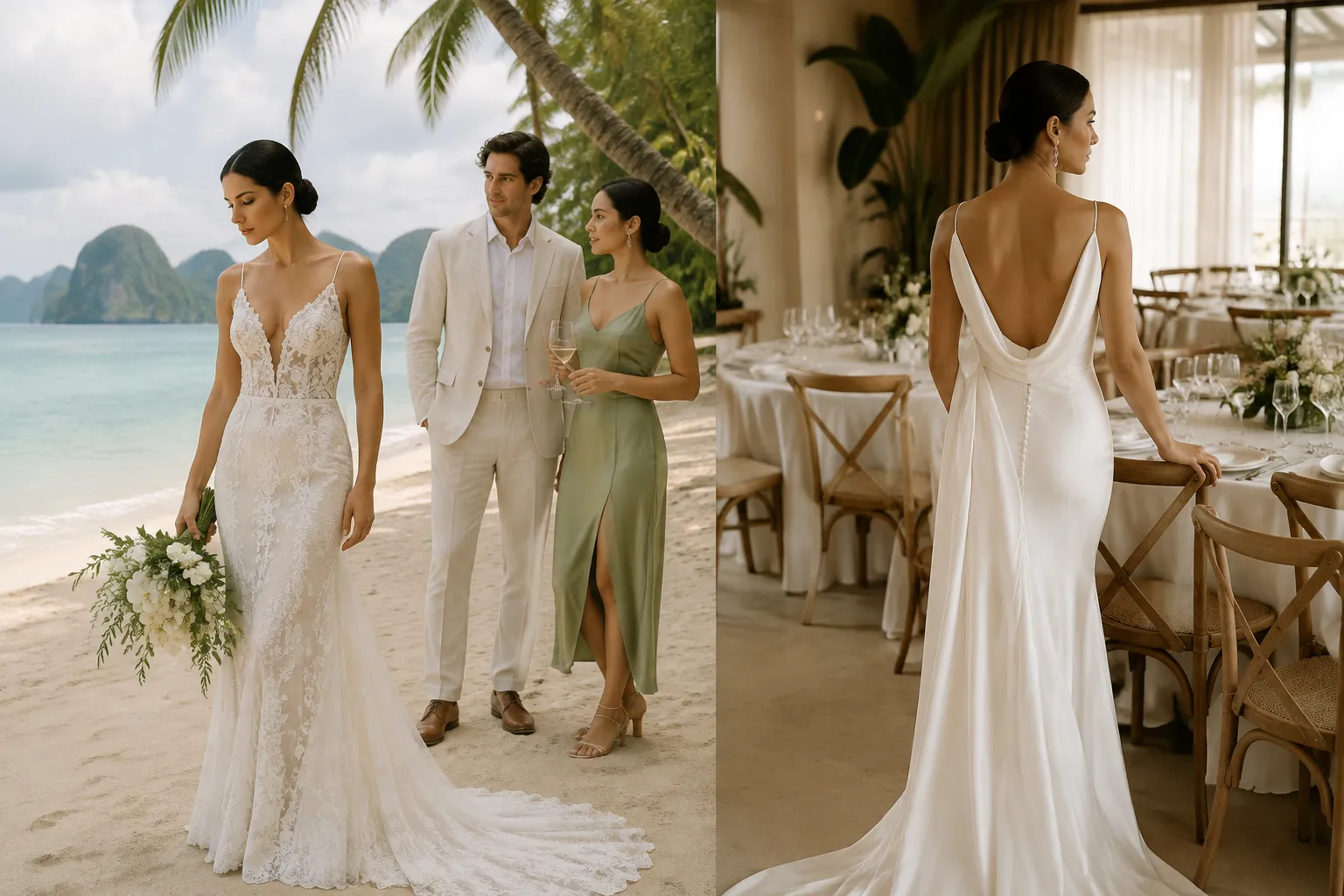
If an in-person inspection is not possible, request recent photographs or a simple route plan. A venue described as beachfront may use a pavilion, terrace, lawn, boardwalk, or indoor room for part of the ceremony. The dress plan should reflect the actual sequence.
Manage Travel and the Wedding-Day Schedule
A wedding dress may travel by air, remain in a hotel room, and move between preparation and ceremony spaces. Confirm packing and transport arrangements with the dressmaker, airline, venue, and planner. Do not assume that a particular garment bag or cabin arrangement will be accepted.
Allow time for:
- Steaming or pressing
- Dressing and fastening
- Shoe changes
- A short movement check
- Travel from the preparation room to the ceremony
- Photography before or after the ceremony
- Hem or train adjustments
- A possible outfit change
Veils, long ribbons, detachable sleeves, and layered skirts may need separate checks because wind and movement vary by site. Tell the photographer and planner which locations require assistance and which movements are comfortable for the wearer.
A Practical Decision Rule
A beach wedding dress is workable when the wearer can:
- Walk the complete route in the planned shoes.
- Sit, stand, turn, and pose without repeated adjustment.
- Manage the hem or train on the actual surface.
- Remain comfortable during the expected outdoor period.
- Move between outdoor and indoor spaces without the outfit becoming impractical.
- Meet the attire preferences agreed with the family, ceremony leader, and venue.
- Follow a clear backup plan if the route, weather, or schedule changes.
If several points remain uncertain, adjust the construction, shorten or bustle the train, add a second outfit, or revise the ceremony route before the final fitting.
Common Questions
What is the most comfortable dress shape for a Thailand beach wedding?
There is no universal answer. Choose according to the route, surface, ceremony duration, airflow, footwear, and the wearer’s ability to move comfortably.
Is a long wedding dress suitable for sand?
It may be, if the hem and train can be managed and the venue provides a practical route. Confirm the surface, walking distance, and photography plan before final alterations.
Should the couple choose a lighter fabric?
A lighter construction may be useful, but the complete garment matters. Discuss the fabric, lining, fit, and decorative layers with the dressmaker rather than relying on a fabric label alone.
Will one dress work for every ceremony segment?
Sometimes, but not always. A blessing, rod nam sang ceremony, reception, and beach photographs may involve different movement and attire considerations. Ask the family, ceremony leader, and planner whether one outfit or a second outfit fits the planned sequence.
What should be confirmed with the venue?
Confirm the walking surface, shade, steps, changing space, photography route, outdoor duration, indoor transitions, train assistance, and site restrictions. These details are more useful than relying on a general beach-wedding description.
Sources
- Thermal comfort standards for air conditioned buildings in hot and humid Thailand considering additional factors of acclimatization and education level (Journal Article) | ETDEWEB
- Thailand ventilation comfort chart
- Exploring the impact of dress codes on thermal comfort and workplace satisfaction in tropical climates | Theoretical and Applied Climatology | Springer Nature Link
- An exploratory of decision making factors for an overseas wedding destination : A casetudy of Indian couples, Phuket, Thailand
- Influences on the consumer decision making process in selecting destination wedding
- Industry study of wedding tourism in Thailand
- A Study on Korean-Thai Traditional Wedding Dresses