
Wedding Shoes for Thailand Beaches, Gardens, and Temples
For a Thailand wedding, choose footwear for the complete route rather than the ceremony photograph alone. A beach may involve loose sand and heat, a garden may combine grass with paving or steps, and a temple may require shoes to be removed before entering particular sacred areas. For many couples, the practical plan is one comfortable pair for the longest outdoor movement, with a second option available for a different surface or ceremony stage.
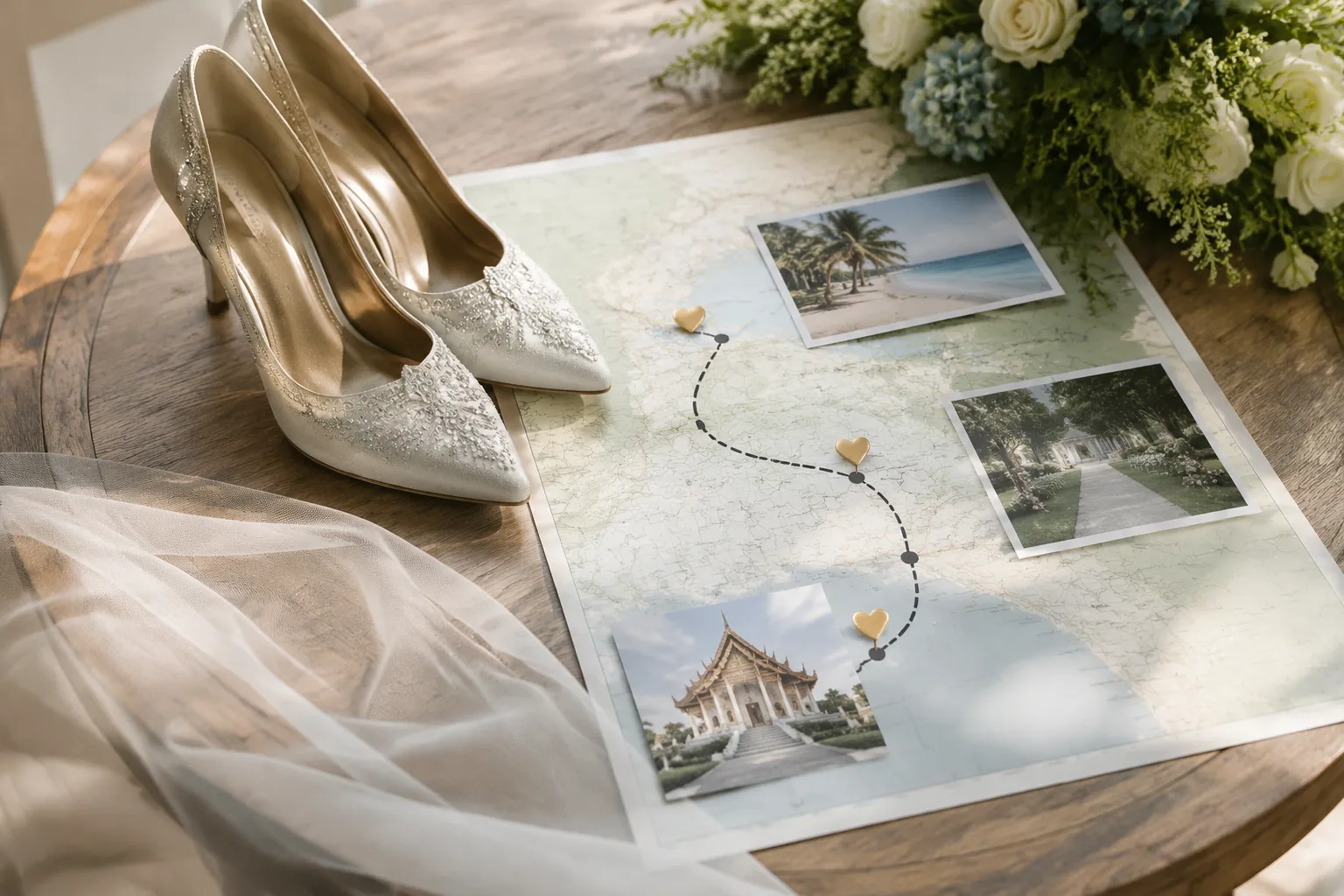
Before buying, map the day:
- Where will you walk from the preparation room to the ceremony?
- Will the route include sand, grass, stone, steps, or wet paths?
- Will you move between indoor and outdoor spaces?
- Will shoes be removed at a temple?
- How long will you stand before and after the ceremony?
- Does the venue, temple, ceremony leader, or family representative have a preference?
These details matter more than whether a shoe is marketed as a beach, garden, or bridal style.
Wedding Shoes for Thai Beach Venues
Beach footwear needs to suit sand entry, changing ground firmness, heat, and the distance between venue areas. A shoe with an open gap around the ankle may allow sand to enter more easily. That is a useful fit consideration, not a promise of comfort on every beach.
For a sandy ceremony, look for:
- A secure fit that does not depend on a narrow heel staying perfectly planted
- A sole that feels stable when the surface gives way
- Straps or closures that keep the foot from sliding forward
- A shape that does not pinch when feet feel warm or slightly swollen
- Materials that can be cleaned or dried after contact with sand or moisture
Very thin heels can be difficult to manage on loose sand, but a completely flat shoe is not automatically the right answer. Walk the route, if possible, and consider whether you can move steadily from the guest area to the ceremony point and remain comfortable while standing.
Barefoot wedding imagery is common in destination-wedding marketing, but it represents a visual choice rather than a universal expectation. Some couples may go barefoot for photographs or a short beach moment and wear shoes for the rest of the route. Ask the planner or venue how the ceremony area is prepared and whether the walking route differs from the area shown in promotional photographs.
Wedding Shoes for Garden Venues
A garden can look level in photographs while still containing grass, soil, paving, steps, or changes in elevation. Choose for the route, not only for the lawn where the couple will stand.
Check whether the ceremony includes:
- A paved approach followed by grass
- A long walk from the preparation area
- Stairs or sloped paths
- Decorative flooring placed over the lawn
- A covered area that may become relevant if rain changes the plan
- Outdoor photographs after the formal ceremony
A stable low heel, dress shoe, sandal, or formal flat may suit a garden route, depending on the couple’s clothing and comfort. The useful checks are foot security, ease of walking, and whether the sole feels manageable on both firm and softer ground.
If the ceremony includes a khan maak procession, ask where the couple will walk and stand while family members and guests take part. The couple may remain in one area or move between spaces. The wedding planner or family representative can explain the sequence; that information may make a second pair useful even when the ceremony itself takes place on a level lawn.
Wedding Shoes for Temple Venues
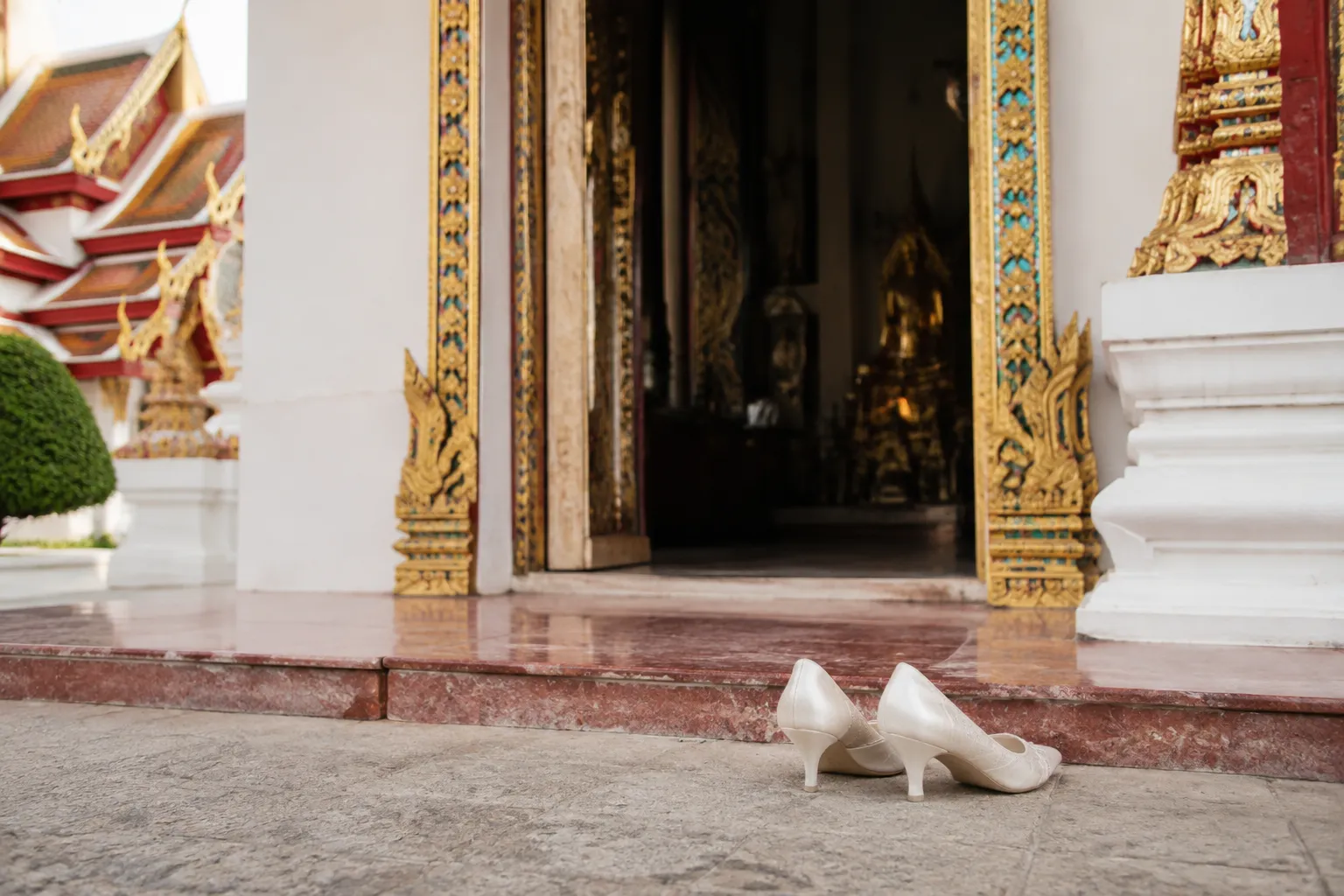
Temple footwear planning is different because shoes may need to be removed before entering particular sacred areas. A study of selected temples in Bangkok describes visitors removing shoes before entering certain sacred parts and notes that storage may be limited in some locations. This does not establish one procedure for every temple or wedding.
Ask the specific temple or ceremony leader:
- At which entrance or area are shoes removed?
- Will the couple enter an indoor worship space?
- Will shoes be put back on between the blessing and photographs?
- Where should the couple leave or store them?
- Are there steps, warm paving, or a long approach before the removal point?
- What clothing and footwear guidance should be shared with guests?
A temple visit or monk blessing may follow a different sequence from a resort ceremony. The couple may need one pair for travel and outdoor movement, then remove it before entering the relevant area. Easy-to-remove footwear can simplify that transition, but it should still stay secure during the approach.
Temple visitor research also points to the value of clear directions, dress information, and preparation details. Request practical instructions in advance and share them with the wedding party. Do not assume that guests will know where to walk or when shoes should be removed.
When to Plan a Shoe Change
A shoe change is useful when the ceremony sequence contains genuinely different conditions. A couple might wear a formal pair for an indoor or paved ceremony, change into a more stable option for garden photographs, or use a simple pair for crossing sand.
Consider a second pair when:
- The ceremony and reception use different surfaces
- A temple visit follows a beach or garden ceremony
- The couple expects a long outdoor photography session
- Rain could move the event to a covered area
- The main shoes are difficult to remove and replace
- The route includes stairs, loose ground, or extended walking
- The wedding outfit allows a discreet change
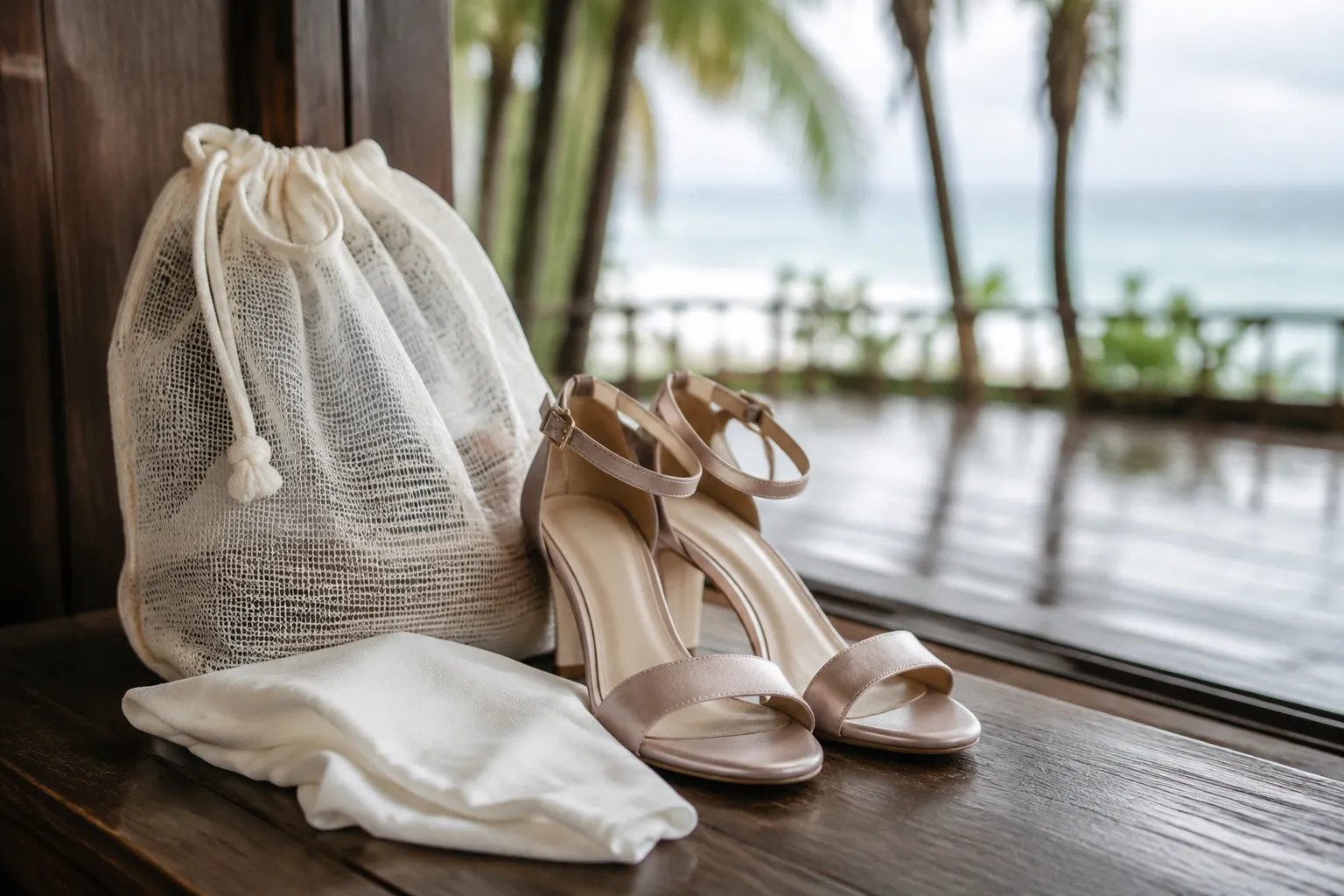
Give the spare pair to a named member of the wedding party or planner. Keep it in a breathable shoe bag with a simple cloth for sand or damp ground. Agree in advance who will carry it and where the change will happen. A spare pair left in a distant room is not useful during a tightly timed ceremony.
Heat, Rain, and Wedding Shoe Comfort
Thailand venue planning may involve outdoor heat, sudden weather changes, and movement between air-conditioned rooms and open areas. There is no single shoe material or design that suits every route, so use the wearer’s fit and the venue conditions as the main guides.
Wear the intended shoes before the wedding during short, ordinary walks. Pay attention to:
- Pressure from straps or decorative elements
- Heel movement
- Toe crowding
- Friction during repeated steps
- Whether the shoe remains secure when walking slowly
- How easily it can be removed and put back on
- Whether the foot slides when the shoe or ground is damp
This preparation cannot reproduce every wedding-day condition. Pack an alternative that the wearer already knows, rather than an untested emergency purchase.
For rain planning, ask whether the ceremony will stay outdoors, move under cover, or change location. Confirm what happens to the walking route, photography schedule, and shoe storage with the venue, planner, or photographer.
A Simple Venue-Specific Shoe Plan
- Draw the walking route.
List each movement from preparation through ceremony, photographs, reception, and departure. Mark sand, grass, stone, stairs, covered flooring, and any area where shoes may be removed.
- Match the shoe to the longest difficult section.
A pair that suits a short ceremony may be unsuitable for a long route or extended standing. Prioritize the part of the day that places the greatest demand on walking and fit.
- Separate ceremony etiquette from venue policy.
Shoe removal at a particular temple is a question for the temple or ceremony leader. Whether a resort permits a certain heel, protects a lawn, or changes the route is a venue question. Ask the relevant person for each decision.
- Coordinate with family and ceremony participants.
If a monk blessing, family procession, or water-pouring ceremony is included, ask the family representative or ceremony leader how the couple will move through the sequence. Family preference may affect clothing and footwear choices, but it should be discussed rather than assumed.
- Prepare the change and storage plan.
Decide where the second pair will be kept, who will carry it, and how shoes will be handled at a temple, particularly where storage space or visitor directions may be limited.
Questions to Confirm Before the Wedding
Send these questions to the venue, planner, temple, or ceremony leader:
- What surfaces will the couple cross?
- How far is the ceremony area from the preparation room?
- Are there steps, slopes, loose sand, or grass?
- What is the rain plan?
- Are outdoor photographs scheduled after the ceremony?
- Will shoes be removed, and exactly where?
- Is there a designated place for footwear?
- Are there venue restrictions on heels or outdoor footwear?
- Should guests receive separate shoe-removal or dress instructions?
- Is a footwear change practical within the ceremony schedule?
There is no single wedding shoe style for every Thailand venue. The useful choice follows the actual route, respects instructions from the specific temple or ceremony leader, accommodates family preference, and leaves the couple prepared for changes between sand, gardens, paved areas, and indoor spaces.
Sources
- A Model for the Management of Cultural Tourism at Temples in Bangkok, Thailand
- An exploratory of decision making factors for an overseas wedding destination: A case study of Indian couples, Phuket, Thailand
- Thailand as World LGBTQ Wedding Destination
- Mobile Application for Thai & Foreign Tourists Visiting Thai Temple
- Barefoot on the beach: the destination wedding as discursive cultural practice
- Wedding In Thailand: Traditional And Business